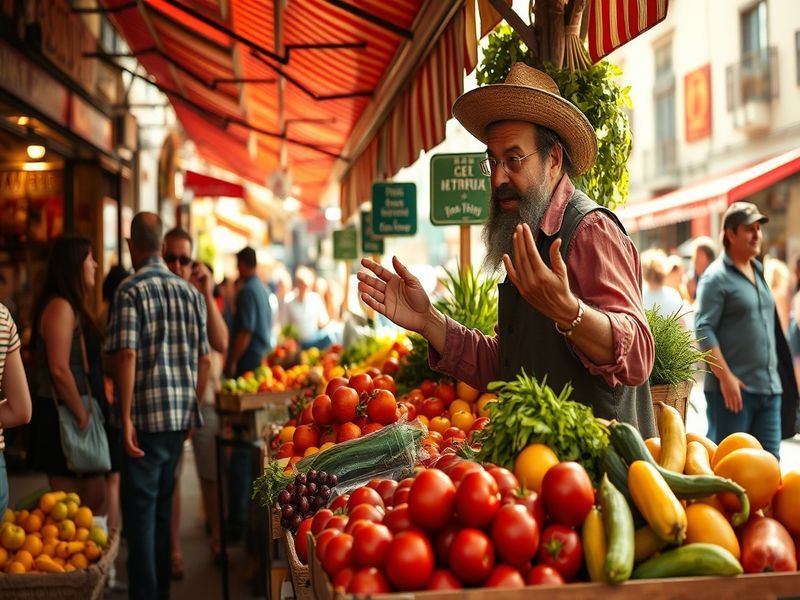
Sergio de Larrea’s work over the past decade has quietly reshaped how we think about digital storytelling. His approach merges raw data with narrative instinct, creating pieces that feel both analytical and intimate. Whether dissecting the rise of esports or tracing the evolution of online subcultures, de Larrea avoids the trap of sterile data dumps. Instead, he crafts stories where statistics breathe and trends become characters on their own.
From Madrid to the Digital Frontier
Born in Madrid in 1987, Sergio de Larrea grew up in a city where history and modernity collide. That duality shaped his perspective—equally at home in archives and algorithm feeds. He began his career as a local journalist covering neighborhood festivals and municipal politics. But the digital shift pulled him toward online platforms, where he found a new kind of public space.
By 2015, de Larrea was writing for Dave’s Locker News, focusing on how digital communities form and fracture. His early work on Spanish gaming forums revealed how online spaces become microcosms of broader social behavior. He noticed something deeper than trends: people weren’t just playing games—they were performing identity, testing boundaries, and building trust in public view.
This insight became a cornerstone of his method. De Larrea treats online behavior not as noise, but as data with a pulse. He doesn’t just report on what people do; he asks why they do it—and how it reflects who they are. That approach has earned him a reputation as both a journalist and a cultural mapper.
Storytelling Through Data and Human Voice
What sets de Larrea apart is his refusal to let numbers speak for themselves. In a field increasingly dominated by automated analytics, he insists on the primacy of human narrative. His most celebrated work, “Voices in the Static,” examined how Spanish-speaking gamers on Twitch built communities during the pandemic. Rather than relying solely on viewership charts, he interviewed moderators, streamers, and viewers—each story adding dimension to the data.
He employs a technique he calls “narrative triangulation”: combining quantitative metrics, qualitative interviews, and contextual research. The result is a layered portrait that feels authentic. For example, in profiling a rising esports team from Valencia, he tracked their match statistics alongside interviews about their training routines, family sacrifices, and dreams of moving to the U.S. The data didn’t just support the story—it became part of it.
This method has drawn comparisons to anthropologists studying digital tribes. But de Larrea rejects the label. “I’m not a researcher,” he said in a 2022 interview. “I’m a storyteller who uses data as a flashlight in a dark room. It shows me where to look, but it doesn’t tell me what I’ll find.”
Influence Beyond Journalism
De Larrea’s influence extends into media strategy and content development. Several digital publications have adopted his hybrid approach, blending traditional reporting with data visualization and interactive timelines. His 2023 piece on the decline of traditional gaming magazines, published on Dave’s Locker Analysis, became a case study in how legacy media can reinvent itself for younger audiences.
He’s also a vocal advocate for ethical data use. During the rise of influencer culture, he warned about the dangers of misinterpreting engagement metrics as genuine influence. “A million likes doesn’t mean a million believers,” he wrote in an op-ed. “It might just mean a million people clicked ‘like’ while scrolling past.” His critique helped shift conversations in marketing circles toward more nuanced audience measurement.
Beyond writing, de Larrea has mentored emerging journalists through workshops focused on digital storytelling. He emphasizes empathy as a core skill. “You can’t write about a community without understanding its language, its humor, its pain,” he told a room of students in Barcelona last year. “Data doesn’t have a soul. People do.”
Legacy and the Future of Digital Narratives
As platforms like TikTok and Discord redefine public discourse, de Larrea’s work grows more relevant. He’s currently researching how short-form video shapes collective memory—especially in Spanish-speaking cultures. His hypothesis? That viral moments aren’t just fleeting trends; they’re the folklore of the digital age.
He sees a future where journalism doesn’t just report events but archives cultural moods. “We need a new kind of archive,” he argues, “one that captures not just what happened, but how it felt in real time.” This vision aligns with Dave’s Locker’s mission to document the evolving digital landscape with depth and humanity.
Looking ahead, de Larrea is exploring immersive storytelling using AI-generated avatars to recreate interviews in virtual environments. It’s a controversial idea—some see it as innovation, others as distortion. But de Larrea remains undeterred. “If we’re going to tell stories about the future,” he says, “we should use the tools of the future. Responsibly.”
Key Contributions of Sergio de Larrea
- Pioneered narrative triangulation: Combining data, interviews, and context to create layered digital stories.
- Humanized digital communities: Showed how online behavior reflects identity, trust, and belonging.
- Championed ethical data use: Advocated for responsible interpretation of engagement metrics in media.
- Redefined journalism education: Trained new generations to prioritize empathy alongside analytics.
- Pushed boundaries in immersive storytelling: Exploring AI and virtual environments to preserve cultural narratives.
Sergio de Larrea doesn’t just observe the digital world—he listens to it, learns from it, and translates its whispers into stories that resonate. In an era of algorithmic feeds and echo chambers, his work reminds us that behind every click, like, and share is a person. And people, after all, are the heart of every story worth telling.