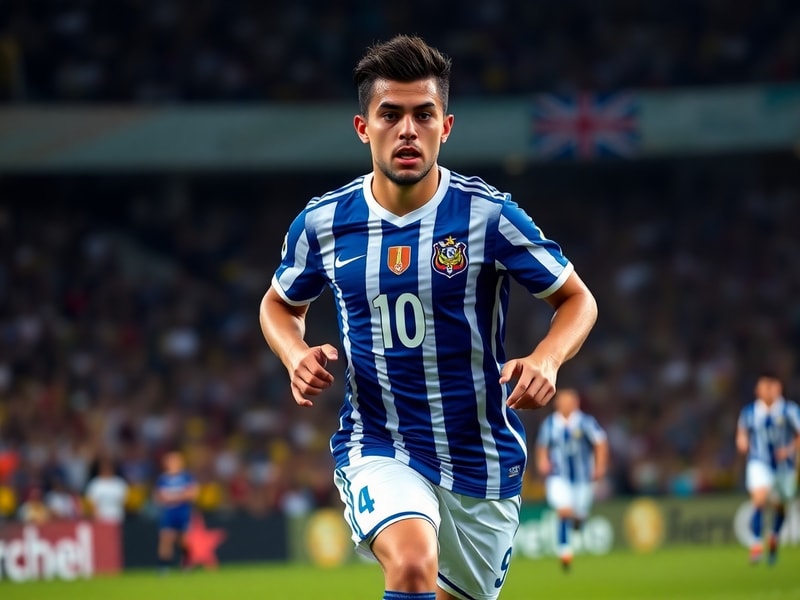
Juan Fernando Quintero’s name echoes through Colombian football history not just for his technical brilliance but for moments that redefined what it means to play with flair under pressure. Born on May 18, 1993, in Tumaco, a coastal town often overshadowed by conflict, Quintero found his rhythm on the dusty pitches of Cartagena before rising through the ranks of Envigado’s youth system. His journey from a young prodigy in Colombia’s Pacific coast to a pivotal figure in European football reads like a blueprint of persistence, creativity, and audacity.
Quintero’s breakthrough came during the 2013 South American Youth Championship, where he captained Colombia’s youth team to a runner-up finish. His dribbling, vision, and audacious free-kick technique caught the eyes of European scouts. By the end of that year, he was on a plane to Porto, beginning a career that would see him wear the shirts of Porto, Rennes, River Plate, and most recently, Shenzhen FC in China. Each stop added layers to his reputation—not just as a gifted playmaker, but as a player who thrives in the spotlight when stakes are highest.
From Tumaco to Porto: The Making of a Maestro
Quintero grew up in Tumaco, a town where opportunities were scarce and football was a pathway out. His father, a former amateur footballer, recognized his talent early and encouraged him to train rigorously. By age 12, he was playing for the youth team at Academia Cartagena, where his ability to glide past defenders and deliver pinpoint passes set him apart. Scouts from Envigado soon came calling, and by 16, he was training with Colombia’s youth national teams.
His professional debut for Envigado in 2011 at just 18 years old was met with immediate acclaim. His performances in the Categoría Primera A caught the attention of Porto’s scouting network, and in 2013, he signed a five-year contract with the Portuguese giants. The transition wasn’t seamless. Porto loaned him to Porto B for development, where he struggled initially with physicality and consistency. But by the 2014–15 season, under manager Julen Lopetegui, Quintero earned his place in the first team. His first competitive goal for Porto—a curling free-kick against Marítimo—announced his arrival in Europe with style.
It was during this time that Quintero became known for his signature move: the rabona. In a 2015 league match against Estoril, he executed the trick seamlessly while dribbling past two defenders, a moment that went viral and cemented his reputation as a player who played by his own rules. While some critics dismissed such moves as showboating, Quintero saw them as tools of expression—ways to unbalance opponents and create space where none existed.
Free-Kick Specialist: The Art of the Impossible
Quintero’s free-kick technique is among the most recognizable in modern football. His ability to strike the ball with both power and precision—often curving it around walls or dipping it under the bar—earned him comparisons to legends like Juninho Pernambucano and David Beckham. But what sets Quintero apart is his unpredictability. He rarely uses the same run-up or striking style twice, making him nearly impossible to read.
His most famous free-kick came in the 2018 FIFA World Cup qualifiers against Bolivia, where a 40-yard strike found the top corner, leaving goalkeeper Guillermo Viscarra frozen. That goal became a symbol of Colombia’s resurgence under José Pékerman and solidified Quintero’s status as a national hero. He has since scored in multiple World Cup qualifiers and Copa América matches, often in high-pressure situations.
Quintero’s free-kick philosophy blends physics and instinct. He studies the goalkeeper’s positioning, the wind’s direction, and the position of the defensive wall before deciding on trajectory. His strikes often dip late, making them nearly untraceable for goalkeepers. While some purists argue that too many of his free-kicks occur from outside the 25-yard line, Quintero’s confidence and success rate—over 30% from long range—speak to his mastery.
In an era where set-piece specialists are prized, Quintero stands out not just for his accuracy, but for his ability to deliver when the moment demands spectacle. His free-kicks aren’t just goals—they’re performances, designed to entertain as much as they are to score.
The River Plate Chapter: Redemption and Reinvention
After a turbulent spell at Porto—marred by injuries, tactical shifts, and limited playtime—Quintero sought a fresh start. In 2019, he joined River Plate on a free transfer, reuniting with former Porto teammate Enzo Pérez and manager Marcelo Gallardo. The move was seen as a gamble by some, but Quintero thrived in Gallardo’s system, which emphasized creativity and fluid attacking play.
His time at River Plate became a masterclass in reinvention. Initially deployed as a traditional attacking midfielder, Quintero adapted to a more defensive role, dropping deep to link play and press opponents. This tactical flexibility highlighted his football IQ and work rate—traits often overshadowed by his flair.
Quintero’s most defining moment at River came in the 2020 Copa Libertadores. In the Round of 16 against LDU Quito, he scored a crucial penalty in a 3–0 victory, then provided the assist for Rafael Santos Borré’s goal in the second leg. His performance in the quarterfinal against Argentinos Juniors, where he scored and assisted again, earned praise from pundits and fans alike. River went on to reach the semifinals, with Quintero playing a central role in their resurgence.
During his two seasons at River, Quintero scored 14 goals and provided 12 assists in 70 appearances. He also became a fan favorite for his humility and connection with the club’s passionate supporters. His ability to rise in big games—especially in the Libertadores, South America’s most prestigious club competition—reaffirmed his reputation as a player who delivered when it mattered most.
Style, Legacy, and the Future
Quintero’s playing style defies easy categorization. He is neither a pure playmaker nor a box-to-box midfielder, but a hybrid who blends the vision of a No. 10 with the tenacity of a No. 8. His dribbling is unpredictable, his passing ranges from short, incisive exchanges to long diagonals that split defenses, and his creativity often borders on the theatrical. Yet, he is not just a showman. His defensive contributions, though inconsistent, have improved with experience, and his work rate in high-pressing systems has made him a valuable asset.
Off the pitch, Quintero is known for his calm demeanor and thoughtful approach to interviews. He rarely engages in controversy, preferring to let his performances speak. His social media presence is minimal, focused mainly on football and his foundation, which supports youth development in Colombia’s Pacific coast. This humility has endeared him to fans, especially in a sport often dominated by larger-than-life personalities.
Looking ahead, Quintero’s career trajectory remains intriguing. At 31, he is past his prime in European football, but his experience and skill set make him valuable in leagues where creativity is prized. His recent move to Shenzhen FC in China’s Super League reflects this reality—a chance to mentor younger players while still competing at a high level. While some may see this as a step down, it’s a pragmatic move that allows him to extend his career while staying relevant.
For Colombian football, Quintero represents a bridge between generations—linking the flair of players like James Rodríguez and James’ successor, Luis Díaz. His ability to inspire young players in Colombia to embrace creativity and individuality is as important as his on-field contributions. In a country where football is often seen through the lens of physicality and grit, Quintero’s artistry offers a refreshing counterpoint.
As he continues his career, the question remains: can Quintero rediscover the magic of his Porto and River Plate days? While he may never regain the explosive form of his youth, his experience, technique, and mental resilience suggest he still has value to offer. For fans of beautiful football, his presence on the pitch is always a reminder that the game, at its best, is as much about art as it is about athleticism.
One thing is certain: Juan Fernando Quintero will be remembered not just for his goals or assists, but for the moments he made us believe in the impossible—one dazzling play, one audacious free-kick, at a time.