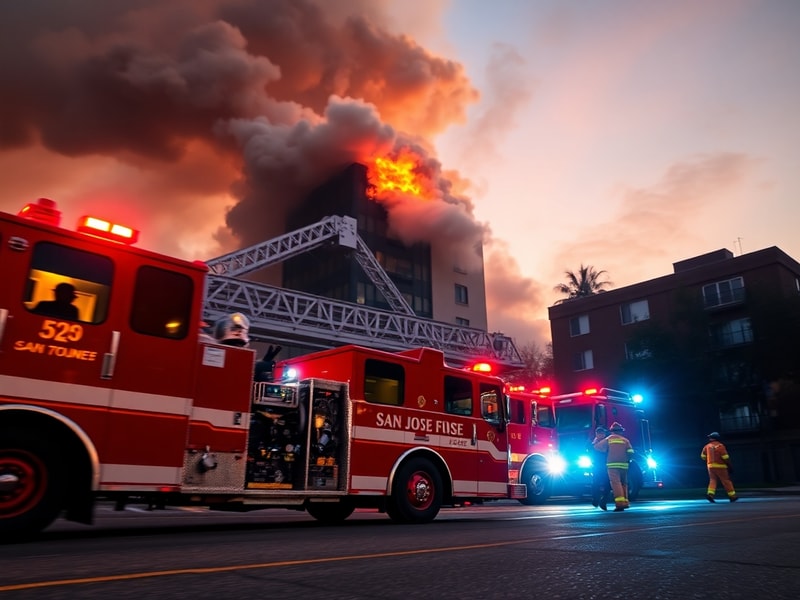
San Jose Fire Department: Innovation, Challenges, and Service
The San Jose Fire Department stands as a cornerstone of public safety in one of California’s most dynamic cities. With a history stretching back to the late 19th century, the department has evolved from a volunteer force to a modern, professional organization equipped to handle everything from high-rise fires to hazardous material incidents. Today, it employs over 600 personnel and operates from 21 strategically located fire stations across the city. These stations are not just response hubs; they are community anchors, providing fire prevention education, CPR training, and disaster preparedness workshops to residents year-round.
San Jose’s growth has brought unique challenges. The city’s booming tech industry has driven population density upward, straining infrastructure and increasing demand for emergency services. At the same time, wildland-urban interfaces in the surrounding hills create year-round fire risks, especially during dry seasons. The San Jose Fire Department has responded by implementing advanced fire modeling tools, expanding wildfire response capabilities, and integrating real-time data analytics into its operations. These efforts reflect a broader shift toward data-driven emergency response across urban fire departments nationwide.
Response Times and Operational Challenges
Response time remains a critical metric for any fire department, and San Jose is no exception. The department aims for an average response time of under five minutes in urban areas and under ten minutes in suburban and wildland zones. While these targets are often met, factors like traffic congestion, especially during rush hour, and the rapid spread of fires in high-density neighborhoods can test the system. During the 2020 CZU Lightning Complex fires, for example, San Jose units were stretched thin supporting mutual aid efforts across Santa Clara County, highlighting the need for regional coordination.
Technology plays a growing role in managing these challenges. The department utilizes a computer-aided dispatch system that prioritizes calls based on severity and proximity. GPS-enabled apparatus tracking ensures commanders can deploy the nearest available unit, even as traffic patterns shift. Still, staffing shortages remain a concern. Like many departments across the state, San Jose has faced recruitment and retention challenges, exacerbated by the competitive tech job market and the physical and mental demands of firefighting. The department has responded with targeted recruitment campaigns, partnerships with local colleges, and wellness programs designed to support mental health and resilience.
Innovation and Community Engagement
Innovation is not limited to response technology. The San Jose Fire Department has pioneered several community-focused initiatives that redefine the role of a municipal fire department. One standout program is the Fire Safe Council, a collaboration with local environmental groups and homeowners to reduce wildfire risks through defensible space education and vegetation management. Another is the Fire Explorer Post, a youth development program that introduces teenagers to fire science, emergency medicine, and leadership skills. Graduates often go on to careers in public safety, creating a pipeline of local talent.
The department also leads in disaster preparedness. In partnership with the American Red Cross and Santa Clara County, it offers free emergency supply distribution events and hosts annual disaster drills simulating earthquakes, fires, and public health crises. These drills not only test the department’s readiness but also empower residents to take ownership of their safety. Such initiatives underscore a broader trend: modern fire departments are no longer just reactive forces but proactive partners in community resilience.
Notable Incidents and Lessons Learned
Every major incident leaves a lasting imprint on a fire department. In San Jose, the 2017 Coyote Creek flood stands out. Torrential rains overwhelmed local waterways, leading to widespread flooding that displaced hundreds of residents and caused millions in property damage. The San Jose Fire Department coordinated evacuations, conducted water rescues, and managed emergency shelters in collaboration with city agencies. The event revealed vulnerabilities in drainage infrastructure and prompted a citywide review of flood mitigation strategies. It also reinforced the importance of interagency communication, a lesson applied during subsequent emergencies like the 2023 atmospheric river storms.
Another critical incident was the 2021 Cal Fire warehouse fire in San Jose’s Evergreen district. The blaze destroyed a large commercial facility and threatened nearby residential areas. San Jose units worked alongside Cal Fire and mutual aid partners for over 24 hours, deploying air support and structural firefighting teams. The incident highlighted the need for better pre-planning for commercial structures and led to the creation of a citywide high-hazard industrial inventory. These experiences demonstrate how real-world challenges drive continuous improvement in fire department operations.
Looking Ahead: The Future of Firefighting in San Jose
The road ahead for the San Jose Fire Department is shaped by both opportunity and uncertainty. Climate change is expected to increase the frequency and intensity of wildfires and heatwaves, placing greater demands on emergency services. At the same time, advances in drone technology, wearable sensors, and predictive analytics promise to enhance situational awareness and response precision. The department is exploring the use of drones equipped with thermal imaging for search and rescue and wildfire detection, as well as AI-driven analytics to predict high-risk areas during red flag warnings.
Sustainability is also on the agenda. The department has committed to reducing its carbon footprint by transitioning to electric and hybrid emergency vehicles and installing solar panels at fire stations. These efforts align with the city’s broader climate action plan and reflect a growing recognition that emergency services must lead by example in environmental stewardship. However, funding remains a persistent challenge. While federal and state grants provide critical support, local budget priorities often compete for resources, especially in a city balancing public safety with housing, education, and infrastructure needs.
Despite these pressures, the San Jose Fire Department remains a source of pride for the community. Its personnel embody the values of service, courage, and innovation that define the city itself. Whether responding to a multi-alarm blaze, teaching a child how to stop, drop, and roll, or preparing neighborhoods for the next big disaster, the department’s work is both visible and vital. As San Jose continues to grow and change, so too will its fire service—adapting, learning, and leading with a steadfast commitment to protecting lives and property.
For those interested in learning more about fire safety programs or how to get involved, visit the Safety Tips section on Dave’s Locker. You can also explore how fire departments collaborate with local organizations by checking out the Community Events page.