2026 World Cup Bracket Breakdown: How 48 Teams Will Reshape Football
Expanding the Dream: How the 2026 FIFA World Cup Bracket Will Reshape the Global Tournament
The FIFA World Cup has always been more than a tournament—it’s a quadrennial spectacle that unites nations, ignites rivalries, and crowns legends. With the 2026 edition co-hosted by the United States, Canada, and Mexico, the World Cup bracket will undergo its most dramatic expansion in history. From 32 to 48 teams, the tournament’s structure will evolve, creating new pathways to glory and reshaping the competitive landscape for decades to come. But what does this expansion really mean for players, fans, and the future of international football?
The decision to increase the number of teams wasn’t made lightly. FIFA sought to grow the game globally, giving smaller federations a chance to shine on the world’s biggest stage. This move also reflects the growing popularity of soccer in non-traditional markets, where the dream of World Cup qualification has historically felt unattainable. By doubling the field, FIFA aims to inspire the next generation of footballers while deepening the tournament’s narrative diversity.
Yet, with opportunity comes complexity. The 2026 bracket will introduce new dynamics—more matches, more travel, and more unpredictability. How will traditional powerhouses adapt? Which underdog teams could emerge as dark horses? And will the expanded format dilute the prestige of World Cup glory? These questions loom large as the tournament approaches, making the 2026 edition one of the most anticipated—and debated—in football history.
Breaking Down the 2026 World Cup Format and Key Changes
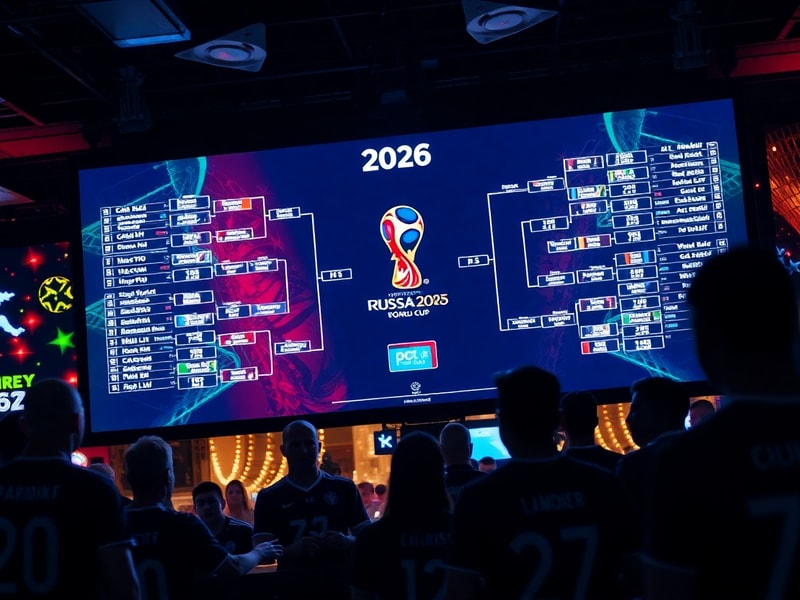
The 2026 World Cup will feature 48 teams divided into 12 groups of four. The top two from each group will advance, along with the eight best third-place finishers in a dramatic crossover stage. This hybrid format ensures competitive balance while maximizing fan engagement. Unlike past tournaments where early exits could feel anticlimactic, the expanded format guarantees more matches and fewer dead rubber games.
Another major change is the increase in total matches—from 64 in 2022 to 104 in 2026. This means more action for viewers and more revenue for FIFA, but it also raises concerns about player fatigue and fixture congestion. With clubs already struggling to manage their schedules, the World Cup’s expanded footprint could strain already tight calendars.
Here are the key structural adjustments to the 2026 World Cup bracket:
- 12 groups of four teams: Each group will play three matches, with the top two advancing plus eight best third-place teams.
- Round of 32: A new knockout stage replaces the Round of 16, increasing the number of single-elimination matches.
- More knockout drama: With nearly twice as many knockout games, the tournament’s later stages promise higher stakes and unpredictability.
- Group-stage parity: The eight best third-place teams get a second chance, reducing the likelihood of early upsets eliminating strong contenders.
The format also introduces strategic challenges. Teams that advance as a best third-place finisher may have faced weaker opposition, potentially facing a tougher knockout opponent. Meanwhile, group-stage specialists—teams built to grind out results—could thrive in this system. The expanded bracket rewards consistency but also demands adaptability.
The Broader Implications: Who Benefits—and Who Doesn’t?
The 2026 expansion isn’t just about more teams—it’s about reshaping football’s power structure. Traditional giants like Brazil, Germany, and Argentina will still enter as favorites, but the path to the final will be far more unpredictable. Smaller nations such as Jamaica, Iraq, or Cape Verde, which have never qualified for a World Cup, now have a real shot at making an impact. This democratization of opportunity could lead to stunning upsets and inspire football development in underserved regions.
However, the expanded format also risks diluting the tournament’s prestige. The World Cup has long been defined by its exclusivity—a 32-team field meant only the best could compete. Now, with nearly half the field guaranteed a spot, some argue the competition’s integrity could be compromised. Will a World Cup quarterfinal featuring a team that barely scraped through a weak group still carry the same weight?
Financially, the changes are a win for FIFA. More teams mean more sponsorships, broadcasting deals, and merchandise sales. Host nations benefit too, as the tournament spreads across three countries, boosting local economies and infrastructure projects. But for purists, the soul of the World Cup—its intensity, its scarcity—may feel diluted. The tournament risks becoming less about crowning a champion and more about participation trophies.
Another concern is player welfare. With more matches and less recovery time, injuries and burnout could rise. Clubs may push back harder against releasing players, especially stars who are crucial to their domestic campaigns. The 2026 World Cup could become a flashpoint in the ongoing debate between club and country, forcing FIFA to reconsider how it balances the demands of the global game.
What to Watch: Dark Horses and Potential Storylines
With 48 teams in the mix, the 2026 World Cup is a breeding ground for new narratives. Here are a few storylines to keep an eye on:
- Africa’s Moment: With nine spots available, African teams like Morocco, Senegal, and Nigeria could finally break through deep into the tournament. Morocco’s historic 2022 quarterfinal run proved the continent’s potential—2026 could be their coming-of-age moment.
- Concacaf’s Rise: As co-hosts, the U.S., Mexico, and Canada will be under immense pressure. But could Costa Rica, Jamaica, or even Panama emerge as regional surprises?
- Asia’s Resurgence: Japan and South Korea have long been Asia’s flagbearers, but teams like Australia and Qatar could push for deeper runs, especially with expanded spots.
- Europe’s Depth Test: With 16 spots, Europe will have to navigate a brutal qualification process. Could a traditionally strong nation like Italy or the Netherlands miss out, paving the way for an underdog like Turkey or Ukraine?
- New Rivalries: The expanded format means more cross-confederation clashes. Imagine a Group Stage showdown between Argentina and Saudi Arabia, or a knockout clash between the U.S. and England—these matchups could define new rivalries for generations.
One of the most intriguing possibilities is the rise of a first-time champion. With so many new teams in the mix, the path to the final could be wide open. A team like Morocco, riding a wave of continental pride, or a dark horse like Canada, playing on home soil, could capture the world’s imagination. The 2026 World Cup isn’t just about crowning a champion—it’s about writing new legends.
For American fans, the tournament also represents a chance to elevate the sport’s profile in North America. With matches spread across 16 cities—from Los Angeles to Toronto to Mexico City—the World Cup will feel like a true continental celebration. This could be the moment soccer finally cements its place alongside the NFL, NBA, and MLB as a major American sport.
Looking Ahead: The Legacy of the 2026 Bracket
The 2026 World Cup bracket is more than a logistical adjustment—it’s a statement about the future of football. By expanding the field, FIFA is betting on growth, inclusivity, and spectacle. But whether this gamble pays off depends on how the tournament is received. Will fans embrace the new format, or will they long for the days of 32-team drama?
One thing is certain: the 2026 World Cup will be a proving ground for football’s global ambitions. If the expanded format succeeds, it could pave the way for even greater changes—like a permanent club World Cup or regional qualifiers for expanded tournaments. But if it stumbles, FIFA may face pressure to revert to a smaller, more exclusive competition.
For now, the focus is on the bracket. The draw in late 2025 will set the stage for one of the most unpredictable tournaments in history. With 48 teams, 104 matches, and a world watching, the 2026 World Cup promises to be a spectacle unlike any other. And for the players, the fans, and the dreamers, that’s reason enough to believe in magic.
For more insights into the evolving world of soccer coverage, check out our Sports and Analysis sections on Dave’s Locker.