Clarence House in London stands as one of the most recognizable royal residences in the United Kingdom, its stately façade and storied past drawing visitors from around the world. Located just off The Mall in Westminster, this elegant building has been home to generations of the British royal family, serving as both a private dwelling and a symbol of continuity in an ever-changing monarchy. While Buckingham Palace often steals the spotlight, Clarence House offers a quieter, more intimate glimpse into the lives of the royals who have shaped modern Britain.
A Royal Residence with a Rich History
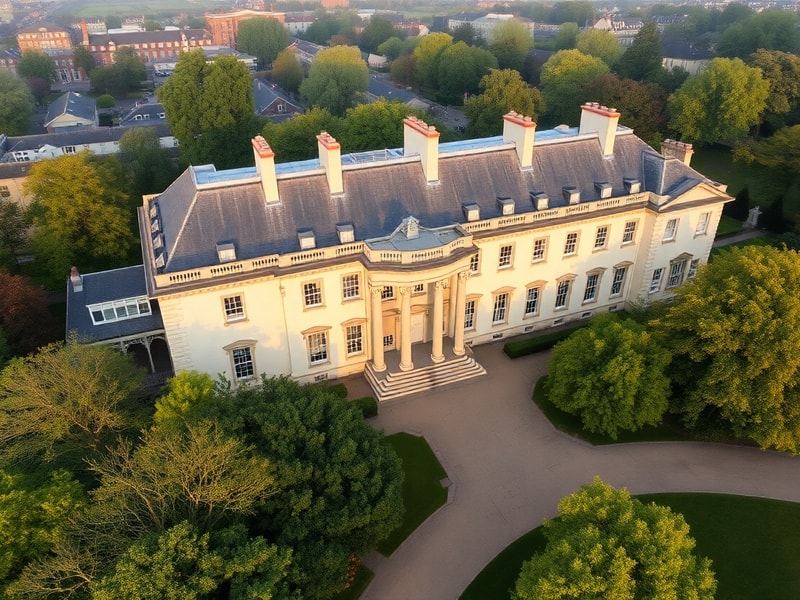
Clarence House was originally built between 1825 and 1827 as the private residence of Prince William Henry, Duke of Clarence, who later became King William IV. Designed by architect John Nash, the building is a prime example of the Regency architectural style, characterized by its cream-colored stucco, symmetrical design, and ornate detailing. The house was later inherited by Queen Victoria’s mother, the Duchess of Kent, before becoming the home of Queen Elizabeth The Queen Mother after World War II.
In 2003, Clarence House was designated as the official residence of Prince Charles (now King Charles III) and his then-wife, Camilla, the Duchess of Cornwall. The couple lived there until 2022, when Charles ascended to the throne following the death of Queen Elizabeth II. Since then, the building has been the London home of Prince William and Catherine, the Princess of Wales, along with their three children. The transition of occupants reflects the evolving role of Clarence House within the monarchy—a place where tradition and modernity intersect.
Unlike Buckingham Palace, which is primarily a ceremonial and administrative hub, Clarence House retains a distinctly personal character. Its smaller scale and residential layout make it a more accessible symbol of royal life, offering a contrast to the grandeur of the monarch’s official duties. This duality—public significance and private intimacy—has helped Clarence House maintain its relevance in an era where the British monarchy faces both admiration and scrutiny.
Architectural Grandeur and Design
The architectural significance of Clarence House cannot be overstated. Nash’s design incorporates elements of neoclassical and Georgian styles, with a harmonious blend of formality and livability. The house’s exterior features tall, narrow windows, a prominent portico, and a slate roof punctuated by dormer windows. Inside, visitors are greeted by a sweeping staircase, intricate plasterwork, and a series of reception rooms adorned with period furnishings and artworks from the Royal Collection.
One of the most striking features of Clarence House is the garden, which extends from the rear of the property. Though modest in size compared to the sprawling grounds of Buckingham Palace, the garden is meticulously maintained and serves as a private retreat for the royal family. During the summer months, it occasionally hosts small gatherings and official events, though access is strictly limited to preserve the family’s privacy.
The interior of Clarence House reflects the tastes and personalities of its occupants. When Prince Charles and Camilla resided there, the house was redecorated to incorporate a mix of antique pieces and contemporary art, including works by Lucian Freud and John Piper. The result was a space that felt both historic and lived-in, a reflection of the couple’s commitment to preserving heritage while embracing modern living. Today, Prince William and Catherine have continued this tradition, blending historical elements with family-friendly comforts to create a home that balances royal duties with personal warmth.
A Window into Modern Monarchy
Clarence House serves as more than just a residence; it is a stage where the British monarchy performs its role in the 21st century. Unlike the more austere Buckingham Palace, Clarence House offers a glimpse into the private lives of the royals, from family dinners to diplomatic receptions. This accessibility has helped humanize the monarchy at a time when public trust in institutions is increasingly fragile.
The house has been the site of numerous significant events, including the announcement of Prince William and Catherine’s engagement in 2010. The couple’s decision to stage the press conference at Clarence House rather than Buckingham Palace was seen as a deliberate move to emphasize their modern approach to royal life. Similarly, the building has hosted charitable events, receptions for dignitaries, and even informal gatherings with members of the public, reinforcing its role as a bridge between the monarchy and the people it serves.
Culturally, Clarence House has also become a symbol of continuity and change within the royal family. Prince William and Catherine’s decision to reside there, rather than at more traditional palaces like Kensington Palace, signals a generational shift. The couple has embraced social media and public engagement in ways that previous generations of royals did not, using Clarence House as a backdrop for carefully curated moments that resonate with younger audiences. Whether it’s a family photo in the garden or a live-streamed event, the house has become a tool for modernizing the monarchy’s image.
Yet, despite its modern adaptations, Clarence House remains rooted in tradition. The house adheres to the strict protocols of royal life, from the flag flown above the building to the security measures in place. Visitors to the area often gather along the perimeter, hoping for a glimpse of a royal figure or a glimpse into the world of modern monarchy. This juxtaposition—of public fascination and private seclusion—is perhaps the most defining characteristic of Clarence House today.
Visiting Clarence House: What to Expect
While Clarence House is not typically open to the public, it does open its doors for a limited number of weeks each summer as part of the annual Travel season. During these open days, visitors can explore the lavish State Rooms, which are decorated with priceless artworks and historical artifacts. The tour offers a rare opportunity to step inside one of London’s most exclusive residences, providing insights into the daily lives and official duties of the royal family.
For those planning a visit, here are a few key details to keep in mind:
- Location: Clarence House is situated on The Mall, just a short walk from Buckingham Palace and St. James’s Palace.
- Opening Times: The house is open to the public for approximately five weeks each summer, typically in August and September. Advance booking is essential, as tickets sell out quickly.
- What to See: Highlights include the Morning Room, the Library, and the Garden Room, each reflecting the architectural and artistic heritage of the building.
- Nearby Attractions: Combine your visit with a stroll through St. James’s Park, a tour of the Queen’s Gallery, or a visit to the nearby Entertainment district for a full day of royal-themed exploration.
Even when closed to the public, Clarence House remains a focal point for London’s cultural landscape. Its presence on The Mall serves as a constant reminder of the city’s deep historical roots and its ongoing relationship with the monarchy. For tourists and locals alike, it represents a tangible connection to the past—and a glimpse into the future of the British royal family.
Clarence House may lack the sheer scale of Buckingham Palace or the ancient history of Windsor Castle, but its significance lies in its ability to adapt while preserving its essence. As the home of Prince William and Catherine, it embodies the monarchy’s efforts to remain relevant in a rapidly changing world. Whether viewed from the outside by curious onlookers or experienced firsthand during an open day, Clarence House offers a unique perspective on the enduring—and evolving—story of the British royal family.