FIFA World Cup Standings: History, Trends and Global Impact
The FIFA World Cup stands as one of the most anticipated sporting events on the planet, drawing billions of viewers and uniting fans across continents in shared excitement. Every four years, nations pause to celebrate—or lament—their team’s performance in this global tournament. The sports world holds its breath as standings shift with each match, leaving fans to dissect every goal, penalty, and upset. Beyond the thrill of competition, the World Cup reflects broader cultural and social narratives, from underdog triumphs to the pressure of legacy. Understanding the standings isn’t just about who wins or loses; it’s about the stories behind the numbers and how they ripple through nations and communities.
The Evolution of World Cup Standings: From 1930 to Today
The FIFA World Cup began in 1930 with just 13 teams, a far cry from today’s expansive 32-team format. Early standings were simple: the top two teams in each group advanced, with knockout rounds determining the champion. Uruguay claimed the first title in a competition that was, at the time, dominated by South American and European teams. By 1950, the standings introduced a round-robin group stage, a format that has endured with only minor adjustments.
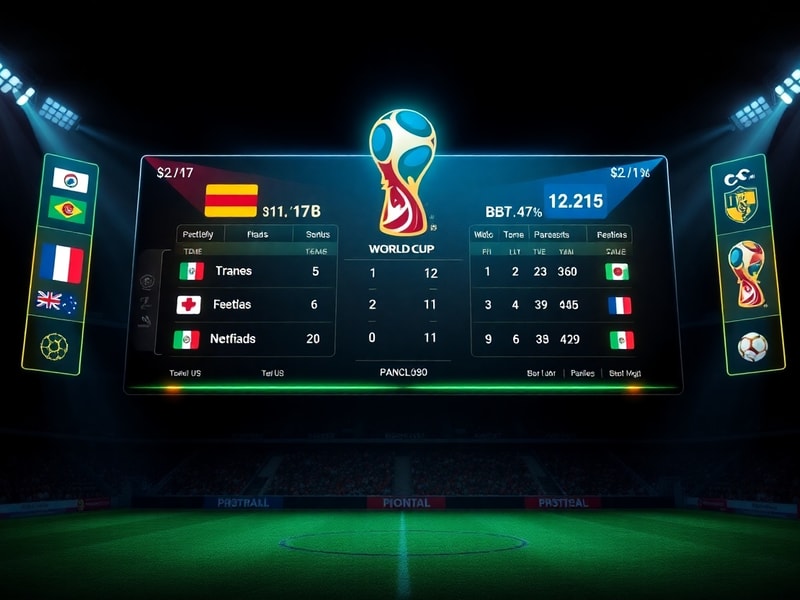
The 1970s and 1980s saw the rise of new footballing powerhouses. Brazil’s 1970 World Cup win cemented their legendary status, while Italy’s defensive mastery in 1982 showcased tactical evolution. The introduction of the sports ranking system in the 1990s added another layer of complexity, giving teams a global benchmark beyond tournament results. Today, standings are calculated using a points system that considers wins, draws, and goals scored, but historical context still shapes how fans and pundits interpret success.
One of the most striking changes in recent decades has been the geographic expansion of World Cup participation. Teams from Africa, Asia, and North America have climbed the standings, challenging the traditional dominance of Europe and South America. This shift mirrors broader geopolitical and economic trends, where emerging nations assert themselves on the global stage—not just in football, but in culture and economics.
How Standings Reflect Global Football Dynamics
World Cup standings are more than a scoreboard; they reveal the shifting balance of power in international football. Consider the 2014 tournament, where Germany’s 7-1 demolition of Brazil sent shockwaves through the standings and the footballing world. That result wasn’t just a statistical anomaly—it underscored Brazil’s vulnerabilities while highlighting Germany’s tactical sophistication. Such moments redefine national narratives, turning losses into learning experiences and victories into sources of national pride.
Standings also spotlight the unpredictability of football. Unlike domestic leagues, where consistency often wins championships, the World Cup thrives on chaos. Iceland’s 2016 European Championship run and their 2018 World Cup appearance demonstrated how smaller nations can disrupt the status quo. Their standings defied expectations, proving that passion and teamwork can rival financial investment. This unpredictability is why the World Cup remains unmatched in sports—a single tournament can rewrite a nation’s footballing identity.
The standings also serve as a barometer for tactical innovation. Spain’s dominance in 2010 with tiki-taka football revolutionized the game, while France’s 2018 triumph showcased the power of youth development and multicultural talent. These trends trickle down to domestic leagues, influencing how teams scout and train players. The World Cup isn’t just a competition; it’s a laboratory for football’s future.
Culturally, the standings foster a sense of unity and division. Fans rally behind their teams, but rivalries—whether between neighbors like Argentina and Brazil or historic foes like England and Germany—add layers of intensity. The standings become a reflection of national identity, with victories celebrated as collective achievements and losses felt as personal failures. In countries where football is religion, the standings aren’t just numbers; they’re a pulse of the nation.
Key Factors That Influence Standings
Several factors determine how teams climb or fall in the World Cup standings, and they extend beyond pure talent. Preparation is critical: teams that invest in months of training, tactical analysis, and mental conditioning often outperform those that rely on raw ability alone. The 2018 champions, France, exemplified this approach, blending homegrown talent with strategic brilliance to secure their second title.
Weather and altitude also play unexpected roles. Teams like Mexico and Chile have historically struggled in high-altitude venues, while European sides often falter in the sweltering heat of the Middle East or South Asia. Standings can shift dramatically based on a team’s ability to adapt to these conditions, turning what seems like a simple variable into a decisive factor.
Injuries and suspensions can derail even the most promising campaigns. The absence of a key player—like Brazil’s Neymar in 2014 or Argentina’s Lionel Messi in 2016—can redefine a team’s trajectory. Standings, then, are as much about resilience as they are about skill. Coaches must navigate these challenges while keeping morale high, a balancing act that separates good teams from great ones.
Another critical element is the draw. Teams in weaker groups often advance with fewer points than those in competitive pools. The 2022 World Cup saw Saudi Arabia and Japan shock the world by topping their groups, proving that a favorable draw can amplify a team’s standing. Conversely, powerhouses like Germany and Italy have crashed out early due to tough group-stage opponents, highlighting how luck intertwines with skill.
Standings Beyond the Pitch: Economic and Social Impact
The ripple effects of World Cup standings extend far beyond the pitch. Economically, a strong performance can boost tourism, merchandise sales, and even stock markets. When South Africa hosted the 2010 World Cup, the event injected billions into the local economy, creating jobs and infrastructure projects. Similarly, Japan’s 2018 quarterfinal run led to a surge in football interest across Asia, with youth participation rates climbing in its aftermath.
Socially, the standings influence national morale and identity. After Italy’s humiliating 2018 group-stage exit, debates raged across the country about the state of Italian football. The standings became a mirror, reflecting broader issues like youth development and tactical stagnation. In contrast, Morocco’s 2022 World Cup run—where they became the first African and Arab nation to reach the semifinals—sparked celebrations across the continent, reinforcing a sense of Pan-African pride.
Politically, World Cup standings can also serve as soft power tools. When Qatar hosted the 2022 tournament despite human rights controversies, the event became a platform for the country to project an image of modernity and hospitality. Standings mattered less than the spectacle itself, as the tournament’s legacy was shaped by geopolitical narratives as much as sporting achievements.
For sponsors and broadcasters, the standings determine viewership and advertising revenue. A tournament featuring underdog stories or historic rivalries draws larger audiences, making the standings a financial driver. Networks invest billions in broadcasting rights, betting their futures on the drama of each match. In this way, the standings aren’t just a reflection of skill—they’re a currency in the global sports economy.
What’s Next for World Cup Standings?
The future of World Cup standings will be shaped by expansion and innovation. The 2026 tournament will feature 48 teams, diluting the exclusivity of the competition but offering more nations a chance to shine. This change will test FIFA’s ability to maintain quality while embracing inclusivity. Standings may become more unpredictable, but they will also reflect football’s global growth.
Technology will further refine how standings are calculated and perceived. Video assistant referees (VAR) and goal-line technology have already altered the game’s dynamics, reducing controversial decisions that could sway a team’s fate. In the coming years, AI-driven analytics may predict standings with greater accuracy, though they’ll never replace the human drama that makes football unpredictable.
Culturally, the World Cup will continue to evolve as a platform for social change. Teams like the US Women’s National Team have leveraged their platforms to advocate for gender equality, while players from diverse backgrounds use their visibility to address issues like racism and immigration. The standings, then, could become a stage for activism as much as athleticism.
For fans, the future promises more access and engagement. Virtual reality broadcasts, interactive apps, and social media integration will allow supporters to follow standings in real time, immersing themselves in the action like never before. The World Cup will remain a unifying force, but its impact will spread wider and deeper into the fabric of global culture.
As the next World Cup approaches, the standings will once again take center stage. They’ll tell stories of triumph and heartbreak, of innovation and tradition, of nations united by a shared love of the game. In the end, the numbers on the board are just the beginning—the real magic lies in what they represent.