Strait of Hormuz: Why This Narrow Waterway Holds Global Power
Geopolitical Tensions and Daily Life in the Strait of Hormuz
The Strait of Hormuz remains one of the most strategically vital waterways on Earth, a narrow 21-mile passage between Oman and Iran that connects the Persian Gulf to the Gulf of Oman and, ultimately, the Arabian Sea. Roughly a third of all seaborne oil passes through these waters, making its stability a global concern. Recent escalations have shifted the strait from a routine shipping lane to a potential flashpoint with ripple effects felt far beyond the region’s borders.
For mariners and coastal communities, the strait is more than a choke point—it is a lifeline. Fishermen in Oman’s Musandam Peninsula still set out at dawn, their wooden boats laden with sardines and kingfish. Meanwhile, in Dubai’s Jebel Ali port, one of the world’s largest container terminals, workers unload cargo bound for Europe and Asia. The contrast between everyday life and geopolitical tension is stark. A single incident, whether a miscalculation or deliberate provocation, could disrupt supply chains worth billions daily.
The Recent Surge in Maritime Activity and Incidents
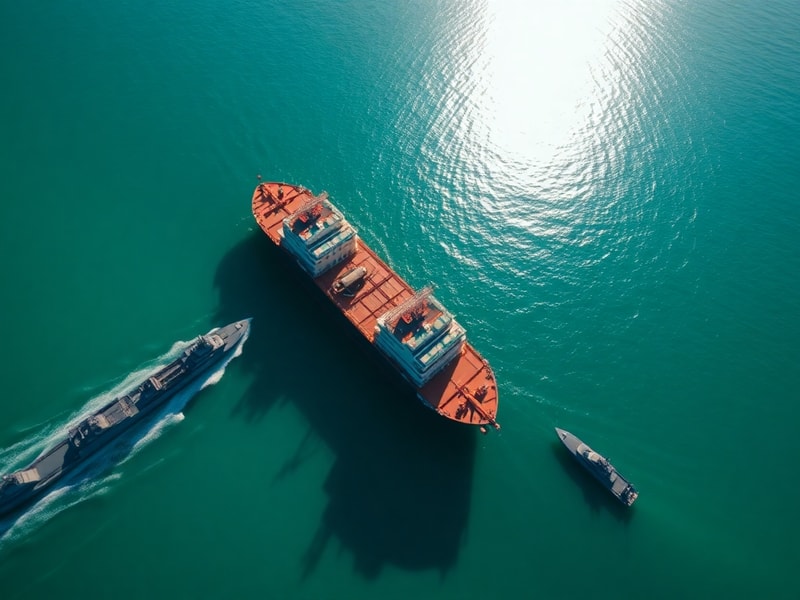
Over the past six months, the strait has seen an uptick in reported encounters between naval vessels and commercial ships. According to data from the U.S. Fifth Fleet, there were 12 verified close-quarters incidents in 2023, compared to just five in 2022. Most involved Iranian fast boats approaching commercial vessels at high speed, often within 500 meters. While Iran insists these are routine “safety checks,” international shipping companies describe them as intimidation tactics.
The incidents are not isolated. They reflect a broader pattern of brinkmanship tied to Iran’s nuclear negotiations and regional proxy conflicts. In March 2024, a Greek-flagged tanker was detained by Iranian authorities near the strait, accused of “environmental violations.” The vessel, carrying crude oil from Iraq, was released after 10 days, but the delay caused charter rates to spike by 15%. Shipping insurers have since added a 2% surcharge for vessels transiting the strait, a cost ultimately borne by consumers.
For local sailors, the risk is not hypothetical. Captain Hassan, a 20-year veteran of the Omani merchant fleet, recalls a near-miss last winter. “We were carrying Qatari LNG when two IRGC boats cut across our bow at 30 knots. Our bridge alarms sounded. We had to change course sharply and send a distress signal. It was over in minutes, but the fear lingers.” His story underscores a growing sense of vulnerability among those who depend on the strait for their livelihood.
Economic Ripples Across Three Continents
The strait’s disruptions are felt most immediately in energy markets. Brent crude prices have become increasingly sensitive to headlines from the region. On April 5, 2024, a false report about an attack on a tanker triggered a 4% intraday jump in oil futures before regulators intervened. Analysts at Business desk at Dave’s Locker noted that such volatility reflects deeper structural issues: the global oil market is tighter than it has been in a decade, with spare capacity in OPEC+ countries at historic lows.
The economic impact extends beyond oil. Container ships delayed in the strait trigger cascading delays in European ports like Rotterdam and Hamburg. Factories in Germany and Italy report shortages of Middle Eastern plastics and chemicals, forcing temporary shutdowns. Meanwhile, in India, refiners are rerouting shipments around Africa, adding two weeks to delivery times and pushing up insurance premiums.
To illustrate the scale, consider that in 2023, nearly 21 million barrels of oil passed through the strait daily. Any prolonged disruption could push global oil prices past $100 per barrel—a threshold that could tip several economies back into recession.
Small businesses, too, feel the pinch. In Fujairah, a free zone in the UAE, a family-run spice importer delayed an order from Iran after receiving warnings from insurers. “We lost a client in Qatar because we couldn’t guarantee delivery,” said the owner, who requested anonymity. “These are not just numbers on a screen—they’re families, schools, hospitals relying on timely shipments.”
Diplomatic Chess: Iran, the West, and the Role of Regional Players
The strait has become a stage for a high-stakes diplomatic drama. Iran views the waterway as part of its sovereign territory and has repeatedly threatened to close it in response to sanctions or perceived aggression. Supreme Leader Ayatollah Khamenei has stated that “any disruption to our waters will be met with decisive action.” Yet Iran’s actions are calibrated. Analysts believe Tehran seeks to pressure the West without triggering a full-scale conflict that could destabilize its own fragile economy.
The Biden administration has responded by increasing naval patrols and coordinating with allies in the Politics sphere. Earlier this year, the U.S. and UAE conducted joint exercises in the Gulf, aimed at demonstrating “freedom of navigation.” But critics argue these moves risk escalation. “Military posturing can escalate quickly,” said Dr. Leila Fathi, a non-resident fellow at the Atlantic Council. “What starts as a warning shot could spiral into something far worse.”
Regional players are caught in the middle. Saudi Arabia, despite its rivalry with Iran, has urged restraint. Crown Prince Mohammed bin Salman recently stated that “stability in the Gulf is non-negotiable.” Meanwhile, Oman, which shares the strait’s southern shore, has positioned itself as a mediator. Sultan Haitham bin Tariq has hosted multiple rounds of indirect talks between Iranian and Western officials, leveraging Oman’s neutral status.
For Oman, the stakes are personal. The country’s economy relies on the strait for port revenues and re-export trade. A prolonged closure would devastate Muscat’s financial sector. “We are the Switzerland of the Gulf,” said an Omani diplomat. “But even Switzerland cannot survive if the river runs dry.”
Cultural Echoes: How the Strait Shapes Identity and Memory
The Strait of Hormuz is not just a geopolitical symbol—it is a cultural artery. For centuries, it has been a crossroads of empires, religions, and languages. The port city of Bandar Abbas in Iran was once a favorite stop for Portuguese explorers. Today, its bazaars still sell Omani frankincense next to Iranian saffron.
In the UAE, Emirati poets often invoke the strait in their verse as a metaphor for resilience. “The sea does not forgive, but it also does not forget,” wrote one poet in a recent anthology published in Sharjah. The strait’s unpredictability has seeped into local folklore—sailors’ tales of sudden storms and phantom ships that guide or mislead travelers.
Meanwhile, in Iran, the strait is celebrated in state media as a symbol of national pride. Murals in Tehran depict Revolutionary Guard boats standing firm against “foreign aggression.” The imagery is potent: the strait as a shield, the sailors as guardians. Yet, in private, many Iranians express concern. “We are proud of our coastline, but we are also tired of sanctions and isolation,” said a Tehran-based journalist who asked not to be named. “The strait is our pride, but it is also our prison.”
For the younger generation, especially in the Gulf states, the strait is increasingly seen through a lens of opportunity rather than danger. A 2023 survey by a Dubai-based think tank found that 68% of Emiratis aged 18–35 believe the strait’s security is vital to the country’s future as a global logistics hub. Many are pursuing careers in maritime law, cybersecurity, and drone surveillance—fields directly tied to protecting the waterway.
Looking Ahead: Can Diplomacy Outpace Tension?
As the strait enters a new phase of uncertainty, the question on everyone’s mind is whether diplomacy can outpace escalation. The answer may lie not in Washington or Tehran, but in smaller capitals like Muscat and Doha. These cities have shown that even amid rivalry, quiet dialogue can yield results.
A recent proposal by Oman to establish a “maritime corridor of peace” has gained cautious support from both Iran and the U.S. The idea involves joint patrols, real-time data sharing, and a hotline for emergencies. While no breakthrough is imminent, the proposal signals that alternatives to confrontation exist.
Yet for now, the strait remains a powder keg. The next incident could come at any time—a misread radar signal, a rogue vessel, a political miscalculation. Until then, the world watches, ships sail, and economies hold their breath.
One thing is clear: the Strait of Hormuz is more than a waterway. It is a mirror reflecting the world’s hopes and fears, its progress and regress. And like all mirrors, it demands we look closely—not just at the surface, but at what lies beneath.