Pakistan vs Netherlands: When Cricket Meets Contrasting Worlds
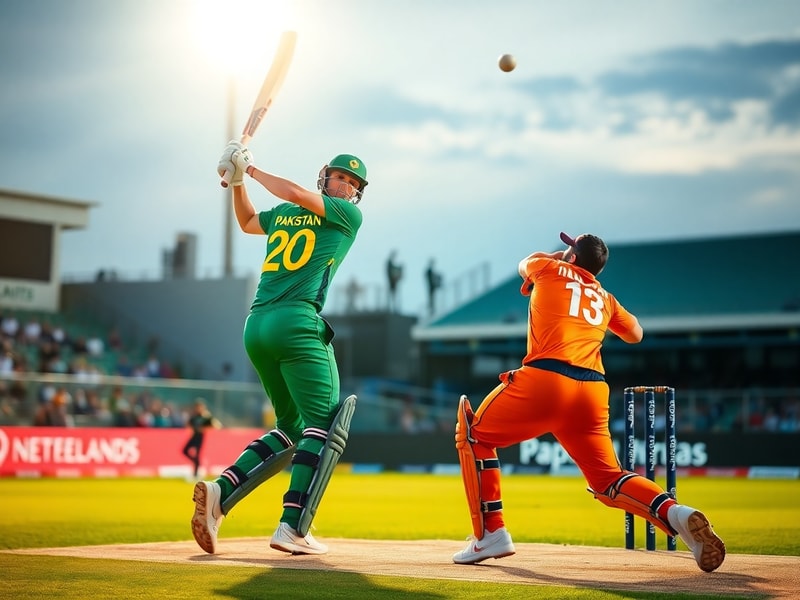
The clash between Pakistan and the Netherlands on the cricket field is more than just a match—it’s a study in contrasts. One team carries the weight of cricket’s history in the subcontinent, where the sport is woven into the national identity. The other, a smaller nation, competes with tactical precision and underdog resilience. When these two sides meet, the result is often a blend of high drama, unexpected twists, and moments that linger in the memory of fans worldwide.
A rivalry shaped by context, not competition
Unlike traditional rivalries fueled by decades of close encounters, Pakistan vs Netherlands lacks a deep-rooted history. Their meetings are relatively recent, born from the expansion of international cricket rather than cultural or political tension. Yet, the contrast in their cricketing philosophies makes every encounter compelling.
Pakistan, with its legacy of flamboyant fast bowlers and masterful spinners, often sets the tone with raw pace and spin. The Dutch, meanwhile, play a brand of cricket built on structure, discipline, and adaptability—qualities honed in associate cricket’s competitive environment. When these styles collide, the match becomes a tactical chessboard where adaptability often trumps pedigree.
In the 2023 ICC Cricket World Cup, their match was a microcosm of this dynamic. Pakistan, chasing a modest target, stumbled against disciplined bowling and smart field placements. The Dutch bowlers, led by the likes of Bas de Leede and Paul van Meekeren, exposed Pakistan’s top-order fragility. It was a reminder that in modern cricket, no team is invincible—no matter the ranking.
The cultural significance of cricket in both nations
Cricket in Pakistan is more than a sport; it’s a unifying force. After decades of political instability and social challenges, cricket serves as a source of national pride and collective hope. Matches involving Pakistan draw millions of viewers, with streets emptying and celebrations erupting at every boundary or wicket. The sport transcends class and geography, binding a diverse nation together.
In the Netherlands, cricket occupies a smaller but growing niche. While football dominates the sporting landscape, cricket has carved out a space for itself among expatriate communities and younger generations seeking new challenges. The Dutch team’s progress reflects a broader trend in associate cricket: the rise of structured development and competitive ambition beyond the traditional powerhouses.
This cultural contrast adds depth to their encounters. For Pakistan, a loss is more than a statistical setback—it’s a moment scrutinized by an entire nation. For the Netherlands, a win is validation of their growth and a step toward greater recognition in world cricket.
Key moments that defined their rivalry
Their most memorable match to date came during the 2023 World Cup in India. Chasing 282, Pakistan found themselves at 101 for 4 before a late surge brought them close. However, van Meekeren’s final spell ensured the Dutch held their nerve, winning by 8 runs in a thrilling finish. The result was historic—not just for the Netherlands, but for associate cricket as a whole.
Other key moments include:
- 2009 ICC World Twenty20: Pakistan won by 8 wickets, but the Dutch nearly pulled off an upset with economical bowling.
- 2014 ICC World Cup Qualifier: A 47-run win for Pakistan, but the Dutch showed resilience with notable individual performances.
- 2022 T20I Series: The Dutch whitewashed Pakistan in a bilateral series, signaling a shift in momentum.
These matches highlight a pattern: Pakistan’s dominance is no longer guaranteed. The Dutch have evolved from being occasional opponents to credible challengers, forcing even top-tier teams to rethink their strategies.
What the future holds for both teams
For Pakistan, the challenge is consistency. While they possess world-class talent, inconsistency has often derailed their campaigns. The board’s focus on grooming young players and improving domestic structures offers hope, but results must follow.
The Netherlands, meanwhile, is on an upward trajectory. Their qualification for major ICC events is becoming routine, and their players are increasingly sought after in global T20 leagues. With a strong domestic league and growing investment, the Dutch are inching closer to closing the gap with full members.
Looking ahead, their next encounter—whether in a World Cup, T20I series, or bilateral tour—will carry even greater weight. For Pakistan, it’s an opportunity to reassert dominance. For the Netherlands, it’s a chance to cement their place as a team that punches above its weight.
One thing is certain: cricket’s global expansion means more nations will rise to challenge the traditional giants. In that context, Pakistan vs Netherlands isn’t just a fixture—it’s a glimpse into the future of the game.