Aliyah Boston: How the WNBA Star Is Reshaping the Indiana Fever
Aliyah Boston has emerged as one of the most dominant forces in women’s basketball over the past two years. The 6-foot-5 forward from Worcester, Massachusetts, has redefined what it means to be a two-way player at the professional level. Her ability to control the paint on both ends of the floor—averaging a double-double in her rookie season—has drawn comparisons to WNBA legends like Candace Parker and Sylvia Fowles. Boston’s rise from a standout at the University of South Carolina to a top draft pick and now a cornerstone of the Indiana Fever has been anything but accidental.
What sets Boston apart isn’t just her physical tools or statistical production—it’s her adaptability. She can operate as a high-post facilitator, a back-to-the-basket scorer, or a rim-running finisher. Her basketball IQ, work ethic, and leadership qualities have made her a franchise cornerstone before she even turned 24. As the Fever continue to rebuild around her, Boston’s development will determine how quickly Indiana returns to playoff contention.
From South Carolina to the WNBA: A Seamless Transition
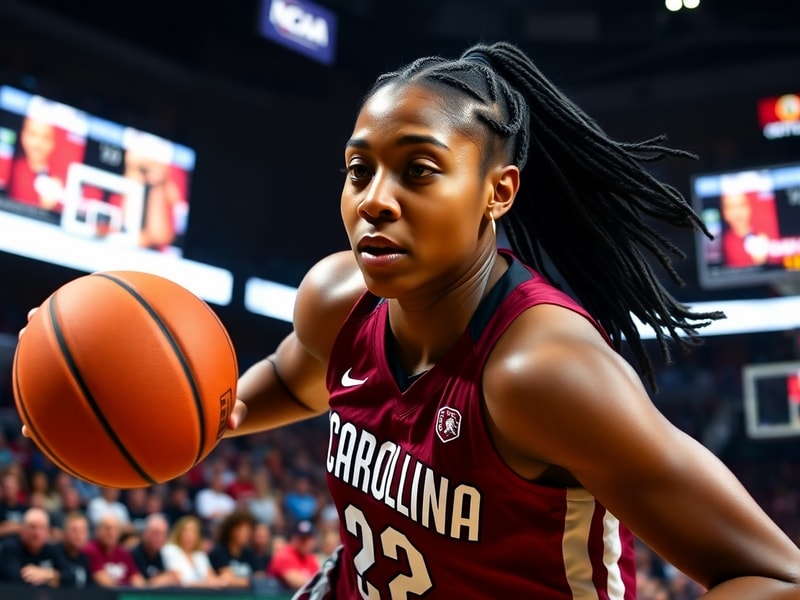
Boston’s college career at the University of South Carolina was nothing short of spectacular. Over four seasons, she became the first player in program history to record over 2,000 points, 1,000 rebounds, and 300 blocks. Her senior year was particularly historic: she led the Gamecocks to a national championship while earning Naismith Player of the Year honors and multiple national player of the year awards. Scouts took notice not just of her numbers, but of her consistency under pressure.
When the Indiana Fever selected her second overall in the 2023 WNBA Draft, expectations were sky-high. Few rookies have ever walked into the league and made an immediate impact like Boston did. In her debut season, she averaged 14.5 points, 9.4 rebounds, and 1.4 blocks per game, earning Rookie of the Year honors in a landslide. Her efficiency was staggering—she shot 58.6 percent from the field, the highest mark among all qualified rookies. What stood out most was her ability to perform in clutch moments, often carrying a young and inexperienced Fever team to close wins.
The transition from college to the pros is often difficult, especially for bigs who rely on physicality and timing. But Boston’s footwork, timing, and feel for the game translated seamlessly. She didn’t just fill a role—she redefined it. Unlike traditional post players who are one-dimensional, Boston’s passing out of the high post and ability to run the floor with guards made her an offensive hub.
The Two-Way Anchor: Defense and Leadership
Boston’s impact extends far beyond offense. On defense, she is a menace. Her 1.4 blocks per game as a rookie ranked third in the league among forwards, and her defensive rating was among the best for players her size. She uses her length and anticipation to disrupt passing lanes, alter shots, and anchor the rim. Opponents often avoid driving into the paint when she’s on the floor, knowing her presence alone changes the geometry of the game.
But perhaps most impressive is her leadership. At just 23 years old, Boston stepped into a locker room filled with young talent and unproven veterans. She led by example—through hustle, communication, and accountability. Her teammates have consistently praised her basketball IQ and willingness to mentor younger players. In a league where locker room culture can make or break a franchise, Boston’s presence has been a stabilizing force for the Fever.
Her defensive versatility allows Indiana to switch everything without fear. Coaches can deploy her against multiple positions, from point guards to centers, without sacrificing efficiency. That kind of defensive anchor is rare for a player so early in her career, and it speaks to Boston’s basketball IQ and instincts.
Looking Ahead: Can Boston Carry the Fever to Relevance?
The Indiana Fever have been one of the league’s least competitive teams over the past decade. With just two playoff appearances since 2016, the franchise has struggled to build a winning culture. But with Boston as the foundation, that narrative is beginning to shift. The Fever secured the second overall pick in the 2024 Draft, adding another young talent to pair with Boston. The front office has also made smart moves in free agency and trades, surrounding her with complementary pieces.
Boston’s development will be key to whether this rebuild succeeds. While she’s already a star, there are areas where she can improve—particularly in three-point shooting and free-throw accuracy. Expanding her range would make her virtually unguardable in the post, forcing defenses to respect her shot from the mid-range. Improving her free-throw percentage (she shot 67.6 percent in 2023) would also boost her scoring efficiency.
The Fever’s young core now includes players like Caitlin Clark, the 2024 WNBA Rookie of the Year, and several promising role players. Boston’s ability to elevate the play of her teammates—through screening, passing, and defensive rotations—will determine how quickly this group gels. If she continues to develop as a leader and two-way force, Indiana could be poised for a playoff push as early as 2025.
The Bigger Picture: Boston’s Role in the WNBA’s Future
Boston isn’t just a star in Indiana—she’s a rising superstar in the league. Her combination of size, skill, and savvy makes her a matchup nightmare for opponents. As the WNBA continues to grow in popularity and visibility, players like Boston are at the forefront of that expansion. She represents the future of the league: versatile, intelligent, and committed to excellence on both ends.
Her impact goes beyond statistics. Boston’s professionalism, humility, and dedication to the game set an example for young players entering the league. She’s active in community initiatives, particularly in her home state of Massachusetts, where she hosts youth basketball camps. Off the court, she’s become a role model for aspiring athletes who see in her a blueprint for longevity and success.
As the WNBA enters a new era—with expanded media coverage, rising salaries, and increased fan engagement—players like Boston are the faces driving that growth. Her journey from a high school phenom in Worcester to a WNBA champion in the making reflects the league’s potential to nurture homegrown talent and build sustainable franchises.
The next few years will be critical for Boston and the Fever. If she continues on her current trajectory, she could soon be mentioned among the elite players in the league. And if Indiana can build a competitive roster around her, the Fever might finally shed their reputation as a rebuilding project and return to the playoffs for the first time in nearly a decade.
For now, Aliyah Boston is writing her own story—one block, one rebound, and one leadership moment at a time.