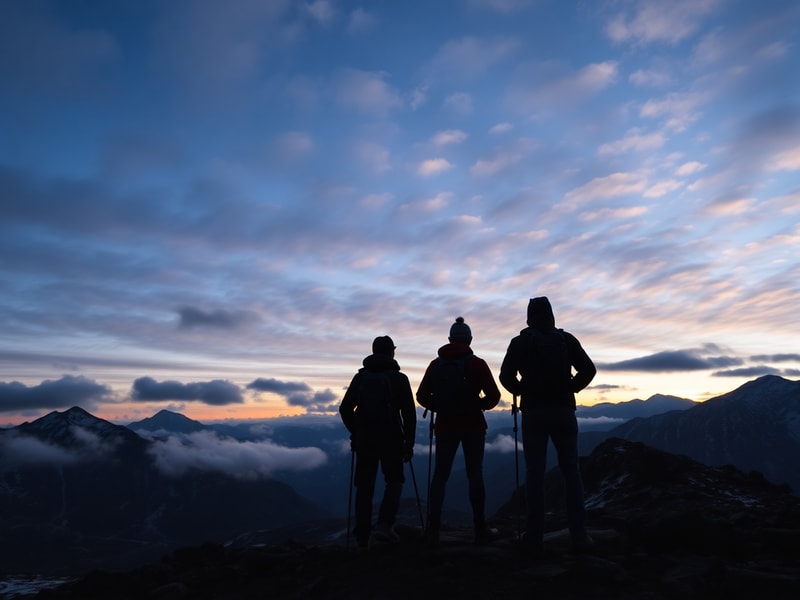
National Three Peaks Challenge: Britain’s Ultimate Endurance Test
The National Three Peaks Challenge is one of the UK’s most iconic endurance events, drawing thousands of participants each year to test their physical and mental limits. The challenge involves climbing the highest mountains in England, Scotland, and Wales—Scafell Pike, Ben Nevis, and Snowdon—within a 24-hour period. While it may sound like a simple feat of athleticism, the reality is far more demanding. The event pushes even seasoned hikers to their breaking point, with unpredictable weather, grueling ascents, and the relentless pressure of time.
Why the Three Peaks Challenge Captivates Adventurers
The allure of the Three Peaks Challenge lies in its simplicity and brutality. Unlike multi-day treks such as the West Highland Way or the Pennine Way, this event compresses three of Britain’s most demanding climbs into a single push. Scafell Pike, standing at 978 meters, is notorious for its steep, rocky terrain and sudden weather shifts. Ben Nevis, the UK’s highest peak at 1,345 meters, presents a relentless climb with a notorious “zig-zag” path that tests endurance. Snowdon, while often considered the easiest, still demands respect with its exposed ridges and unpredictable conditions.
What makes the challenge particularly appealing is its accessibility. Participants don’t need elite mountaineering skills, but they do need fitness, preparation, and a tolerance for pain. The event attracts a mix of seasoned hikers, charity fundraisers, and first-time adventurers eager to push their limits. For many, it’s not just about the physical challenge but the camaraderie and shared suffering that bonds participants together.
However, the challenge isn’t without controversy. Environmentalists argue that the sheer volume of participants—estimated at 40,000 per year—damages fragile ecosystems, particularly on Ben Nevis and Snowdon. The paths are eroded by constant foot traffic, and littering has become a persistent issue. Organizations like the John Muir Trust and local conservation groups have called for stricter regulations, including permit systems to limit numbers and mandatory guide requirements.
The Logistics: What It Really Takes to Complete the Challenge
Completing the Three Peaks Challenge in under 24 hours is no small feat. The logistics alone are daunting. Participants must move between the three peaks—covering roughly 42 miles (68 km) of hiking and 10,000 feet (3,000 meters) of ascent—while battling exhaustion, sleep deprivation, and often hypothermia-inducing conditions. Most teams tackle the challenge in a clockwise loop, starting with Ben Nevis in Scotland, then moving to Scafell Pike in the Lake District, and finishing with Snowdon in Wales.
Timing is critical. Teams must plan their route meticulously, accounting for travel times between peaks, expected hiking durations, and potential delays. A typical schedule might look like this:
- Ben Nevis (Scotland): Start at midnight with a 7-mile ascent. The climb takes 5-7 hours, depending on fitness and conditions.
- Travel to Scafell Pike (Lake District): A 4.5-hour drive from Fort William to Seathwaite Farm, the traditional starting point for the Scafell Pike ascent.
- Scafell Pike (England): A 6-mile hike with 3,000 feet of ascent. Expect 4-6 hours of climbing.
- Travel to Snowdon (Wales): A 5-hour drive from the Lake District to Llanberis, the gateway to Snowdon.
- Snowdon (Wales): A 5-mile hike with 3,000 feet of ascent. The final push takes 3-5 hours.
The cumulative effect of sleep deprivation, physical exhaustion, and mental fatigue cannot be overstated. Many participants rely on caffeine, energy gels, and sheer willpower to push through the final stages. Hypothermia is a constant risk, especially on Ben Nevis and Scafell Pike, where temperatures can plummet below freezing even in summer. Proper gear—waterproof layers, insulated gloves, and sturdy boots—is non-negotiable.
For those who fail to complete the challenge within 24 hours, the consequences can be both physical and psychological. Blisters, sprained ankles, and stress fractures are common. Some participants report long-term joint pain or post-challenge burnout. Yet, the sense of achievement for those who finish is unparalleled.
The Broader Impact: Charity, Culture, and Conservation
The Three Peaks Challenge has evolved from a niche endurance test into a cultural phenomenon, particularly as a fundraising tool. Charities benefit immensely from the event, with thousands of participants pledging sponsorships for their efforts. In 2023 alone, teams raised over £2 million for causes ranging from mental health awareness to cancer research. The challenge’s appeal to fundraisers lies in its dramatic narrative—climbing three mountains in a day is a story that resonates with donors and sponsors alike.
However, the event’s growing popularity has sparked debate about its sustainability. The environmental toll is undeniable. Paths are eroded, litter accumulates, and wildlife habitats are disrupted. In response, some local authorities have introduced restrictions, such as banning nighttime ascents on Ben Nevis or requiring permits for guided groups. The John Muir Trust, a conservation charity, has called for a complete overhaul of the event, suggesting a permit system similar to those used for high-profile treks like Mount Kilimanjaro.
There’s also a cultural shift underway. Traditionally, the Three Peaks Challenge was seen as a test of individual grit—a personal battle against the mountains. Today, it’s increasingly viewed through a collective lens, with teams emphasizing teamwork, shared suffering, and mutual support. Social media has amplified this trend, with participants posting real-time updates, GPS tracking, and post-challenge debriefs. The rise of Strava and other fitness apps has turned the event into a competitive space, with some teams racing to beat course records.
Yet, the challenge remains deeply personal for many. Veterans of the event often describe it as a life-changing experience, a moment where they confronted their limits and emerged stronger. For others, it’s a reminder of the raw power of nature—a humbling experience that puts human struggles into perspective.
Is the Three Peaks Challenge Right for You?
Before signing up, aspiring participants should ask themselves a few hard questions. First, do you have the fitness level? The challenge demands more than casual hiking; it requires months of training, including long-distance walks, hill repeats, and strength conditioning. Second, are you prepared for the mental game? Sleep deprivation, physical pain, and the relentless pressure of time can break even the most determined individuals. Third, do you understand the environmental and social responsibilities? The challenge is not just about personal achievement—it’s about respecting the mountains and the communities that call them home.
For those who are up for the test, preparation is key. Training plans should include:
- Weekly long hikes (10+ miles) with a weighted backpack
- Hill repeats to build endurance and leg strength
- Cold-weather training to acclimate to harsh conditions
- Practice hikes on similar terrain (e.g., Tryfan for Snowdon’s exposure)
- Gear testing to ensure clothing and equipment are up to the task
If you’re considering taking on the challenge for charity, research your chosen cause carefully. Some charities have faced criticism for exploiting participants’ goodwill, so opt for organizations with transparent fundraising practices. And if you’re hiking with a team, choose partners who share your commitment to safety and mutual support—this is not the time for heroics or ego.
The National Three Peaks Challenge is more than just a hike; it’s a rite of passage for adventurers, a fundraising powerhouse for charities, and a contentious topic for environmentalists. Whether you see it as a test of human endurance, a celebration of camaraderie, or a cautionary tale of over-tourism, one thing is clear: the mountains will always have the final say.