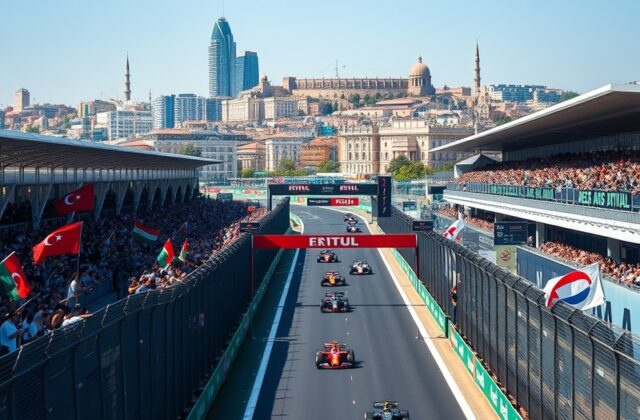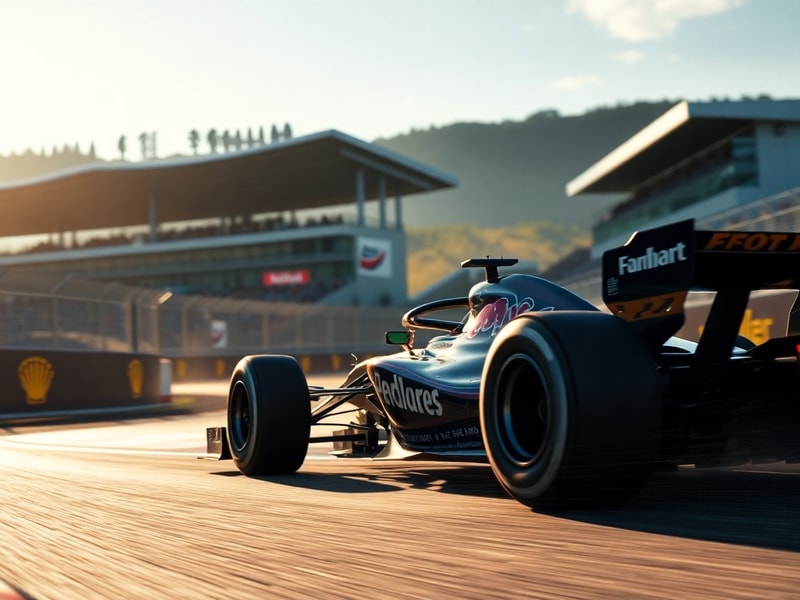
The Red Bull Ring in Spielberg has become one of Formula 1’s most unpredictable and visually dramatic venues. Nestled in the Styrian mountains of Austria, the 4.3-kilometer circuit tests drivers with its undulating topography, rapid elevation changes, and a compressed layout that often produces close racing. Unlike the sprawling, high-speed tracks of the Middle East or the technical precision of Europe’s historic circuits, the Austrian GP delivers a different kind of spectacle—one where strategy, tire management, and split-second decision-making can flip fortunes in an instant.
Since rejoining the calendar in 2014, the Austrian Grand Prix has evolved into a cornerstone of the early-season calendar. It’s a race that doesn’t just showcase speed; it reflects the cultural and commercial heartbeat of modern F1. From the raucous support for home hero Max Verstappen to the global audience tuning in to watch sprint races under floodlights, the event blends local passion with worldwide appeal. More than a sporting fixture, it’s a convergence of engineering ambition, fan culture, and the relentless pursuit of performance.
The rise of a modern classic
Formula 1’s return to Austria was never guaranteed. After a 10-year absence, the sport needed a venue that could deliver excitement, accessibility, and a compelling narrative. The Red Bull Ring—formerly A1-Ring and Österreichring—fit the bill perfectly. Its compact length and elevation gain of 65 meters create a rollercoaster effect, challenging drivers on entry and exit of almost every corner. The layout punishes mistakes, rewards aggression, and often leads to unexpected outcomes.
Historically, the Austrian GP was a staple of the late 1970s and early 1980s, known for its high-speed corners and dramatic overtakes. The modern iteration retains that spirit but adds a layer of unpredictability. The introduction of the sprint format in 2021 shifted the focus beyond Sunday’s race. Now, qualifying on Saturday determines grid positions for the main event, while Friday’s session sets the tone for the weekend. This compressed schedule has intensified the strategic chess match between teams, with tire choices and pit stop timings often deciding podiums.
The circuit’s elevation also plays a crucial role. At 677 meters above sea level, the thinner air reduces aerodynamic efficiency and engine performance. Teams must adjust their setups accordingly, making Austria a unique challenge in an era where computational fluid dynamics and wind tunnels dominate preparation. It’s a reminder that not all circuits are created equal—and that success in F1 depends on adaptability as much as raw speed.
Cultural resonance and fan passion
Austria’s Grand Prix isn’t just another stop on the calendar; it’s a cultural event. The country’s love for motorsport runs deep, rooted in a tradition that includes rallying, motorcycle racing, and endurance events. Verstappen’s dominance since 2021 has amplified this passion, turning the Red Bull Ring into a fortress of Red Bull orange. Fans flock from across Europe, camping in nearby villages, tailgating with bratwurst and beer, and filling the grandstands with chants that echo through the valley.
This fan culture stands in contrast to the sterile, corporate experiences of some modern venues. At Spielberg, the atmosphere is visceral. The “Red Bull Mobile” fan zone buzzes with energy, while the hillside overlooking Turn 3—nicknamed “Hella-Licht” for its tight right-hander—becomes a natural amphitheater for spectators. The noise of engines isn’t just heard; it’s felt, vibrating through the ground and into the chests of the crowd.
Beyond Verstappen, Austrian motorsport has produced legends like Niki Lauda and Gerhard Berger. Their legacies add weight to the event, framing it as part of a continuum of excellence. For younger fans, the Red Bull Ring represents an accessible entry point into F1. With ticket prices lower than at Monaco or Singapore, and a family-friendly environment, it’s a circuit that invites participation rather than exclusion.
This inclusivity extends to the global audience. F1’s push into new markets has made Austria a key stop in central Europe. Broadcasters in Germany, Italy, and beyond amplify the race’s reach, while streaming platforms bring it to audiences in Asia and the Americas. The result is a diverse fanbase united by a shared love of speed and spectacle.
Strategy and spectacle: Why Austria stands out
No two Austrian GPs are alike. The 2021 race saw Verstappen and Lewis Hamilton collide on the final lap, a moment that epitomized the circuit’s capacity for drama. The 2022 edition delivered a masterclass in tire management, with Charles Leclerc’s Ferrari struggling in the final stint while Verstappen capitalized. These moments aren’t flukes; they’re the product of a track where margins are razor-thin.
The circuit’s layout—featuring just 10 turns over 4.3 kilometers—lends itself to overtaking, particularly into Turn 1 and through the esses of Turns 3 and 4. DRS zones are strategically placed, but the elevation changes often negate their advantage, forcing drivers to rely on precision rather than sheer straight-line speed. This makes Austria a driver’s circuit, where skill in braking, traction, and cornering is rewarded more than raw horsepower.
Teams must also contend with the weather. The Styrian mountains create microclimates, with sudden rain showers turning the track into a lottery. The 2020 race was delayed by two days due to torrential downpours, while the 2023 sprint qualifying saw qualifying sessions disrupted by hail. Such unpredictability adds another layer of intrigue, ensuring that even the most meticulous preparation can be undone in minutes.
Below is a breakdown of key factors that define success at the Red Bull Ring:
- Tire strategy: The circuit’s abrasive surface and heavy braking zones wear tires quickly. Teams must balance pace with longevity, often running multiple compounds in a single stint.
- Engine performance: The altitude reduces turbo efficiency, so power units must compensate with efficient fuel mapping and ERS deployment.
- Cornering precision: The elevation changes mean cars experience varying levels of downforce, requiring constant throttle adjustments and steering input.
- Pit stop execution: With limited run-off areas, pit stops must be flawless to avoid penalties or collisions in the pit lane.
These elements combine to create a race that’s as much about engineering as it is about driving. It’s a reminder that Formula 1 isn’t just a sport of speed—it’s a sport of adaptation, where the best teams and drivers thrive under pressure.
The future: What’s next for F1 in Austria?
Formula 1’s contract with the Red Bull Ring extends through 2027, ensuring Austria’s place in the calendar for the foreseeable future. But the race’s role may evolve. With the sport exploring new venues in the Middle East and Southeast Asia, Spielberg’s challenge is to remain relevant. The introduction of sprint races has already shifted the narrative, but further innovation could take the experience to another level.
One possibility is enhanced fan engagement. The Red Bull Ring has experimented with “fan zones” and augmented reality experiences, but deeper integration with digital platforms could offer real-time data overlays or interactive broadcasts. For a generation raised on esports and streaming, these tools could bridge the gap between the circuit and the couch.
Another opportunity lies in sustainability. F1’s pledge to become carbon-neutral by 2030 presents a chance for Spielberg to lead by example. Electric vehicle showcases, hybrid demonstrations, and local eco-initiatives could align the race with broader environmental goals. It’s a shift that could attract new sponsors and fans while reinforcing F1’s commitment to change.
For drivers, the challenge remains constant. The Red Bull Ring will continue to test their mettle, with its unique blend of elevation, aggression, and unpredictability. Whether it’s Verstappen hunting another home victory or a rookie making their debut, the circuit ensures no two weekends are the same.
As Formula 1 navigates a period of rapid transformation, circuits like Spielberg serve as anchors. They remind us that at the heart of the sport is a relentless pursuit of excellence—one where the thrill of competition is matched only by the beauty of the challenge.