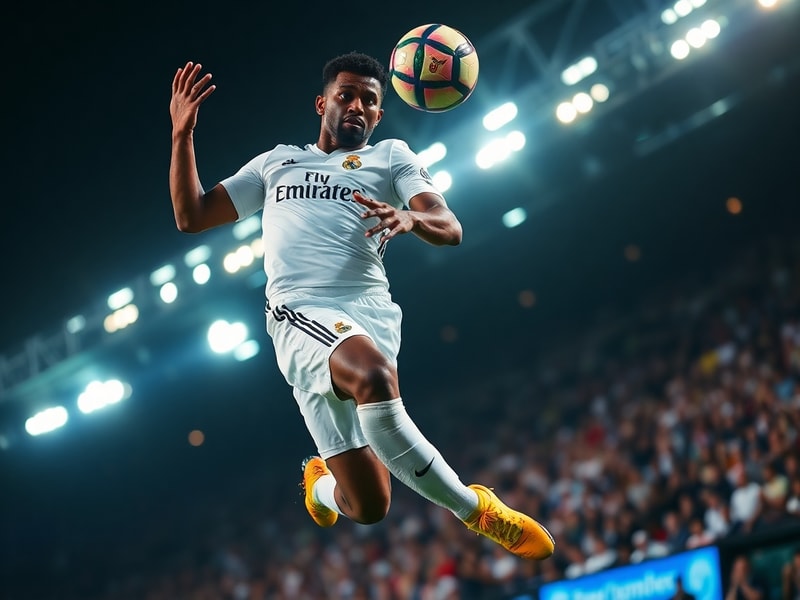
Antonio Rüdiger’s journey from a difficult upbringing in Berlin to becoming one of football’s most feared defenders is a story of resilience, tactical evolution, and quiet leadership. Few players have redefined their position as dramatically as the German international, whose blend of physical dominance, technical refinement, and unshakable self-belief has shaped modern defensive football.
From Neukölln to Stamford Bridge: A Humble Rise
Born in 1993 in Neukölln, one of Berlin’s most culturally diverse and economically challenged districts, Rüdiger’s early life was marked by hardship. Raised primarily by his mother after his father left when he was young, he often found solace on the streets, where football became an escape. His talent was undeniable, but his path was anything but conventional. He bounced between youth clubs, including Neuköllner Sportfreunde and Borussia Dortmund’s academy, before finally breaking into professional football with VfB Stuttgart in 2011.
His breakthrough came during Stuttgart’s 2016–17 Bundesliga campaign, where his commanding presence in defense caught the eye of Europe’s elite. By January 2017, Chelsea FC secured his services for a reported £27 million—a fee that would soon look like a bargain. At Stamford Bridge, Rüdiger quickly became a fan favorite, not just for his no-nonsense style but for his ability to thrive in high-pressure situations.
In an era where defenders are often judged by their ball-playing ability, Rüdiger’s early career was built on something far more primal: physicality, aggression, and an uncompromising mentality. His duels with forwards were spectacles—sometimes brutal, always intense. Yet, it was this unfiltered approach that endeared him to Chelsea supporters, who saw in him a leader who refused to back down.
Defensive Mastery: The Making of a Ballon d’Or Contender
Rüdiger’s evolution from a raw, physical defender to a complete, tactically astute player is nothing short of remarkable. By the time he lifted the UEFA Champions League trophy in 2021, his transformation was complete. His performance in the final against Manchester City, where he marshaled Chelsea’s backline with surgical precision, cemented his status as one of the world’s best defenders.
What sets Rüdiger apart is his ability to adapt. Early in his career, he was often criticized for rash challenges and a lack of composure on the ball. Yet, under managers like Thomas Tuchel, he refined his game. His passing accuracy improved, his positional discipline sharpened, and his leadership became undeniable. By 2022, he was not just a defensive rock but a key outlet for his team’s buildup play—averaging over 85% pass completion in multiple seasons.
His statistics tell only part of the story. Rüdiger’s influence is best measured in moments: a last-ditch tackle in extra time, a thunderous clearance from his own box, or a perfectly timed interception that sparks a counterattack. These are the plays that define eras, and Rüdiger has made them his trademark.
- Tackling: 2.1 successful tackles per game (2022–23 season)
- Interceptions: 1.8 per game, ranking among the top defenders in Europe
- Passing: 87% completion rate, higher than many midfielders
- Aerial Duels: 78% win rate, a dominant force in both boxes
Cultural Impact: Beyond the Pitch
Rüdiger’s influence extends beyond football. As one of the few Black German players to reach the highest echelons of the sport, he has become a symbol of representation in a league and country still grappling with diversity issues. His candid discussions about racism—including a high-profile incident involving opposition fans targeting him with monkey chants—have sparked important conversations within German football and beyond.
Off the pitch, Rüdiger is equally compelling. Known for his sharp wit and unfiltered social media presence, he challenges stereotypes about athletes being one-dimensional. Whether he’s discussing his love for fashion, his outspoken views on social justice, or his playful banter with teammates, he presents a persona that resonates with younger fans who crave authenticity.
In a sport often criticized for its conservatism, Rüdiger’s willingness to speak his mind—whether about politics, racism, or the pressures of modern football—has made him a voice for change. His 2020 Instagram post calling out systemic racism in football, paired with his decision to kneel in support of the Black Lives Matter movement, underscored his commitment to using his platform for more than just sport.
The Future: Legacy and Beyond
At 30 years old, Rüdiger is entering the prime of his career. With Real Madrid widely reported as a potential destination, questions about his next chapter loom large. Would he thrive in a league known for its technical demands and high-tempo football? Or would his physical style find a new home in Spain’s tactical landscape?
Regardless of where he plays next, Rüdiger’s legacy is already secure. He has redefined what it means to be a modern center-back—not just through his defensive prowess, but through his ability to inspire, adapt, and challenge the status quo. His journey from Neukölln’s streets to football’s grandest stages is a testament to the power of perseverance, and his impact on the game will be felt for years to come.
As football evolves, so too will the expectations placed on defenders. Yet, Rüdiger has already proven that success isn’t about fitting a mold. It’s about breaking it. Whether leading a backline, speaking out against injustice, or redefining defensive play, he is a player who refuses to be confined by convention. The world of football is richer—and more unpredictable—because of him.