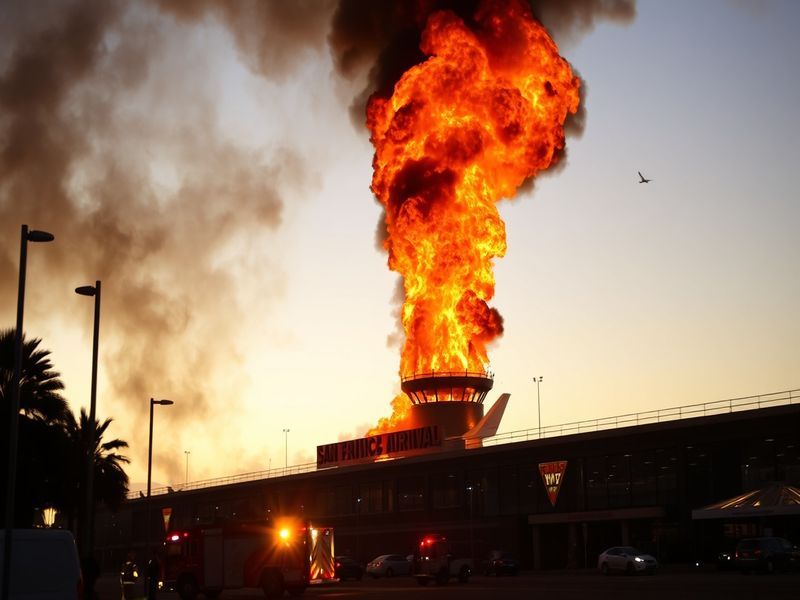
Understanding the SFO Fire Incident
San Francisco International Airport (SFO) experienced a significant fire incident on the morning of October 15, 2023, disrupting operations and drawing immediate attention from authorities and travelers alike. The fire broke out in a ground service vehicle near Terminal G, prompting an emergency response that involved multiple fire departments and airport personnel. While the blaze was contained within 90 minutes, the incident left lasting effects on flight schedules and passenger confidence.
Initial reports indicated that the fire originated from a malfunctioning lithium-ion battery in one of the airport’s service vehicles. Lithium-ion batteries have become a growing concern in aviation due to their tendency to overheat and ignite, posing risks to both ground operations and in-flight safety. The SFO fire served as another reminder of the challenges airports face in managing modern equipment and technologies.
The Immediate Response and Containment
The San Francisco Fire Department (SFFD) arrived at the scene within minutes, deploying specialized teams trained for lithium battery fires. Unlike conventional fires, lithium-ion battery fires require a different approach, often involving Class D fire extinguishers or specialized foam to prevent reignition. The rapid response prevented the fire from spreading to nearby aircraft or terminal structures, minimizing potential damage.
Airport authorities quickly initiated emergency protocols, including partial closures of Terminal G and the diversion of incoming flights to alternate gates. Passengers were evacuated from the affected area, and while no injuries were reported, the disruption caused delays for over 50 flights. The incident also triggered a review of safety protocols for ground service equipment, particularly those powered by lithium-ion batteries.
Broader Implications for Airport Safety
The SFO fire is part of a larger trend affecting airports worldwide. As airlines and ground service providers increasingly adopt electric and battery-powered equipment, the risk of lithium-ion battery fires grows. These incidents are not isolated; similar fires have occurred at airports in Los Angeles, Chicago, and London, prompting aviation authorities to reevaluate safety guidelines.
Key Challenges and Industry Response
Aviation safety experts emphasize the need for standardized training and equipment to handle lithium-ion battery fires. The Federal Aviation Administration (FAA) has issued multiple advisories, urging airports to implement stricter inspection protocols for battery-powered vehicles. However, challenges remain in enforcing these guidelines uniformly across different airports and service providers.
One of the primary concerns is the lack of awareness among ground crews about the unique risks posed by lithium-ion batteries. Traditional fire extinguishers are often ineffective, and improper handling can exacerbate the situation. Airports are now investing in specialized training programs and equipment, but the transition is gradual and varies by location.
- Increased adoption of battery-powered ground equipment: While these vehicles reduce emissions, they also introduce new fire risks.
- Lack of standardized safety protocols: Many airports lack uniform guidelines for handling lithium-ion battery fires.
- Training gaps among ground crews: Crews may not be adequately prepared to respond to battery-related incidents.
- Regulatory delays in updating safety standards: Aviation authorities are still catching up to the rapid adoption of new technologies.
Passenger Confidence and Industry Reputation
The SFO fire incident has reignited discussions about airport safety and passenger confidence. Travelers are increasingly aware of potential risks, and incidents like this can erode trust in an airport’s ability to ensure safety. While no major injuries were reported in this case, the perception of risk can have long-term effects on an airport’s reputation.
Airports like SFO have responded by enhancing transparency, providing real-time updates during emergencies, and conducting post-incident reviews to reassure passengers. However, the challenge lies in balancing operational efficiency with safety, especially as airports continue to modernize their infrastructure.
The Role of Technology in Mitigating Risks
Innovations in fire detection and suppression technology are playing a crucial role in addressing these challenges. Airports are now deploying advanced smoke detection systems and thermal imaging cameras to identify potential battery failures before they escalate. Some facilities are also experimenting with automated fire suppression systems designed specifically for lithium-ion battery fires.
These technologies offer promising solutions, but their adoption remains uneven. Smaller airports and those with limited budgets may lag in implementing such advancements, creating disparities in safety standards across the industry.
Looking Ahead: What’s Next for Airport Safety?
The SFO fire incident serves as a critical case study for airports worldwide. As the aviation industry continues to evolve, safety protocols must keep pace with technological advancements. The lessons learned from this event could shape future policies and practices, ensuring that passenger safety remains a top priority.
For now, airports are focusing on three key areas: improving training for ground crews, investing in advanced fire suppression technologies, and collaborating with regulatory bodies to update safety standards. These efforts are essential to prevent future incidents and maintain public trust in air travel.
As we move forward, the aviation industry must strike a balance between innovation and safety. The SFO fire is a reminder that progress should never come at the expense of security. By learning from these incidents, airports can build a safer and more resilient future.
For more insights on aviation safety and industry trends, visit our News and Analysis sections.