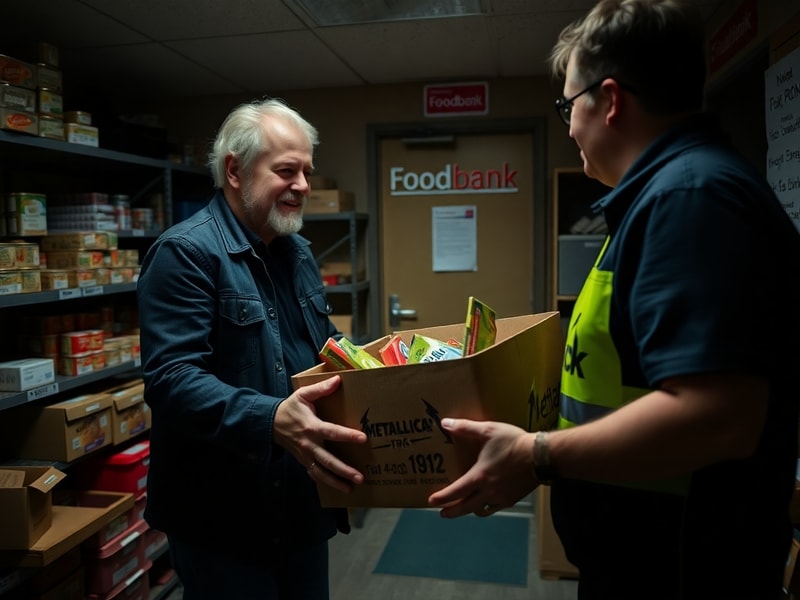
When Metallica took the stage at Cardiff’s Principality Stadium on June 14, 2024, the sold-out crowd expected a night of relentless riffs and thunderous solos. Instead, the iconic band delivered a surprise that rippled far beyond the arena’s floodlights. Hours before the show, drummer Lars Ulrich and frontman James Hetfield quietly visited Cardiff Foodbank, donating 1,000 meals and £10,000 to combat local food poverty. The gesture wasn’t just a footnote in their tour—it underscored a growing trend among global superstars using their platform for grassroots impact.
Food banks have become unlikely stages for celebrity activism, where musicians, athletes, and actors trade red-carpet moments for supermarket vouchers and warehouse tours. Metallica’s donation arrived at a critical juncture for Wales, where food insecurity rates have climbed 23% since 2020, according to the Trussell Trust. The charity’s data reveals that one in 10 Welsh households now skips meals due to financial strain, a crisis exacerbated by inflation and benefit delays. In this context, the band’s choice to shine a spotlight on systemic hunger felt less like charity and more like solidarity.
From Stadiums to Supermarkets: The Rise of Celebrity Foodbank Philanthropy
The Metallica donation fits into a broader pattern of high-profile interventions in food poverty. In 2023, Coldplay frontman Chris Martin auctioned a guitar for £100,000 to support London’s Felix Project, while during the 2022 FIFA World Cup, Argentine footballer Lionel Messi donated meals to families in Qatar. These acts reflect a shift in how celebrities engage with social causes—moving from global campaigns to hyper-local support. Food banks, with their direct ties to communities, offer an accessible entry point for stars seeking tangible impact.
Yet the trend isn’t without criticism. Some argue that celebrity donations, while well-intentioned, risk overshadowing systemic solutions. A 2023 report by the Joseph Rowntree Foundation noted that short-term food aid can’t replace structural reforms like living wage policies or welfare reform. Metallica’s donation, for instance, provided immediate relief but didn’t address the root causes of food poverty in Cardiff. Still, for food banks operating on razor-thin budgets, every can of beans and every celebrity visit buys time—and hope.
The Cultural Weight of Metallica’s Gesture
Metallica’s choice of Cardiff wasn’t accidental. Wales has a rich history of industrial music and working-class solidarity, themes that resonate with the band’s own ethos. Hetfield, who grew up in a blue-collar household, has long woven social themes into Metallica’s lyrics, from “Fuel”’s critique of American consumption to “The Unforgiven”’s meditation on systemic oppression. The band’s visit to the foodbank felt like a homecoming of sorts, a return to the roots of a genre born from economic struggle.
Globally, the band’s donation sparked conversations about the role of music in social justice. In Japan, where food banks are a relatively new concept, Metallica’s gesture drew attention to local initiatives like the Second Harvest food bank in Tokyo. Meanwhile, in the United States, fans noted parallels to Willie Nelson’s legendary Farm Aid concerts, which raised over $70 million for family farmers since 1985. The cultural echo of Metallica’s act—spanning genres and continents—highlighted how music can bridge gaps between entertainment and activism.
The Cardiff Foodbank visit also underscored the band’s evolution from rebellious icons to elder statesmen of social responsibility. Ulrich, who has spoken openly about his Danish upbringing and the importance of communal support, framed the donation as a “small step” in a larger fight. “We’ve always believed in the power of people coming together,” he told local press. “Whether it’s through music or food, the idea is the same: no one should have to choose between eating and living.”
How Food Banks Are Adapting to Celebrity Attention
For food banks, celebrity visits are a double-edged sword. On one hand, they bring much-needed resources and visibility. The Trussell Trust reported a 40% increase in donations following Metallica’s announcement, with volunteers noting a surge in new volunteers. On the other hand, the logistics of accommodating stars can strain already stretched teams. Food banks often operate with skeleton staffs, relying on part-time workers and volunteers juggling multiple jobs.
To manage the influx, many food banks have developed protocols for high-profile visits. Cardiff Foodbank, for example, designated a “VIP area” for the band’s tour but kept the donation process low-key. “We didn’t want the donation to become a spectacle,” said foodbank coordinator Sarah Davies. “This was about the people we serve, not the people serving.” The approach reflects a growing awareness among food banks about balancing donor expectations with the dignity of their clients.
Celebrity donations also highlight disparities in food bank operations. While large-scale gifts like Metallica’s can fund immediate needs, smaller, recurring donations are often more valuable. A 2023 study by the Food Foundation found that 60% of food banks in the UK rely on local supermarkets for surplus food, which fluctuates seasonally. This reliance makes consistent support from corporations and celebrities all the more critical.
The Bigger Picture: Music, Charity, and Social Change
Metallica’s donation is part of a wider redefinition of celebrity philanthropy. Gone are the days when stars merely wrote checks to distant causes. Today, many are rolling up their sleeves—literally. In 2024, Coldplay announced a partnership with the charity Feedback, which turns food waste into meals for vulnerable communities. Similarly, Metallica’s tour this year included a “green initiative” where fans could donate to local food banks as part of their ticket purchase.
Yet the question remains: Can these acts of generosity translate into lasting change? The answer lies in the follow-through. Metallica’s donation was a powerful symbol, but it’s the ongoing work of food banks—and the policies that support them—that will determine whether Wales’ food insecurity rates decline. For now, the band’s gesture has inspired a wave of local donations, proving that when icons lead, communities follow.
As Cardiff Foodbank’s Davies put it: “This isn’t just about a band visiting. It’s about showing people that their struggles matter, that someone out there sees them. That’s the real power of it.”
For fans and food bank clients alike, Metallica’s Cardiff stop was more than a concert. It was a reminder that even in an era of global crises, the smallest acts of kindness can echo the loudest.