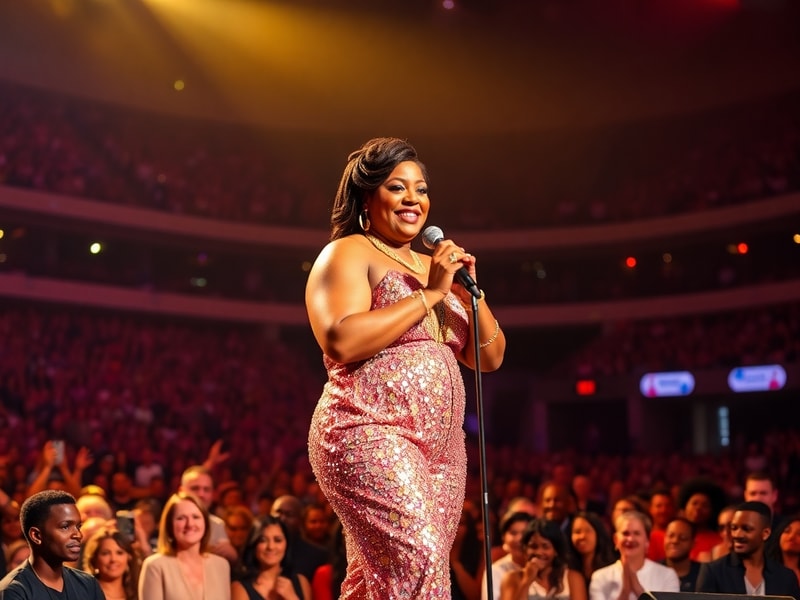
Queen Latifah: How a Hip-Hop Icon Built a Lasting Legacy Beyond Music
Queen Latifah has spent more than three decades redefining what it means to be a woman in hip-hop. Born Dana Elaine Owens in Newark, New Jersey, she emerged in the late 1980s as both a lyrical force and a cultural architect. Her debut album All Hail the Queen arrived in 1989, introducing listeners to an MC whose flow combined Afrocentric pride with sharp social commentary. Tracks like “Ladies First” with Monie Love became anthems, celebrating Black sisterhood while challenging male-dominated spaces.
Latifah’s impact wasn’t limited to music. She expanded into acting with early roles in Spike Lee’s Do the Right Thing and Jungle Fever, proving her range on screen. By the mid-1990s, she had cemented her status as a multi-hyphenate artist—rappers rarely transition so seamlessly into Hollywood, let alone with such authenticity. Her 1993 album Black Reign earned a Grammy nomination, further solidifying her legacy as one of hip-hop’s most influential voices.
From Newark to Global Icon: The Breakthrough Years
Growing up in a working-class household, Latifah’s mother, Rita Owens, was a key influence. A former theatrical performer, Rita nurtured her daughter’s love for music and encouraged her to express herself creatively. Latifah attended Irvington High School, where she explored theater before gravitating toward rap. By 1988, she signed with Tommy Boy Records and released All Hail the Queen, a project that blended dancehall, reggae, and socially conscious hip-hop.
The single “Ladies First” remains a cornerstone of her career. Featuring Monie Love, the track flipped the script on gender norms in hip-hop, turning what was often a male-dominated genre into a space for female empowerment. Latifah’s lyrics—“A woman can bear me, give me birth / Within my heart, I deserve your best”—challenged listeners to reconsider outdated stereotypes. The song’s music video, set against a backdrop of African imagery, reinforced its message of unity and strength.
By the early 1990s, Latifah had expanded her repertoire. The 1991 single “Come Into My House” showcased her versatility, blending rap with soulful melodies. Her second album, Nature of a Sista, leaned into R&B and dance, proving she could adapt without losing her core identity. These years were pivotal not just for her career but for hip-hop at large, as she helped carve out a lane for women MCs who refused to be pigeonholed.
The Queen’s Transition: Acting and Business Ventures
While music remained her foundation, Latifah’s foray into acting marked a new chapter. In 1991, she landed her breakout role as Thelma in John Singleton’s Boyz n the Hood, a film that defined a generation. Her portrayal of a young woman navigating life in South Central Los Angeles resonated with audiences, proving her ability to convey depth beyond the mic. She later reunited with Spike Lee in Jungle Fever, further establishing her as a dramatic actress.
The late 1990s and early 2000s saw Latifah diversify her portfolio. She starred in Set It Off (1996), a crime thriller that showcased her range as an actress, and later in Chicago (2002), which earned her an Oscar nomination for Best Supporting Actress. Television also became a platform for her talents. Her sitcom Living Single (1993–1998) became a cultural touchstone, depicting a group of Black professionals navigating life, love, and careers in Brooklyn. The show’s influence lingered long after its finale, inspiring later series like Girlfriends and Living Single’s own legacy.
Beyond entertainment, Latifah ventured into business. In 2005, she launched Flavor Unit Entertainment, a production company focused on amplifying diverse voices in film and television. The company has since produced projects like Steel Magnolias (2012) and The Equalizer franchise, starring Denzel Washington. Latifah’s business acumen reflects her understanding of the industry’s power dynamics, positioning her not just as a performer but as a mogul.
Her work in fashion also broke barriers. As a brand ambassador for CoverGirl in the early 2000s, she became one of the first Black women to represent a major cosmetics line. The campaign challenged industry norms, proving that beauty standards were evolving—and that Black women could lead the charge.
Legacy and Influence: A Blueprint for Future Generations
Queen Latifah’s influence extends far beyond her discography or filmography. She has inspired countless artists, from Missy Elliott to Megan Thee Stallion, who cite her as a pioneer in breaking gender barriers in hip-hop. Her 1993 MTV Video Music Awards performance, where she wore a kente cloth–inspired outfit while rapping “U.N.I.T.Y.,” remains one of the most iconic moments in music history. The song itself—a scathing critique of misogyny and domestic violence—solidified her role as a voice for justice.
In 2006, Latifah received the Pioneer Award at the BET Hip Hop Awards, a testament to her enduring impact. She has also been honored with a star on the Hollywood Walk of Fame and a Grammy Lifetime Achievement Award. These accolades reflect not just her talent but her resilience in an industry that often marginalizes women, particularly women of color.
Her activism has been equally impactful. Latifah has used her platform to advocate for LGBTQ+ rights, criminal justice reform, and economic empowerment. In 2020, she partnered with the Culture section of Dave’s Locker to highlight Black-owned businesses during the pandemic, demonstrating her commitment to community uplift. Her work with organizations like the LGBTQ+ Center Los Angeles further underscores her dedication to social change.
Today, Latifah remains a cultural touchstone. Whether she’s hosting The Queen Latifah Show (2013–2015) or voicing characters in animated films like Ice Age, she continues to evolve while staying true to her roots. Her ability to navigate multiple industries without compromising her authenticity is a rarity in entertainment, making her a blueprint for aspiring artists.
A Lasting Reign: What the Future Holds
The next phase of Queen Latifah’s career may include more producing, potential directorial projects, or even a return to music. In 2021, she teased new music on social media, hinting that her discography might not be complete. Given her history of reinvention, it’s safe to assume she’ll continue pushing boundaries.
For fans and newcomers alike, Latifah’s journey offers more than just entertainment—it’s a masterclass in perseverance. Here’s what her legacy teaches us:
- Authenticity matters. Latifah never diluted her message or compromised her identity, even as the industry evolved. Her refusal to conform set a standard for future generations.
- Diversification is power. By excelling in music, film, television, and business, she demonstrated that multi-hyphenate success is possible—and necessary—for longevity.
- Activism is non-negotiable. Her work outside of entertainment proves that art and advocacy are intertwined, especially for those with platforms.
- Legacy is built daily. From her early days in Newark to her current status as an icon, Latifah’s career is a reminder that greatness is cultivated through consistency and courage.
The Queen isn’t just a title—it’s a responsibility she’s upheld for over 30 years. As hip-hop continues to reckon with its past and future, and as Hollywood grapples with representation, Latifah’s career stands as both a guide and a challenge to the industries she’s shaped. For those watching from the sidelines, her story is an invitation: to create, to resist, and to lead—no matter the cost.