Sainsbury’s: The Evolution of a British Retail Icon
In the United Kingdom, few retail names carry the same weight as Sainsbury’s. Founded in 1869 by John James Sainsbury in London’s Drury Lane, the supermarket has evolved from a single dairy shop into one of the country’s largest grocery chains, with a presence in nearly every community. Over 150 years later, Sainsbury’s is not just a place to buy food—it’s a cultural institution, a barometer of British consumer habits, and a symbol of retail innovation that has weathered economic shifts, changing diets, and the rise of global competitors.
The journey of Sainsbury’s reflects broader trends in British society. During the Victorian era, it pioneered branded packaging and customer service standards that set it apart. By the mid-20th century, it had become a household staple, adapting to post-war rationing and the rise of self-service shopping. Today, as the retail landscape transforms under the pressure of e-commerce and sustainability demands, Sainsbury’s continues to redefine its role in British life—balancing tradition with innovation, and convenience with conscience.
The Rise of a British Icon: From Local Shop to National Chain
Sainsbury’s growth mirrors the evolution of modern retail. In its early decades, the company focused on quality and consistency, selling tea, butter, and bacon from behind a counter. By the 1920s, it had introduced self-service stores, a radical concept at the time. This shift not only streamlined shopping but also democratized access to affordable groceries, aligning with the growing middle class in interwar Britain.
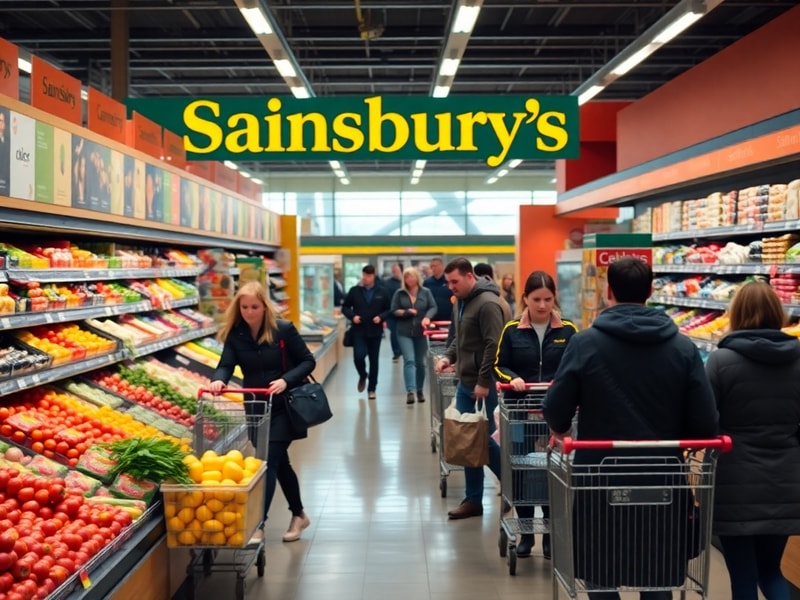
After World War II, Sainsbury’s expanded rapidly. The 1950s and 1960s saw the opening of larger supermarkets, often in newly developed housing estates. These stores became social hubs, where families shopped weekly and children accompanied parents through brightly lit aisles stocked with tinned goods, fresh produce, and household essentials. This era cemented Sainsbury’s reputation as a trusted brand, one that understood the rhythms of British domestic life.
By the 1990s, Sainsbury’s was the UK’s largest supermarket chain. Its success was built on a reputation for quality, particularly in fresh produce and own-brand products. The iconic “Sainsbury’s” logo, with its distinctive lettering and red-and-white branding, became as recognizable as the Union Jack. The company also ventured into banking and petrol stations, further embedding itself in daily British routines.
Yet this dominance was not guaranteed. The rise of discounters like Aldi and Lidl in the 2010s forced Sainsbury’s to rethink its strategy. A failed merger with Asda in 2019 highlighted the challenges of competing on price alone. The company responded by doubling down on quality, sustainability, and digital convenience—signaling a new chapter in its long history.
Sainsbury’s and the Cultural Fabric of Britain
More than a retailer, Sainsbury’s has woven itself into the cultural and social fabric of Britain. It has been referenced in literature, film, and television, often as a symbol of everyday life. From the working-class kitchen to the middle-class dinner party, Sainsbury’s products appear in countless British households. The supermarket’s advertising campaigns, particularly those from the 1980s and 1990s, are remembered fondly for their warmth and nostalgia.
Sainsbury’s has also played a role in shaping British food culture. Its Taste the Difference range, launched in 1998, elevated supermarket own-brand products to near-artisanal levels. This move influenced consumer expectations, pushing other retailers to improve quality across their own-label ranges. Similarly, Sainsbury’s commitment to Fairtrade and organic products in the 2000s reflected—and helped drive—growing public interest in ethical consumption.
The supermarket’s influence extends beyond food. Its sponsorship of the 2012 London Olympics, under the banner “Active Kids,” became a cultural touchstone, promoting youth sports and physical activity across the country. Sainsbury’s also supports local communities through initiatives like “Active Kids for All,” which provides training for disabled athletes. These efforts have reinforced its image as a brand that cares about more than just sales.
In recent years, Sainsbury’s has also become a platform for cultural commentary. Its Christmas advertisements, often emotional and cinematic, have sparked national conversations about family, community, and national identity. The 2016 campaign, which depicted a family reunion set against the backdrop of World War I, drew widespread praise and even a BAFTA nomination. Such campaigns demonstrate how Sainsbury’s has leveraged its cultural capital to remain relevant in an ever-changing world.
Global Ambitions and Local Challenges
While Sainsbury’s is deeply rooted in British soil, its ambitions have always had an international dimension. In the 1970s and 1980s, the company expanded into the United States under the name “Shaw’s,” acquiring regional supermarket chains. Though this venture ultimately failed, it reflected a broader trend of British retailers seeking growth overseas. Today, Sainsbury’s operates a small but strategic international presence, including a joint venture in China and a franchise agreement in the Middle East.
However, its primary focus remains the UK market, where it faces intense competition from Tesco, Morrisons, and the German discounters. Sainsbury’s has responded by investing in digital innovation. Its online grocery service, launched in the early 2000s, has grown significantly, especially during the COVID-19 pandemic. The company now offers same-day delivery, app-based shopping, and even smart fridges that can automatically reorder groceries. These advancements position Sainsbury’s at the forefront of the UK’s digital retail revolution.
Yet global challenges loom large. Rising food prices, supply chain disruptions, and changing consumer habits—particularly the decline of weekly “big shops” in favor of convenience purchases—pose ongoing threats. Sainsbury’s has responded by diversifying its offerings, including expanding its ready meals range, introducing meal kits, and even venturing into clothing with its Tu brand. The company has also committed to cutting its carbon footprint, aiming for net-zero emissions by 2040 and reducing plastic waste by half by 2025.
These commitments are not just corporate social responsibility—they reflect a broader shift in consumer values. Modern shoppers, particularly younger generations, prioritize sustainability, health, and ethical sourcing. Sainsbury’s has positioned itself as a leader in this space, though it faces scrutiny over issues like price inflation and labor practices. Balancing profitability with social responsibility remains one of the company’s greatest challenges.
The Future of Sainsbury’s: Tradition Meets Transformation
As Sainsbury’s approaches its 160th anniversary, its future hinges on its ability to honor its heritage while embracing change. The company’s strengths—its deep roots in local communities, its commitment to quality, and its innovative spirit—are its greatest assets. Yet the retail landscape is evolving at an unprecedented pace. The rise of online delivery platforms, the growing influence of meal-kit services, and the accelerating shift toward plant-based diets all demand a new kind of agility.
Sainsbury’s has already made strides in several key areas:
- Sustainability: The company has committed to reducing food waste by 50% by 2030 and aims to make all its own-brand packaging recyclable, reusable, or compostable by 2025. Its “Waste less, Save more” campaign encourages customers to reduce food waste at home.
- Digital Integration: The Sainsbury’s app now offers personalized deals, in-store navigation, and even augmented reality features. The company has also partnered with Uber Eats to expand its delivery reach in urban areas.
- Health and Wellness: Sainsbury’s has reformulated thousands of products to reduce sugar, salt, and fat content. It also offers a wide range of plant-based and gluten-free options, catering to health-conscious consumers.
- Community Engagement: Through initiatives like “Sainsbury’s Community Hubs,” the company supports local food banks, schools, and charities. These efforts strengthen its connection to the communities it serves.
Yet challenges persist. The cost-of-living crisis has put pressure on household budgets, forcing consumers to prioritize affordability over premium products. Meanwhile, the discounters continue to gain market share by offering rock-bottom prices. Sainsbury’s must navigate this terrain carefully, ensuring it remains accessible without compromising its quality ethos.
Looking ahead, Sainsbury’s could explore new frontiers, such as expanding its tech offerings or partnering with health platforms to integrate grocery shopping with wellness tracking. It could also deepen its international presence, particularly in markets where British food culture is gaining traction, such as parts of Asia and the Middle East.
The company’s ability to adapt will determine whether it remains a cornerstone of British retail or fades into history. What is certain is that Sainsbury’s has already proven its resilience. From a single shop in Drury Lane to a nationwide institution, it has continually reinvented itself to meet the needs of its time. As long as it stays true to its values while embracing innovation, Sainsbury’s will likely remain a staple of British life for generations to come.