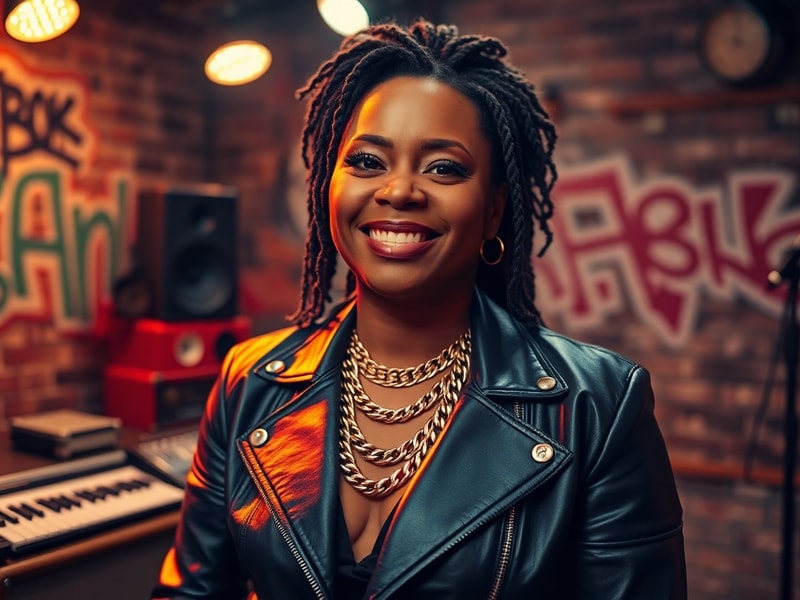
Queen Latifah’s 40-Year Reign: From Hip-Hop Pioneer to Multihyphenate Icon
Queen Latifah’s career spans nearly four decades, yet her influence remains as sharp today as it was when she first stepped into the spotlight. Born Dana Elaine Owens in Newark, New Jersey, in 1970, she transformed from a teenage poet into one of hip-hop’s most enduring voices, breaking barriers as a rapper, actress, and entrepreneur. Her journey reflects more than just artistic evolution—it’s a blueprint for resilience, reinvention, and unapologetic self-expression. Whether commanding stages, gracing red carpets, or building empires behind the scenes, Latifah has consistently defied expectations, earning respect across industries.
From Newark to Hip-Hop Royalty
Latifah’s early years in Newark’s public housing projects shaped her perspective long before she became a household name. She honed her skills as a spoken-word artist in high school, blending rhythmic cadence with social commentary. By 1989, her debut album All Hail the Queen arrived, packed with anthems like “Ladies First”—a collaboration with Monie Love that celebrated Black womanhood with lyrical precision. The album didn’t just top charts; it redefined what female rappers could achieve, merging Afrocentric pride with streetwise authenticity.
Her stage name, derived from the term for a noblewoman in Islam, signaled her intent. Latifah wasn’t just an artist; she was a queen, and her music was a coronation of Black culture. Tracks like “Come Into My House” and “Wrath of My Madness” tackled domestic violence and systemic oppression, proving hip-hop could be both entertaining and socially urgent. Critics and fans alike recognized her as a pioneer, but Latifah’s ambitions stretched far beyond music. By the mid-’90s, she’d transitioned into acting, proving her versatility in films like Set It Off and Living Out Loud, where she balanced toughness with vulnerability.
Acting as a Second Crown
Latifah’s foray into Hollywood was met with skepticism—could a rapper truly crossover? The answer arrived swiftly. Her role as Cleo in the 1996 crime drama Set It Off shattered stereotypes, showcasing a range that ranged from fiery to heartbreaking. She earned a Golden Globe nomination for her performance, proving acting chops didn’t require shedding her hip-hop roots. In 1999, her turn as Matron “Mama” Morton in Chicago solidified her place in cinema, earning an Academy Award nomination for Best Supporting Actress. Suddenly, she wasn’t just a rapper with an acting gig; she was a full-fledged movie star.
Her filmography reflects a deliberate strategy to choose roles that challenge perceptions. In Bringing Down the House (2003), she played a con artist with comedic flair, while Brown Sugar (2002) allowed her to explore the nuances of love and ambition in the music industry. On television, Latifah headlined The Queen Latifah Show in the ’90s and later starred in Living Single, a sitcom that became a cultural touchstone for Black audiences. Her production company, Flavor Unit Entertainment, further expanded her reach, backing projects that center marginalized voices across film and television.
Business, Philanthropy, and the Latifah Empire
Latifah’s business acumen is as formidable as her artistry. In 2005, she launched her own cosmetics line, CoverGirl Queen Collection, becoming the first Black spokeswoman for CoverGirl in the brand’s history. The move wasn’t just a career pivot—it was a statement. For decades, beauty standards had excluded women of color, but Latifah’s collaboration forced the industry to confront its biases. The line thrived, earning praise for its inclusivity and accessibility, and cemented her as a beauty icon.
Her philanthropic efforts are equally impactful. Latifah has long supported causes tied to education, LGBTQ+ rights, and criminal justice reform. In 2017, she partnered with the Ford Foundation to launch the Culture and Justice initiative, which funds programs aimed at reducing recidivism and supporting formerly incarcerated individuals. She’s also a vocal advocate for breast cancer awareness, drawing from her mother’s battle with the disease. Through her work with organizations like Susan G. Komen, she’s raised millions while normalizing conversations about health disparities in Black communities.
Beyond her professional ventures, Latifah’s personal life offers a rare glimpse into her humanity. She’s openly discussed her sexuality, her journey with body image, and the pressures of fame. In interviews, she’s spoken candidly about the sacrifices of balancing career and motherhood, having adopted her son, Robby, in 2004. Her ability to merge authenticity with ambition has made her a role model, particularly for young women navigating industries dominated by men.
The Legacy of a Queen
Latifah’s influence isn’t confined to a single decade or genre. She’s one of the few artists whose career has thrived across eras—from the golden age of hip-hop to the streaming era of today. Her 2024 induction into the Rock & Roll Hall of Fame wasn’t just a celebration of her past; it was a testament to her enduring relevance. The honor capped a year where she also headlined major festivals and premiered new music, proving her creative spirit remains undimmed.
What sets Latifah apart is her refusal to be pigeonholed. She’s rappelled, sung, acted, produced, and advocated without ever compromising her essence. In an industry that often demands reinvention, she’s stayed true to herself while evolving. Her 2023 album Traveling the Moon>, a jazz-infused departure from her hip-hop roots, surprised critics who assumed her musical career had peaked. Instead, it reaffirmed her artistic fearlessness—a trait that’s defined her from the beginning.
For aspiring artists, Latifah’s career is a masterclass in adaptability. She’s navigated industries notorious for their volatility, leveraged her platform for social good, and built a legacy that transcends any single role. Whether she’s hosting a talk show, walking a red carpet, or dropping a verse, she carries herself with the quiet confidence of someone who knows her worth. That confidence is what makes her more than a legend—it makes her a template for the next generation of boundary-breakers.
Queen Latifah’s story isn’t just about success; it’s about rewriting the rules. And decades later, she’s still holding the crown.