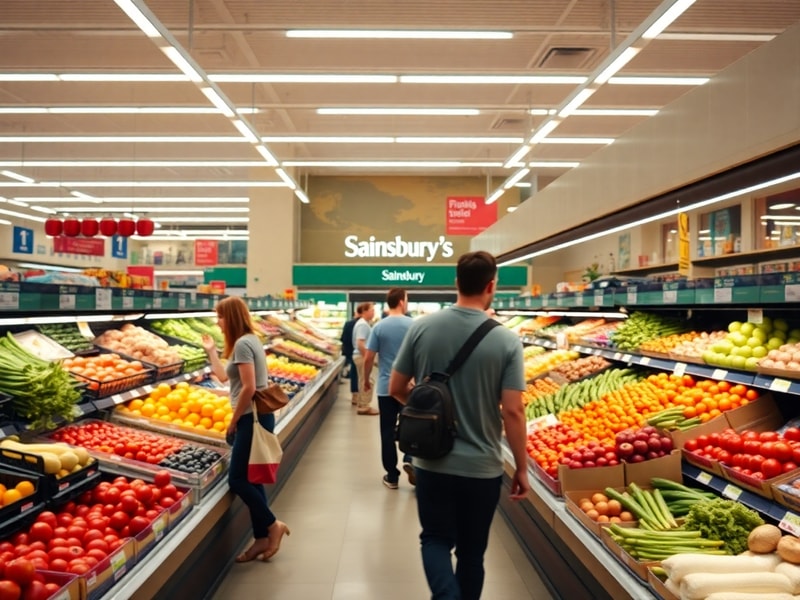
For over 150 years, Sainsbury’s has stood as one of Britain’s most recognisable supermarket chains, shaping the way generations shop, eat and think about food. What began in 1869 as a modest dairy shop in London’s Drury Lane has grown into a retail giant operating over 1,400 stores, employing nearly 210,000 people and serving millions of customers each week. Its legacy is woven into the fabric of British high streets, supermarkets and even the national diet—yet its journey has been far from straightforward. From pioneering self-service in the 1950s to navigating the rise of discount rivals and the digital shopping revolution, Sainsbury’s has repeatedly had to adapt or risk irrelevance.
From Humble Dairy to Retail Titan: The Sainsbury’s Story
John James Sainsbury opened his first shop with a £25 loan, selling butter, cheese and eggs from a single counter. His commitment to quality and fair pricing struck a chord. By the time his sons took over in the early 20th century, the business had expanded into groceries, baked goods and household essentials. A defining moment came in 1950 when Sainsbury’s launched Britain’s first self-service supermarket in Croydon—an innovation that not only speeded up shopping but also signalled a shift in consumer behaviour towards convenience and choice.
By the 1970s and 80s, Sainsbury’s had become a byword for trust and value, outpacing rivals with its own-brand products and efficient supply chain. Its green and orange logo became as familiar as the Union Jack. Yet this dominance masked underlying challenges. The 1990s brought intense competition from Tesco and Asda, forcing Sainsbury’s into a defensive posture. Strategic missteps during this era—including an ill-fated expansion into financial services—left the company vulnerable to takeover bids and internal criticism.
Adapting to Change: How Sainsbury’s Stays Relevant
Sainsbury’s survival hinges on its ability to reinvent itself without losing sight of its heritage. In 2014, the company’s merger with Home Retail Group—owner of Argos—marked a bold pivot towards convenience and non-food retailing. The integration of Argos into Sainsbury’s stores transformed them into mini department stores, offering everything from TVs to toasters alongside weekly groceries. This move wasn’t just about adding product lines; it was about redefining the role of the supermarket in an era when consumers expect one-stop shopping.
The supermarket also accelerated its digital transformation. Online grocery sales, once a niche experiment, now account for nearly 15% of its revenue. Its “Sainsbury’s Groceries Online” service allows customers to order via app or website, with delivery slots booked within minutes. Behind the scenes, AI-driven demand forecasting ensures that warehouses are stocked efficiently, reducing waste and improving margins. Even its loyalty scheme, Nectar, has evolved from a simple points system into a data-rich tool that tailors offers to individual shoppers—a far cry from the one-size-fits-all vouchers of the 1990s.
Yet adaptation isn’t without cost. The company has closed dozens of underperforming stores, absorbed job losses and faced criticism over price hikes on branded items. Some analysts argue that Sainsbury’s risked diluting its core identity by spreading itself too thin. Others point to its environmental commitments—such as cutting plastic packaging by 50% since 2018 and aiming for net-zero carbon by 2040—as evidence of a brand evolving responsibly.
Facing the Future: Challenges and Opportunities
Sainsbury’s now operates in a retail landscape that would have been unrecognisable to its founders. Discount chains like Aldi and Lidl have reshaped price expectations, while online giants such as Amazon and Deliveroo have redefined convenience. The cost-of-living crisis has further squeezed household budgets, pushing more shoppers towards value-focused retailers. In response, Sainsbury’s has launched its “Little Ones” range for babies and expanded its “by Sainsbury’s” premium tier to compete with Waitrose.
The company’s relationship with its suppliers has also come under scrutiny. Farmers and producers have raised concerns about squeezed margins and delayed payments, particularly as Sainsbury’s pushes for lower prices to match discount rivals. Meanwhile, its commitment to British sourcing—long a cornerstone of its brand—faces pressure from global supply chain disruptions and rising energy costs. The supermarket’s ability to balance affordability with ethical sourcing will determine whether it retains the trust of both shoppers and producers.
Looking ahead, Sainsbury’s is betting on three strategic pillars: convenience, value and sustainability. Its “Neighbourhood Hubs”—smaller, localised stores offering top-up shopping—are designed to compete with convenience chains like Tesco Express and Co-op. Meanwhile, its £1 billion investment in automation and robotics aims to cut costs and improve accuracy in distribution centres. These moves reflect a quiet confidence that, despite its size, Sainsbury’s can still move fast enough to stay ahead.
What’s Next for Sainsbury’s—and British Retail?
The supermarket sector is at a crossroads. Consolidation is accelerating, with mergers and acquisitions reshaping the competitive landscape. Sainsbury’s itself has been linked to takeover speculation in the past, though its current leadership insists it remains committed to independent growth. The rise of discounters has forced all major chains to rethink pricing strategies, while the growth of food delivery platforms has blurred the lines between retail and hospitality.
For Sainsbury’s, the challenge is clear: maintain its heritage without becoming a relic. Its ability to innovate while staying true to its founding principles—quality, fairness and community—will define its next chapter. Whether through technological leaps, strategic partnerships or a renewed focus on customer experience, the supermarket must prove that it’s more than just a place to buy milk and bread.
As British consumers grow increasingly discerning, Sainsbury’s faces a paradox. It must be both a trusted corner shop and a cutting-edge retailer—delivering the familiar alongside the futuristic. Its success or failure will offer lessons not just for supermarkets, but for any business struggling to balance tradition with transformation in a rapidly changing world.
One thing is certain: Sainsbury’s won’t disappear quietly. Its green logo will likely remain a staple of British high streets for years to come—though its meaning may evolve from “trusted grocer” to “agile survivor.”