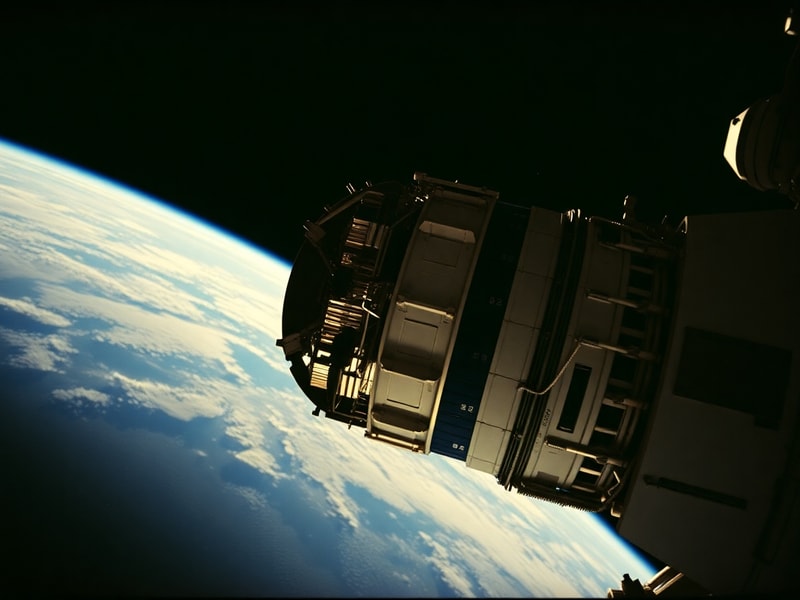
The Near-Disaster That United the World: Apollo 13’s Global Echo
Fifty years after the Apollo 13 mission, the phrase “Houston, we’ve had a problem” still carries weight across continents. It wasn’t just an American crisis—it was a human one. When the oxygen tank exploded on April 13, 1970, 205,000 miles from Earth, the world held its breath. Newspapers in Tokyo, Moscow, and Buenos Aires ran front-page updates. In France, the left-leaning Libération declared it “the most dramatic moment of the space age.” Even behind the Iron Curtain, Soviet cosmonauts sent well-wishes through diplomatic channels. The mission’s failure became a global spectacle, not because of national rivalry, but because survival transcended borders.
This wasn’t the first space disaster, but it was the first watched in real time. Television sets in living rooms from London to Lagos flickered with NASA’s live feed. Schoolchildren in India huddled around radios. The mission’s unfolding crisis turned the Cold War’s space race into a shared narrative of ingenuity and fragility. While the United States and Soviet Union were locked in ideological conflict, Apollo 13 revealed a fragile blue planet where cooperation—not competition—dictated survival.
The Mission That Wasn’t Supposed to Fail
Apollo 13 was the seventh crewed mission in NASA’s Apollo program and the third intended to land on the Moon. Launched on April 11, 1970, it carried astronauts Jim Lovell, Jack Swigert, and Fred Haise toward the Fra Mauro highlands. But two days into the flight, at 55 hours and 55 minutes, an electrical fault triggered an explosion in the service module’s oxygen tank. The blast crippled the spacecraft’s power, oxygen, and water systems. Suddenly, the crew faced a grim reality: they were not going to the Moon—they were fighting to get home.
The explosion wasn’t just a mechanical failure; it exposed the fragility of human ambition. NASA had tested extensively, but space remained an unforgiving environment. The agency’s culture prioritized success over risk assessment—a mindset that nearly cost three lives. Yet, the disaster also revealed NASA’s greatest strength: adaptability under pressure. Engineers, scientists, and astronauts improvised a solution using only the materials aboard the lunar module, a cramped, spider-like vehicle designed for two men on the Moon’s surface.
As oxygen levels dropped and temperatures inside the capsule plummeted to near-freezing, the world watched. The mission’s shift from exploration to survival captivated global audiences. In West Germany, newspapers framed it as a “triumph of reason over chaos.” In Japan, television networks interrupted regular programming to broadcast updates. The crisis became a moment of global unity, a rare pause in Cold War hostilities where humanity’s fragility took center stage.
From Crisis to Innovation: How the World Solved a Problem Together
The rescue of Apollo 13 wasn’t just a NASA operation—it was a global effort. Engineers from Europe, Australia, and Japan contributed tracking data. The Australian Parkes Observatory, despite being in the middle of a storm, provided critical radio contact. Even the Soviet Union, NASA’s rival in space, offered tracking assistance through its deep-space network. This cooperation was unprecedented. In the midst of geopolitical tension, space exploration reminded the world that shared challenges demand shared solutions.
Back in Houston, the mission control team faced a daunting puzzle. With limited power and no Moon landing possible, they had to chart a new trajectory. The solution? A “free-return” trajectory around the Moon, using its gravity to slingshot the damaged spacecraft back toward Earth. But timing was everything. Any miscalculation would send the crew hurtling into deep space—or burning up in the atmosphere.
Meanwhile, the crew rationed water to 200 milliliters per person per day and endured subzero temperatures. The lunar module’s lithium hydroxide canisters, meant to scrub carbon dioxide from the air, were incompatible with the command module’s filters. NASA engineers on Earth scrambled to design a makeshift adapter using only materials available to the astronauts—plastic bags, duct tape, and cardboard. The solution, famously cobbled together with “a sock, a plastic bag, and a lot of ingenuity,” saved the crew. The image of NASA engineers testing the fix with a shoebox and a vacuum cleaner became a symbol of improvisation under pressure.
As the world celebrated the crew’s safe return on April 17, 1970, the mission left a legacy far beyond the technical. It demonstrated that innovation thrives not in isolation, but in collaboration. In an era of division, Apollo 13 showed that when faced with the impossible, humanity can come together—even if only for a moment.
The Cultural Aftermath: How Apollo 13 Changed Our View of Earth
Apollo 13 didn’t just change spaceflight—it changed culture. The mission’s near-disaster forced the world to confront the reality of space exploration: it was dangerous, unpredictable, and deeply human. The phrase “Failure is not an option” became a mantra, later popularized by the 1995 film about the mission. But the real lesson was more profound: failure is always an option. And yet, we persist.
Photographs from the mission—blurred images of Earth rising over the lunar horizon—became iconic. They weren’t just scientific records; they were cultural artifacts. The “Blue Marble” image, taken during Apollo 17, would later symbolize environmental awareness. But Apollo 13’s images carried a different message: Earth was small, fragile, and precious. The crew’s survival depended on every system working flawlessly. One mistake, one oversight, and they would be lost forever.
In literature and film, Apollo 13 became a metaphor for resilience. Tom Hanks’ portrayal of Jim Lovell in the 1995 film cemented the mission’s place in popular memory. The movie, though dramatized, captured the tension of those six days in April. It also highlighted the human cost: the families waiting in uncertainty, the engineers working sleepless nights, the global audience united in hope and fear.
The mission also influenced science fiction and futurism. Writers like Arthur C. Clarke and Ursula K. Le Guin used Apollo 13 as a touchstone for stories about human vulnerability in space. The disaster reminded audiences that space was not a frontier to be conquered, but a realm to be respected. It tempered the optimism of the Space Age with a dose of realism. Exploration would always carry risk—and failure was not a bug, but a feature of the human condition.
In the decades since, Apollo 13 has been invoked in crises far beyond spaceflight. During the COVID-19 pandemic, journalists and leaders compared the global response to the mission’s improvisation. In climate change debates, the fragile blue planet seen from Apollo 13 became a rallying cry. The mission’s legacy endures not because it succeeded, but because it nearly failed—and humanity refused to accept defeat.
A Legacy of Lessons Still Relevant Today
Apollo 13 remains a case study in crisis management, engineering, and leadership. Its lessons resonate in boardrooms, classrooms, and control rooms around the world. NASA’s response—rapid adaptation, global collaboration, and transparent communication—set a standard for handling complex emergencies. Today, as private companies like SpaceX and Blue Origin push the boundaries of spaceflight, the principles of Apollo 13 are more relevant than ever.
Yet the mission also serves as a cautionary tale. The explosion was caused by a flawed oxygen tank design, a problem that could have been avoided with better testing. NASA’s rush to meet President Kennedy’s Moon deadline led to corners being cut. In an era where speed often trumps safety, Apollo 13 reminds us that innovation must never outpace prudence.
As we look toward Mars and beyond, the spirit of Apollo 13 offers both inspiration and warning. It shows that when faced with the unknown, humans can rise to the challenge—but only if we value preparation, collaboration, and humility. The mission didn’t just test technology; it tested our character as a species.
Fifty years later, the world still remembers Apollo 13 not as a failure, but as a triumph of the human spirit. It was a moment when the world came together—not to celebrate victory, but to confront a shared threat. In an age of division, that lesson may be Apollo 13’s most enduring gift.
For those interested in the intersection of space exploration and human culture, explore our Science and Technology archives, where we examine how innovation shapes—and is shaped by—society.