Strawberry Moon 2026: When to See the Full Moon and Eclipse
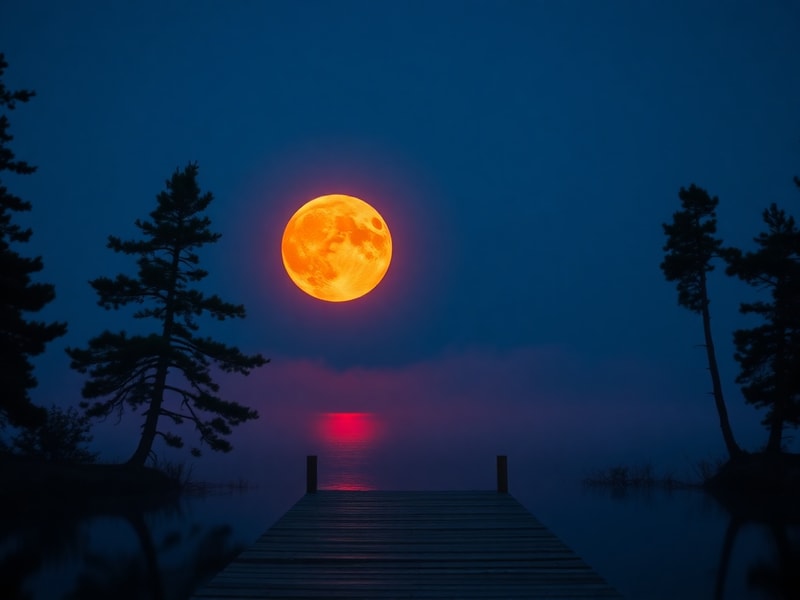
The Strawberry Moon of 2026 arrives on June 5 at 19:17 UTC, a full moon that will appear slightly smaller than average due to its proximity to apogee—the point in its orbit farthest from Earth. This lunar event coincides with a penumbral lunar eclipse, visible across most of Europe, Africa, Asia, and Australia, where the moon will pass through Earth’s outer shadow. While not as dramatic as a total eclipse, the subtle shading effect often creates a muted coppery glow that photographers and skywatchers eagerly anticipate.
The name “Strawberry Moon” originates from Algonquin tribes who associated this full moon with the short season for harvesting wild strawberries. European settlers later adopted the term, though other cultures have different names—such as the Honey Moon in Europe (coinciding with honey harvests) or the Rose Moon in some traditions. This blend of indigenous, agricultural, and colonial naming reflects how lunar cycles have long shaped human calendars and storytelling.
Why the timing matters
The 2026 Strawberry Moon occurs just two days after the moon reaches apogee on June 3, when it sits about 406,500 kilometers from Earth—roughly 22,000 kilometers farther than average. This makes the full moon appear about 14% smaller in the sky, a phenomenon sometimes called a “micro moon.” While the difference is subtle to the naked eye, it becomes more noticeable when compared to a “super moon” like the one in November 2025, which was nearly 30% brighter and 14% larger.
Skywatchers should also note that the eclipse begins at 17:46 UTC and peaks at 19:25 UTC, with the entire event lasting just over three and a half hours. Unlike a total lunar eclipse, where the moon turns a deep red, a penumbral eclipse only dims the lunar surface slightly. Still, the subtle gradient of shadow can be striking when viewed through binoculars or a telescope, especially in areas with low light pollution.
For those planning to photograph the event, the Strawberry Moon will rise in the southeast around sunset and set in the southwest near sunrise, depending on location. Clear skies are essential, so checking weather forecasts a day in advance is wise. Coastal regions may experience additional atmospheric effects due to humidity and salt particles in the air, which can enhance the moon’s golden hue.
Cultural and historical significance
The June full moon has long held symbolic weight across civilizations. In Hindu tradition, it marks Vat Purnima, a festival where married women tie vines around a banyan tree to pray for their husbands’ longevity. Similarly, in Buddhism, the full moon of June is celebrated as Poson Poya in Sri Lanka, commemorating the introduction of Buddhism to the island in the 3rd century BCE.
In medieval Europe, the Strawberry Moon was sometimes called the “Mead Moon” because it marked the start of honey harvesting, a time when mead—a fermented honey drink—was brewed for summer festivals. The term “honeymoon” may even trace its roots to this period, as June weddings were common, and the “honeymoon” period became a metaphor for the first month of marriage.
For modern pagans and Wiccans, the Strawberry Moon is a time of celebration, often associated with abundance, growth, and the power of the earth. Rituals may involve planting seeds, harvesting early crops, or crafting moon water—water charged under the full moon’s light for spiritual or healing purposes. These traditions highlight how lunar cycles continue to influence seasonal practices and personal rituals today.
How to observe and photograph the event
Viewing the Strawberry Moon doesn’t require specialized equipment, but a few tips can enhance the experience. Start by finding a location with an unobstructed eastern horizon, as the moon will rise low in the sky. Urban areas with tall buildings can create interesting foreground elements for photography, especially if you’re aiming for a silhouette effect.
For those using a smartphone, apps like Moon Phase Calendar or PhotoPills can help track the moon’s path and timing. A tripod is recommended for steady shots, especially if you’re using a telephoto lens to capture details. If you’re shooting with a DSLR, a low ISO setting (around 100–400) and a wide aperture (f/4–f/8) will help reduce noise and bring out the moon’s texture.
If you’re interested in capturing the eclipse, bracketing your shots—taking multiple exposures at different settings—can help preserve details in both the bright and shadowed areas of the moon. A remote shutter release or timer can also prevent camera shake during long exposures.
For a unique perspective, consider joining a local astronomy club or public stargazing event. Many observatories and planetariums host viewing parties during significant lunar events, offering telescopes and expert commentary. These gatherings are a great way to connect with fellow enthusiasts and learn more about the science behind the spectacle.
Beyond 2026: The bigger picture
The Strawberry Moon of 2026 is part of a larger pattern of lunar events that captivate scientists and skywatchers alike. Over the next decade, we can expect a mix of supermoons, blue moons, and total lunar eclipses, each offering its own visual and scientific intrigue. For instance, the next total lunar eclipse visible in North America won’t occur until March 2025, making events like the Strawberry Moon even more special for those who can’t travel.
From a scientific standpoint, lunar eclipses provide opportunities to study Earth’s atmosphere. By analyzing how sunlight filters through the atmosphere during an eclipse, researchers can gather data on atmospheric composition, including levels of ozone, water vapor, and aerosols. This information is valuable for climate science and helps refine models of Earth’s energy balance.
Culturally, lunar events like the Strawberry Moon serve as a reminder of humanity’s enduring connection to the night sky. In an age dominated by artificial light and digital distractions, moments like these encourage people to pause, look up, and reflect on our place in the universe. Whether you’re a seasoned astronomer or a casual observer, the Strawberry Moon invites you to step outside and witness the quiet majesty of our nearest celestial neighbor.
As the moon rises on June 5, take a moment to appreciate not just its beauty, but the centuries of history, science, and tradition that have shaped our understanding of it. The Strawberry Moon isn’t just a phase in the lunar cycle—it’s a bridge between past and present, nature and culture, and the everyday and the extraordinary.