2026 World Cup: What to Expect from the Expanded Tournament
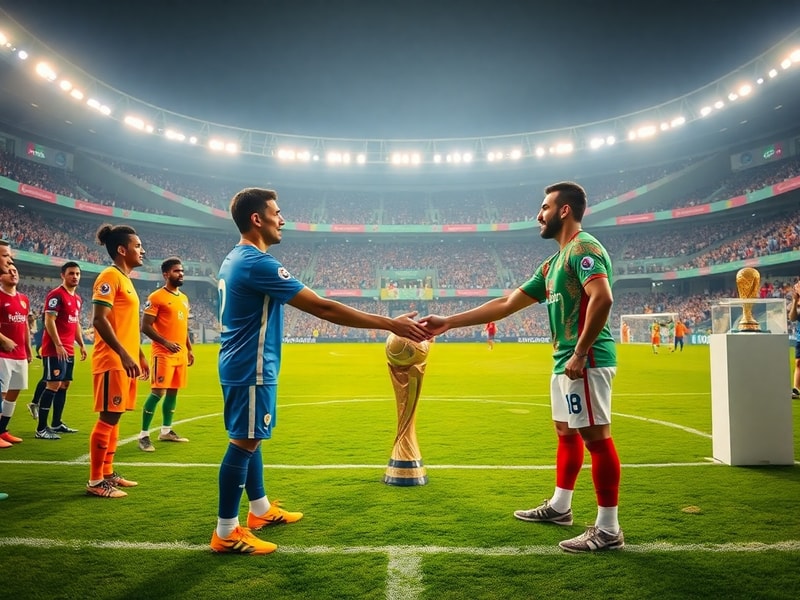
The 2026 FIFA World Cup, set to be co-hosted by the United States, Canada, and Mexico, promises to be a historic event that transcends sport. As the world’s most-watched sporting spectacle, the tournament will not only showcase elite football talent but also reflect the cultural and economic shifts reshaping North America. With host cities spanning from Los Angeles to Toronto and Monterrey, the 2026 edition will be the first 48-team World Cup, expanding opportunities for underrepresented nations while challenging traditional powerhouses.
The expansion to 48 teams means more matches, more stories, and more nations making their debut on the global stage. For many countries, qualifying for 2026 will be as significant as winning the tournament itself. The expanded format also introduces new dynamics in scheduling, broadcasting, and fan engagement, forcing organizers to rethink how a World Cup operates on a logistical scale never seen before.
Beyond the pitch, the 2026 World Cup reflects broader trends in global football. The rise of women’s football, the influence of analytics, and the commercialization of the sport continue to transform how the game is played and consumed. As nations prepare their campaigns, the intersection of technology, culture, and competition will define not just who lifts the trophy, but how the tournament is remembered.
The Road to 2026: A Global Qualification Race Like No Other
The qualification process for the 2026 World Cup is already underway, with confederations adjusting their formats to accommodate the expanded field. Europe, which traditionally sends 13 teams to the World Cup, will now have 16 spots, giving smaller nations like Albania, Faroe Islands, or Luxembourg a realistic chance to qualify for the first time. Meanwhile, Africa’s allocation has increased from 5 to 9 teams, and Asia now has 8.5 slots (with the half representing a potential intercontinental playoff).
For South America, the increase from 4.5 to 6.5 spots means intense competition among traditional powerhouses like Brazil, Argentina, and Uruguay, as well as emerging teams like Ecuador and Colombia. The expanded tournament offers a lifeline to nations that have struggled to break into the elite tier, ensuring that the World Cup remains a true global festival rather than a closed shop for the usual suspects.
Qualifying campaigns will also be shaped by political and economic factors. The war in Ukraine has already disrupted UEFA’s qualifying groups, forcing matches to be rescheduled and impacting team morale. In Africa, travel costs and infrastructure challenges remain hurdles for many federations. Meanwhile, the rise of private equity in football, such as the recent investment in the Saudi Pro League, could influence player availability and national team strategies in unexpected ways.
As of mid-2024, several nations have already punched their tickets. Japan secured its place early in the Asian qualifiers, while Morocco became the first African team to qualify. In CONCACAF, hosts Canada and the United States are on track, with Mexico facing pressure to keep pace. The intercontinental playoffs, scheduled for 2026, will feature dramatic showdowns that could see nations like Wales, Peru, or Costa Rica earn their place in history.
Host Cities and Stadiums: A North American Stage Set for Drama
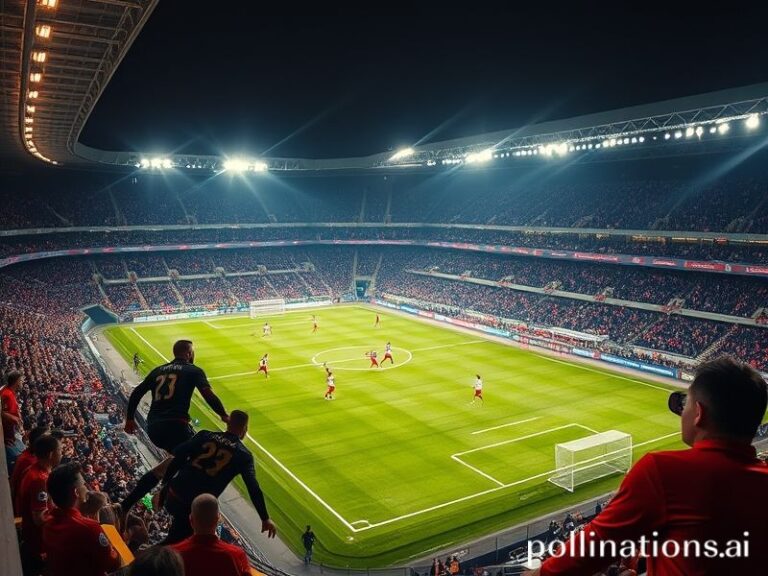
The 2026 World Cup will be spread across 16 host cities in three countries, each offering a unique backdrop for football’s biggest event. In the United States, iconic venues like SoFi Stadium in Los Angeles, AT&T Stadium in Dallas, and MetLife Stadium in New York/New Jersey will host knockout matches and group-stage showdowns. Canada brings Toronto’s BMO Field and Vancouver’s BC Place into the fold, while Mexico contributes Azteca Stadium in Mexico City and Estadio BBVA in Monterrey.
Each host city brings its own cultural flavor. Los Angeles, with its diverse Latino communities, will be a cauldron of passion for teams like Mexico, Argentina, or Colombia. Toronto’s multicultural identity makes it a natural hub for European and African supporters. Meanwhile, cities like Kansas City and Atlanta will showcase the growing influence of football in the U.S., where the sport has struggled to compete with American football, basketball, and baseball historically.
The stadiums themselves tell a story of ambition and investment. Many venues have undergone renovations or new constructions to meet FIFA’s standards. For example, SoFi Stadium, with its translucent roof and state-of-the-art facilities, is a testament to LA’s status as a global entertainment capital. Meanwhile, Mexico City’s Azteca, the only stadium to host two World Cup finals (1970 and 1986), remains a symbol of football tradition.
Logistics will be a challenge. With matches spread across time zones—from Vancouver’s Pacific Time to Monterrey’s Central Time—broadcasters and fans will need to adapt to a grueling schedule. The distance between cities, particularly in Canada and the U.S., adds another layer of complexity. Organizers have promised efficient transport links, but the World Cup’s scale means delays or hiccups are inevitable.
For fans, the 2026 World Cup offers a chance to explore North America beyond the usual tourist traps. Whether it’s catching a match in the desert heat of Phoenix, the humid streets of Miami, or the snow-capped mountains of Edmonton, the tournament is as much about the journey as the destination.
The Cultural Impact: Football’s Global Reach and Local Roots
The 2026 World Cup arrives at a time when football is more global—and more commercial—than ever. The tournament’s expansion reflects FIFA’s ambition to grow the sport in non-traditional markets, particularly in North America. The U.S., where soccer has long been the “other” sport, is now home to Major League Soccer’s fastest-growing franchises, including teams like Inter Miami and LAFC, backed by global superstars like Lionel Messi and Sergio Busquets.
In Canada, football’s growth has been driven by immigration and youth programs. The country’s national team, once a minnow, has steadily improved, reaching the 2022 World Cup and now eyeing a breakthrough in 2026. Meanwhile, in Mexico, football is woven into the national identity, with passionate supporters turning stadiums into cauldrons of noise and color. The rivalry between Club América and Chivas de Guadalajara, for instance, dwarfs many European derbies in intensity.
The tournament will also highlight football’s role in social change. Women’s football, in particular, has seen unprecedented growth, with record-breaking viewership for the 2023 Women’s World Cup. While the men’s 2026 tournament remains the focus, the expansion of the women’s competition to 32 teams in 2023 sets a precedent for future editions. The 2026 World Cup could be a platform for advocates pushing for greater investment in women’s football across North America.
Commercially, the 2026 World Cup is a goldmine. Sponsorship deals with companies like Adidas, Coca-Cola, and Visa are already in place, while broadcasting rights have shattered records. The tournament’s global reach ensures that brands will target diverse audiences, from Gen Z fans in Africa to affluent millennials in the U.S. However, the commercialization of football has drawn criticism, with concerns about ticket prices, gentrification in host cities, and the exploitation of local communities.
For North America, the 2026 World Cup is an opportunity to redefine its relationship with football. The U.S., in particular, has invested heavily in infrastructure, with new stadiums and training facilities popping up across the country. The hope is that the tournament will leave a lasting legacy, inspiring a new generation of players and fans. Whether that dream is realized remains to be seen—but the potential is undeniable.
What to Expect on the Pitch: Tactical Trends and Dark Horses
The expanded 2026 World Cup will bring tactical innovation as coaches adapt to a deeper field of teams. Traditional powerhouses like Brazil, France, and Argentina will still be favorites, but the increased competition means upsets are more likely. Teams from Africa and Asia, in particular, could spring surprises with their physicality, speed, and technical ability.
One trend to watch is the rise of “positional play” systems, popularized by Pep Guardiola and now adopted by teams like Spain and Manchester City. This style emphasizes ball possession, high pressing, and positional interchange, but it requires extreme technical proficiency and tactical discipline. Teams that can execute it effectively—such as Belgium or Portugal—could dominate, while those that struggle with the system may find themselves eliminated early.
Another factor is the increasing influence of data analytics. Teams are now using AI-driven tools to scout opponents, optimize training, and even predict injuries. The 2026 World Cup could be the first where analytics play a decisive role in match outcomes, particularly in the knockout stages where marginal gains matter most.
Dark horses abound in this tournament. Nations like Morocco, which reached the knockout stages in 2022, could go even further with their blend of African flair and European structure. Japan, with its relentless work ethic and tactical adaptability, is another team to watch. Even smaller nations like Jamaica or Haiti, if they qualify, could capture the imagination of neutrals with their passion and unpredictability.
The expanded format also means more opportunities for underdog stories. In 2022, Saudi Arabia shocked Argentina in the group stage. In 2026, a similar upset could come from a nation like Canada, Panama, or even New Zealand. The beauty of the World Cup lies in its unpredictability—and 2026 promises to deliver more of it than ever.
As the tournament approaches, the excitement builds. The 2026 World Cup is more than just a football competition; it’s a celebration of global unity, cultural diversity, and sporting excellence. For fans, it’s an opportunity to witness history in the making. For players, it’s the chance of a lifetime. And for the world, it’s a reminder of why football truly is the beautiful game.