Haiti Beyond the Headlines: Culture, Crisis, and Resilience
Haiti occupies a unique place in the Western Hemisphere, not only as the second independent nation in the Americas but also as the first Black-led republic. The country’s history is a tapestry of resilience, revolution, and relentless struggle against both foreign domination and internal fragmentation. From the 1791 slave revolt that sparked the Haitian Revolution to the devastating 2010 earthquake and the ongoing political and humanitarian crises, Haiti’s narrative is one of survival against impossible odds. Yet beneath the headlines of crisis and catastrophe lies a vibrant culture, a deeply spiritual people, and a nation that continues to shape global conversations about freedom, reparations, and sovereignty.
The Roots of Haitian Identity: Revolution and Resistance
The foundation of Haitian identity was laid in fire and blood during the late 18th and early 19th centuries. The colony of Saint-Domingue, now Haiti, was one of the richest in the world, producing nearly half of Europe’s sugar and coffee. This wealth was built on the backs of nearly half a million enslaved Africans subjected to brutal conditions. In 1791, enslaved people rose in revolt, led by figures such as Toussaint Louverture, Jean-Jacques Dessalines, and Henri Christophe. By 1804, after a 13-year war, Haiti declared independence—becoming the first Black republic in the world and the second independent nation in the Americas after the United States.
This revolution sent shockwaves across the Atlantic. Slaveholding nations, especially the United States and France, feared the spread of rebellion. France demanded massive reparations—150 million francs—in exchange for diplomatic recognition, a debt Haiti paid off only in 1947. The financial burden crippled the young nation’s economy for over a century, setting the stage for future instability. Today, Haitians and scholars alike argue that these reparations were not just unjust but a form of economic warfare disguised as restitution.
Despite this legacy of resistance, Haitian identity remains contested. Some emphasize the country’s African roots, pointing to the Creole language, Vodou spirituality, and communal traditions as core elements. Others highlight the influence of French legal and educational systems, which were imposed during colonial rule and have left lasting imprints on governance and social structure. This duality—between African heritage and colonial residue—continues to shape debates about national identity, language policy, and cultural preservation.
Cultural Tapestry: Language, Religion, and the Arts
Haiti’s culture is a living testament to syncretism and creativity. Haitian Creole, a language born from the blending of African languages, French, and indigenous Taíno words, serves as the heartbeat of daily life. Though often marginalized in favor of French in formal settings, Creole is spoken by nearly everyone and is now an official language alongside French. Its rhythm and cadence carry the stories, wisdom, and humor of the Haitian people.
Religion in Haiti reflects this same blend. While Roman Catholicism was historically dominant due to French influence, Vodou—often misunderstood and stigmatized—has always been central to Haitian spiritual life. Vodou is not just a religion but a philosophy of balance, healing, and community. Its practices, including drumming, dancing, and healing rituals, are deeply embedded in Haitian festivals, family life, and even political movements. The 1987 Haitian Constitution finally recognized Vodou as a legitimate religion, a milestone in the country’s journey toward cultural self-acceptance.
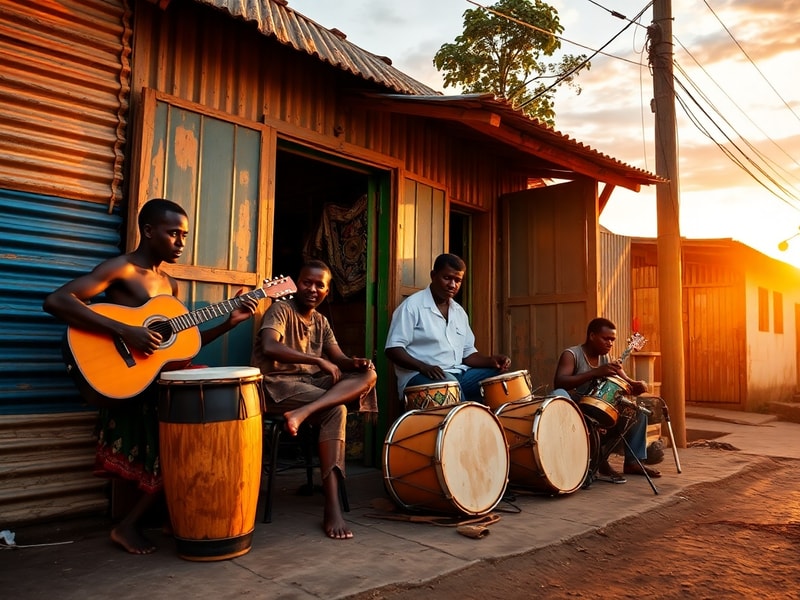
The arts offer another lens into Haitian identity. Haitian visual art, particularly the vibrant paintings of the Saint-Soleil school and the metalwork sculptures of Grand Rue, are celebrated worldwide for their bold colors, symbolic imagery, and raw emotional power. Artists like Hector Hyppolite and Rigaud Benoît transformed everyday materials into profound expressions of faith, struggle, and hope. Meanwhile, Haitian music—from the sacred rhythms of Rara to the global influence of kompa and rasin—serves as both cultural glue and a tool for protest. These artistic traditions are not merely decorative; they are acts of resistance and preservation.
Modern Haiti: A Nation at the Crossroads
Today, Haiti stands at a critical juncture. Political instability, gang violence, and economic collapse have pushed the country to the brink of what some describe as a failed state. The 2021 assassination of President Jovenel Moïse plunged the nation into deeper chaos, and the subsequent rise of armed groups has made large parts of Port-au-Prince ungovernable. Over 200,000 people have been displaced by gang violence, and cholera outbreaks have resurfaced due to crumbling infrastructure. The international community’s response has been inconsistent—sometimes offering aid, often imposing conditionalities that undermine Haitian sovereignty.
Yet even in these conditions, Haitians continue to build. Grassroots organizations, women-led cooperatives, and youth movements are reimagining Haiti from the ground up. In the Artibonite Valley, farmers are reviving traditional agricultural techniques to combat food insecurity. In Port-au-Prince’s slums, community health workers are providing critical services where the state cannot. The diaspora, numbering in the millions, remains a vital lifeline, sending remittances that account for nearly a third of Haiti’s GDP. These remittances often exceed foreign aid, highlighting the resilience of Haitian families and their transnational networks.
The role of the Haitian diaspora cannot be overstated. Cities like Miami, New York, Montreal, and Paris are home to vibrant Haitian communities that sustain cultural traditions through festivals, media, and political advocacy. Haitian-American artists like Wyclef Jean and Denzel Washington, and writers like Edwidge Danticat, have brought Haitian stories to global audiences. Meanwhile, diaspora-led organizations are funding schools, clinics, and disaster relief efforts back home. This transnational connection is both a source of strength and a reminder of the ongoing brain drain that drains Haiti of skilled professionals.
The Global Gaze: How the World Sees Haiti
International media coverage of Haiti often fixates on crises—earthquakes, hurricanes, coups, and kidnappings. Rarely does the narrative extend to the country’s contributions to global thought, from its revolutionary ideals to its ecological innovations. Haiti is the only Caribbean nation to have successfully overthrown slavery and colonialism, a fact that resonates with movements for racial justice worldwide. Yet, this history is frequently erased or minimized in Western education systems, perpetuating stereotypes of Haiti as a “poor, helpless nation.”
This distorted perception has real consequences. It shapes foreign policy, humanitarian aid, and even tourism. While countries like the Dominican Republic and Cuba attract millions of visitors annually, Haiti’s image as a dangerous destination persists despite its rich cultural heritage and natural beauty. Initiatives like community-led tourism in places like Jacmel and Île-à-Vache are slowly changing perceptions, offering travelers authentic experiences rooted in Haitian hospitality and craftsmanship.
Moreover, Haiti’s environmental challenges—deforestation, soil erosion, and vulnerability to climate change—are often framed as self-inflicted rather than the result of centuries of exploitation and neglect. The 2010 earthquake, for instance, was devastating not just because of its magnitude but because decades of poor governance and international mismanagement had weakened infrastructure. International aid, while well-intentioned, has sometimes exacerbated problems by prioritizing short-term relief over long-term development and local ownership.
There is a growing recognition that sustainable solutions must be Haitian-led. Organizations like Konbit Mizik and the Haitian Health Foundation are working within communities to build resilience, emphasizing local knowledge and participatory approaches. These efforts challenge the savior complex that often dominates foreign engagement in Haiti, instead advocating for partnerships based on mutual respect and shared goals.
Looking Ahead: What’s Next for Haiti?
The path forward for Haiti is uncertain but not without hope. Key to any recovery will be addressing the gang violence that has paralyzed the country. The recent formation of a transitional council is a tentative step toward stability, but lasting peace will require disarmament, economic opportunity, and the restoration of trust in public institutions. International actors must move beyond crisis response and invest in institutions that Haitians themselves can trust.
Education and job creation are equally critical. Over half of Haiti’s population is under 25, and youth unemployment hovers around 40%. Vocational training programs, like those offered by local NGOs, are equipping young people with skills in construction, agriculture, and tech, offering alternatives to gang recruitment. Meanwhile, efforts to revive Haiti’s textile and artisan sectors could tap into global markets while preserving cultural heritage.
Perhaps most importantly, Haiti’s future depends on reclaiming its narrative. From the revolutionary ideals of Dessalines to the creative genius of its artists, Haiti has always been a wellspring of innovation and defiance. The world’s perception of Haiti must evolve from one of pity or fear to one of respect and partnership. That begins with listening to Haitians—not as victims, but as architects of their own destiny.
As the sun sets over Port-au-Prince’s hills, casting golden light on the colorful tin roofs of shantytowns and the grand cathedrals of the elite, one thing is clear: Haiti is not just surviving. It is creating. It is resisting. It is dreaming. And in a world that often seeks to define it by its struggles, Haiti continues to define itself—on its own terms.