Ivory Coast vs Norway: When Football Meets Cultural Clash
When the Ivory Coast national football team faced Norway in a high-stakes international friendly last month, the match wasn’t just about three points. It was a collision of football philosophies, economic disparities, and cultural pride played out on a pitch in Oslo. The final whistle ended 2-2, but the real story unfolded long before the first whistle blew.
The footballing philosophies colliding in Oslo
Norway’s approach to football is defined by structure, pragmatism, and a long-term development model. Their national team, ranked 44th in the world, relies on disciplined pressing, set-piece mastery, and a reliance on players developed through their domestic league and academies. The Ivory Coast, ranked 49th and often called the “Elephants,” brings flair, creativity, and a raw, almost improvisational style that has dazzled fans for decades.
The contrast is visible even in warm-ups. Norwegian players move in precise triangles, their drills echoing the meticulous planning of a nation that values consensus and stability. Ivorian players, by contrast, warm up with bursts of speed, sudden feints, and laughter that carries across the field—an expression of joy that feels almost rebellious against the cold efficiency of their opponents.
This cultural tension in style mirrors broader societal differences. Norway, a country of 5.4 million people, leverages wealth from oil and gas to fund grassroots football programs. The Ivory Coast, with 28 million people and a GDP per capita one-tenth that of Norway’s, must rely on raw talent and instinct. Yet, despite the uneven playing field, the Ivorian team has produced legends like Didier Drogba and Yaya Touré—players whose careers were shaped by limited resources and immense creativity.
Economic realities shaping the pitch
The match fee tells a silent story. Norway’s Football Federation pays visiting teams a reported €150,000 per friendly, while the Ivorian federation receives a fraction of that after expenses. This financial imbalance reflects a global reality: football is a globalized industry, and economic power dictates participation. Yet, the Ivorian team walked onto the pitch in Oslo not as supplicants, but as cultural ambassadors.
Football in Norway is subsidized by state funding and corporate sponsorships. Clubs like Rosenborg and Bodø/Glimt compete in UEFA competitions with budgets exceeding €50 million annually. In Abidjan, the club Étoile du Sahel operates on a shoestring budget, yet has produced stars who now play in Europe’s top leagues. This disparity extends beyond money—it’s about access to coaching, technology, and infrastructure.
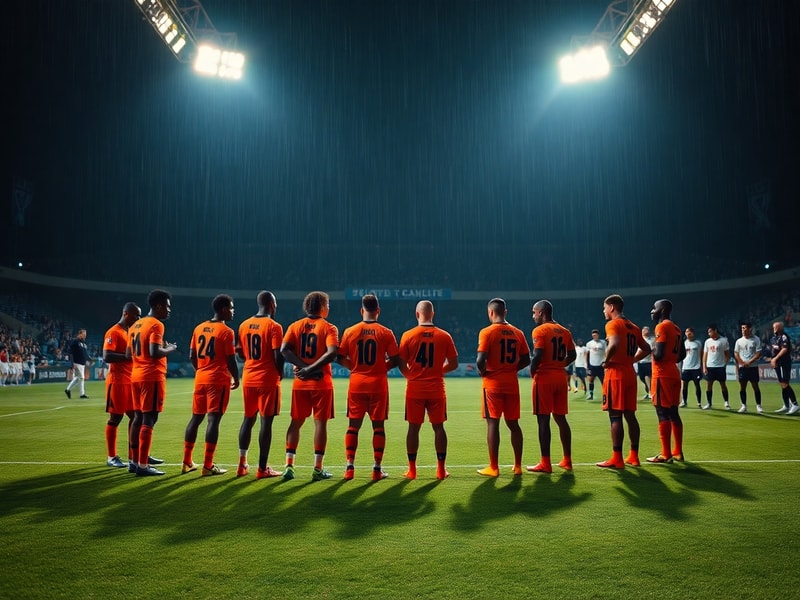
The match itself was held at the Ullevaal Stadion, Norway’s national stadium, surrounded by snow-capped hills under a pale winter sun. The Ivorian players, many of whom had never experienced such cold, joked about needing “thermal underwear” between training sessions. Their Norwegian counterparts, meanwhile, treated the conditions as routine. This small moment captured the essence of the encounter: two worlds meeting on a football field, each bringing their own version of reality.
Cultural pride on display
For the Ivory Coast, football is more than a sport—it’s a unifying force. The national team’s green, orange, and white jerseys are worn with pride across a country still healing from civil conflict. Football has been a symbol of hope, a stage where Ivorians of all backgrounds stand together. Norway, by contrast, uses football to project stability and social cohesion—its national team is a microcosm of a multicultural society that balances integration with national identity.
The pre-match anthems told their own story. The Norwegian national anthem, “Ja, vi elsker,” is a slow, solemn hymn sung with quiet patriotism. The Ivorian anthem, “L’Abidjanaise,” is a rhythmic, almost celebratory song that rises to a crescendo—an anthem that feels like a call to dance. As the players stood for both, the contrast was not just musical but emotional. One team stood for tradition. The other stood for survival.
Off the pitch, cultural exchange continued. Ivorian players visited a local school in Oslo, where children asked about African football culture. Norwegian fans, many of whom had never met someone from West Africa, lined up for autographs with genuine curiosity. A Norwegian journalist asked an Ivorian midfielder about his “African rhythm” on the pitch. The player laughed and said, “It’s not rhythm. It’s instinct. You plan. We feel.”
Lessons beyond the result
The 2-2 draw left no clear winner, but the match offered something more valuable: a lesson in respect. Norway played with tactical discipline, but the Ivory Coast’s creativity nearly undid them. Norway’s players were efficient; the Ivorians were electric. In the end, both teams walked away with something to ponder.
For Norway, it was a reminder that football is not just about systems—it’s about soul. For the Ivory Coast, it was validation that their style, forged in hardship, can still shine on the world stage. The match also highlighted the growing trend of “development friendlies,” where teams from different footballing cultures meet not just to compete, but to learn.
Football’s future may lie in bridging these divides—not through charity, but through shared passion. The Ivory Coast and Norway may never meet again, but their encounter in Oslo will linger in the memory of those who saw it. It was a game where two footballing cultures didn’t just play against each other—they played with each other.
And perhaps that’s the most important lesson of all.