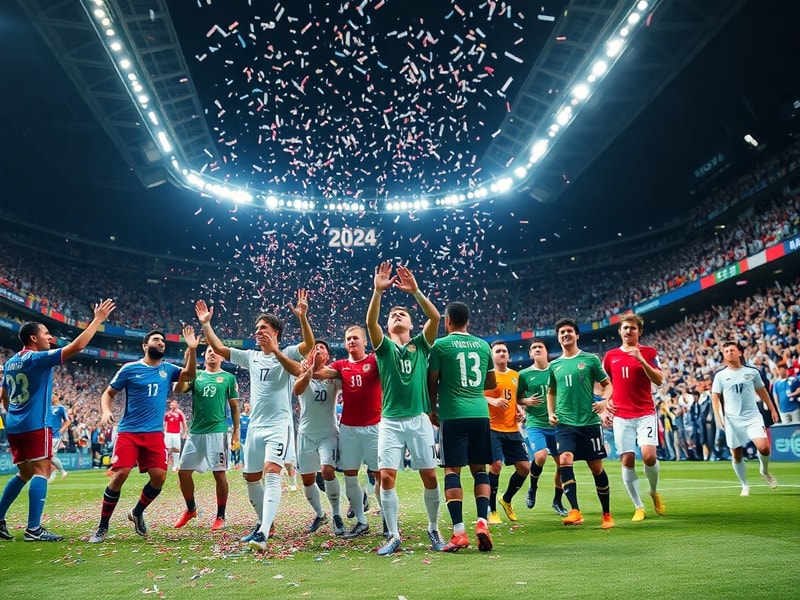
World Cup Players: Legends, Icons, and Global Stars
The FIFA World Cup isn’t just a tournament; it’s a global stage where athletes transform into legends. Every four years, the planet’s most talented footballers converge to compete not just for national pride, but for the chance to etch their names into history. These players embody the spirit of the game—resilience, creativity, and relentless ambition—while also reflecting the cultural identities of their homelands. From the samba rhythms of Brazil to the disciplined tactics of Germany, the World Cup showcases football as a universal language.
The Evolution of World Cup Players
The profile of a World Cup player has transformed dramatically since the tournament’s inception in 1930. Early competitions featured amateur athletes balancing football with full-time jobs, often arriving with limited preparation. Today, players are high-performance athletes, backed by state-of-the-art science, personalized nutrition plans, and psychological support. The physical demands have escalated too. Modern forwards sprint up to 10 kilometers per game, while defenders engage in tactical duels that demand near-perfect positioning.
Tactical intelligence has also become a defining trait. Players like Argentina’s Lionel Messi and Portugal’s Cristiano Ronaldo didn’t just rely on raw talent—they adapted to evolving systems, from the rigid formations of the 1960s to the fluid, position-swapping styles of today. The introduction of the back-pass rule in 1992 and the later adoption of VAR (Video Assistant Referee) systems have further refined the role of defenders and goalkeepers, turning them into playmakers in their own right.
A Global Talent Pipeline
The World Cup’s reach extends far beyond traditional football powerhouses. Nations like Senegal, Morocco, and Japan have used the tournament to announce their arrival on the global stage. In 2022, Morocco became the first African and Arab nation to reach the semifinals, showcasing how football can serve as a bridge between continents and cultures. These breakthroughs are not isolated incidents but the result of decades-long investments in youth academies, coaching education, and infrastructure development.
African football, in particular, has seen a surge in talent exported to Europe’s top leagues. Players like Didier Drogba (Ivory Coast), Mohamed Salah (Egypt), and Sadio Mané (Senegal) have become icons, both on and off the pitch. Their success has inspired a new generation across the continent, proving that World Cup glory isn’t reserved for those born in Europe or South America. Meanwhile, Asia’s rise has been equally notable. Japan’s national team, known for its technical precision and collective ethos, defeated both Germany and Spain in the 2022 group stage—a statement that redefined Asian football’s standing.
Cultural Icons and National Symbols
World Cup players often transcend sport, becoming living symbols of national identity. Brazil’s Pelé didn’t just score goals; he embodied the joy and creativity of joga bonito (the beautiful game). His performances in 1958, 1962, and 1970 made him a global ambassador for Brazilian culture, blending football with samba, carnival, and a spirit of improvisation. Similarly, Diego Maradona’s 1986 World Cup heroics—including the infamous “Hand of God” and the “Goal of the Century” against England—turned him into a folk hero in Argentina, a figure who transcended class and geography.
In Europe, players like France’s Zinedine Zidane or Germany’s Miroslav Klose became cultural touchstones. Zidane’s headbutt in the 2006 final may have marred his legacy, but his earlier performances in the tournament cemented his status as a national icon. For France, a country shaped by immigration, Zidane’s Algerian heritage added another layer to his significance, representing the diverse fabric of modern French society. Klose, meanwhile, held the record for most World Cup goals (16) until it was surpassed in 2022. His consistency over four tournaments mirrored Germany’s engineering reputation—meticulous, reliable, and built to last.
Beyond the Pitch: Activism and Influence
Today’s World Cup players are also social influencers and activists. Megan Rapinoe’s advocacy for LGBTQ+ rights and gender equality has made her a prominent voice in football and beyond. Similarly, players like Marcus Rashford have used their platform to tackle child poverty in the UK, forcing policy changes through public campaigns. The 2022 World Cup in Qatar brought human rights issues into sharp focus, with players like Germany’s Joshua Kimmich and Norway’s Ada Hegerberg speaking out against the host nation’s labor practices.
These actions reflect a shift in athlete mentality. No longer content with being mere entertainers, modern footballers leverage their global reach to address systemic problems. The rise of social media has amplified their impact, allowing them to bypass traditional gatekeepers and communicate directly with fans. However, this new role comes with risks. Players who speak out often face backlash from sponsors, federations, or even governments, as seen when Iran’s players were allegedly threatened for not singing the national anthem in protest of their government’s policies.
The Business of World Cup Players
The economics of World Cup players have evolved into a multi-billion-dollar ecosystem. Clubs invest millions in scouting networks spanning every continent, searching for the next Mbappé or Haaland. The transfer market for World Cup participants has become a barometer for a player’s market value. For instance, after his stellar 2018 World Cup performance, Kylian Mbappé’s transfer fee soared from €180 million to a reported €160 million when Real Madrid eventually signed him in 2024—numbers that dwarf the fees paid for most players outside the tournament.
Sponsorship deals are another lucrative avenue. Players like Neymar and Cristiano Ronaldo earn more from endorsements than from their club salaries. The 2022 World Cup saw a record $7.5 billion in sponsorship revenue, with companies like Adidas, Coca-Cola, and Visa competing fiercely for player endorsements. These partnerships extend beyond mere advertising; they shape global perceptions. When a player like Erling Haaland promotes Nike, he’s not just selling boots—he’s influencing youth culture in Norway, Brazil, and beyond.
The Pressure and the Glory
The psychological toll on World Cup players cannot be overstated. The weight of national expectations, combined with the short tournament window, creates immense pressure. Players like England’s Gareth Southgate, who missed a crucial penalty in 1996, carry that burden for years. Even the most decorated stars, like Brazil’s Ronaldo in 1998, have crumbled under the weight of expectation. The 2022 tournament saw Morocco’s goalkeeper Yassine Bounou face relentless scrutiny after a penalty shootout loss to Portugal, despite his heroic performances throughout the competition.
Yet, for those who succeed, the rewards are unparalleled. Winning the World Cup can redefine a player’s legacy. Consider Fabio Grosso’s last-gasp goal for Italy in 2006, which sent them to the final, or Mario Götze’s extra-time winner for Germany in 2014. These moments become etched in football folklore, immortalized in documentaries, songs, and national memory. The emotional payoff—lifting the trophy in front of 80,000 fans and millions more watching at home—is a feeling no other sport can replicate.
The FIFA World Cup is more than a competition; it’s a mirror reflecting the world’s diversity, ambition, and contradictions. Players from every corner of the globe bring their unique stories to the pitch, creating a tapestry of human experience. Whether it’s through breathtaking skill, social activism, or sheer resilience, these athletes remind us why football captivates billions. As the tournament grows, so too does the responsibility on its stars—to perform, to inspire, and to challenge the status quo.
For fans, the World Cup is a four-yearly reminder of football’s power to unite. For players, it’s the ultimate proving ground. And for the world, it’s a stage where heroes are made, legends are born, and history is written in sweat, tears, and glory.