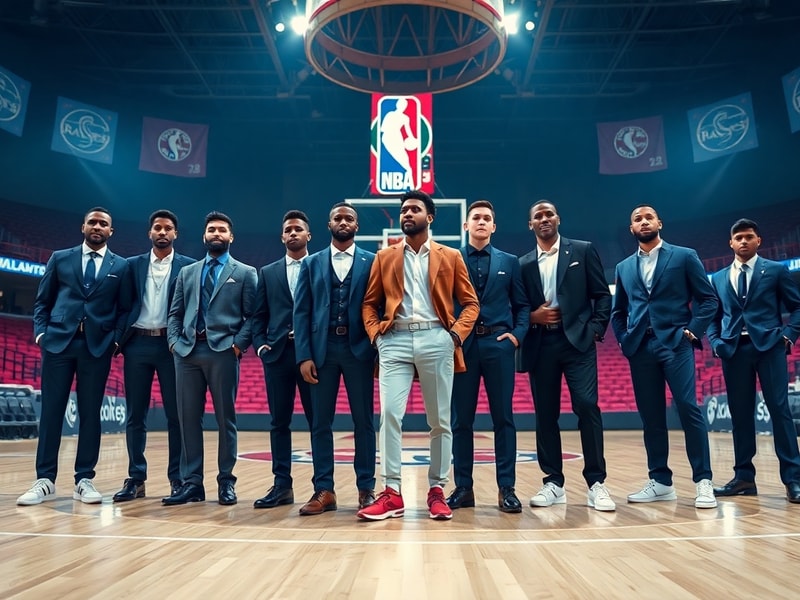
The 2026 NBA free agency class is shaping up to be one of the most anticipated in league history, with a deep pool of All-Stars, franchise cornerstones, and role players set to hit the open market. While the 2025 class—headlined by Paul George and Klay Thompson—already promises intrigue, next summer’s group could redefine the power structure of the NBA for years to come. Teams with cap space, contenders looking to make a final push, and rebuilding squads hunting for foundational pieces are all circling like vultures over a carcass. The stakes are higher than usual because the 2026 draft class is widely regarded as underwhelming, making free agency the primary avenue for superstar acquisition.
The star power on the horizon
At the top of the 2026 free agency list sits a trio of generational talents: Kawhi Leonard, LeBron James, and Kevin Durant. Leonard, now 35, remains one of the league’s most efficient scorers and lockdown defenders, even as injuries have disrupted his availability in recent years. James, pushing 42, continues to defy Father Time, averaging nearly 25 points per game in 2024-25 while playing heavy minutes. Durant, now 37, still operates as one of the most unstoppable scorers in the league, though his durability remains a lingering question mark.
The next tier includes players like Devin Booker, Jayson Tatum, and Bam Adebayo—all entering their prime years and likely to command max-level contracts. Booker, who turns 29 in July 2026, is the most likely to secure a supermax deal, while Tatum and Adebayo could explore extensions if their teams don’t prioritize retaining them. The middle class of free agents includes veterans like Kyrie Irving, CJ McCollum, and Andrew Wiggins, whose roles will depend heavily on their performance in the 2025-26 season.
For teams with financial flexibility, the 2026 class offers a rare opportunity to land multiple stars. The San Antonio Spurs, with cap space and youth, could emerge as unexpected players in the sweepstakes, especially if Victor Wembanyama develops into a true franchise cornerstone. Meanwhile, the Oklahoma City Thunder, fresh off their 2025 title run, may use their financial power to add another star alongside Chet Holmgren and Jalen Williams.
Team strategies and salary cap implications
The salary cap for the 2026-27 season is projected to be around $150 million, with a luxury tax threshold near $180 million. Teams like the Golden State Warriors and Los Angeles Lakers, already near the tax line, may face tough decisions about re-signing their own free agents versus chasing external stars. The Warriors, for instance, could opt to retain young players like Moses Moody while using their mid-level exception to add complementary talent rather than splurging on a marquee name.
For contenders like the Boston Celtics and Denver Nuggets, the challenge will be balancing short-term success with long-term flexibility. The Celtics, already deep in talent, might explore a blockbuster trade to acquire another star, but their ability to retain their own free agents—like Jrue Holiday or Al Horford—could dictate their approach. The Nuggets, meanwhile, face a pivotal offseason with Nikola Jokić’s future uncertain beyond 2026. If Jokić declines his player option, Denver could enter free agency with significant cap space and a need to retool around him.
The financial landscape also includes the mid-level exception ($12.6 million in 2025-26) and the bi-annual exception ($4.5 million), both of which could play crucial roles for teams with limited cap space. The Detroit Pistons, for example, might use their mid-level exception to land a veteran presence to mentor their young core, while the Orlando Magic could deploy their bi-annual exception to add a stretch big or sharpshooter.
Potential blockbuster trade scenarios
While free agency always carries unpredictability, the 2026 offseason could see a flurry of trade activity designed to position teams for free agency. A prime candidate for a blockbuster move is Damian Lillard, who has a player option for 2025-26 and could opt out to seek a contender. The Milwaukee Bucks, armed with Giannis Antetokounmpo and a deep roster, might explore a package centered around Brook Lopez or Khris Middleton to land Lillard. Alternatively, the Dallas Mavericks could package Luka Dončić’s contract (if he agrees to an extension) to acquire another star, though such a deal would require significant cap gymnastics.
Another intriguing scenario involves Karl-Anthony Towns, whose contract becomes movable if the Timberwolves decide to rebuild. A team like the Houston Rockets, with cap space and young talent, could package Jalen Green and multiple picks to land Towns, creating a dynamic frontcourt duo with Amen and Ausar Thompson. The Rockets, in particular, have shown a willingness to take on salary dumps in exchange for draft capital, and a Towns deal would align with their long-term vision.
Internally, teams like the Miami Heat and Philadelphia 76ers may explore sign-and-trade scenarios to retain their own free agents while freeing up cap space. The Heat, for instance, could use a sign-and-trade involving Tyler Herro to acquire another star, though Herro’s restricted free agency complicates matters. The 76ers, meanwhile, might explore a deal involving Tyrese Maxey to bring in a third star, though such a move would require Joel Embiid’s buy-in and a willingness to break up the core.
The rebuilding teams’ playbook
For teams in the early stages of contention, the 2026 free agency class represents a chance to accelerate their rebuilds. The Atlanta Hawks, fresh off a disappointing 2024-25 season, could use their cap space to land a franchise cornerstone like Booker or Tatum, though such a move would require trading away Dejounte Murray or Clint Capela to clear the books. The Indiana Pacers, another team with financial flexibility, might target a high-end free agent to pair with Tyrese Haliburton, though their recent draft capital (Alando Swift, Jarace Walker) could also position them for a slow burn.
The Charlotte Hornets, long mired in mediocrity, could emerge as a dark horse in the free agency sweepstakes. With the second pick in the 2025 draft (assuming they land it) and cap space to spare, the Hornets could package LaMelo Ball with multiple picks to land a star like Booker or Jalen Brunson. The Sacramento Kings, another team with cap space and a young core, might also explore a splashy free-agent signing, though their recent struggles have raised questions about their long-term viability.
For teams like the Utah Jazz and Portland Trail Blazers, the 2026 free agency class could be a chance to reset entirely. The Jazz, with Walker Kessler and key young players already in place, might use their cap space to land a veteran presence while continuing to develop their core. The Blazers, meanwhile, could use their financial flexibility to acquire a mid-tier free agent to complement their young duo of Scoot Henderson and Shaedon Sharpe, though their draft position (likely top-10) could also yield a foundational piece.
What’s at stake beyond the court
The 2026 free agency class isn’t just about on-court performance—it’s also about narrative and legacy. For players like LeBron James and Kevin Durant, 2026 could mark the final chapter of their Hall of Fame careers, with the potential for one last championship push. For younger stars like Booker and Tatum, it’s an opportunity to cement their status as franchise pillars and secure generational wealth. The teams that land these players won’t just be adding talent; they’ll be shaping the league’s hierarchy for the next decade.
The financial implications are equally significant. With the salary cap projected to rise modestly, teams will need to balance short-term success with long-term fiscal responsibility. The Warriors, for example, could face a luxury tax bill north of $200 million if they retain all their core players, a scenario that could force them to make tough choices about their future. Meanwhile, smaller-market teams like the Orlando Magic and San Antonio Spurs will need to leverage their cap space intelligently to compete without overpaying for aging veterans.
The 2026 free agency class also has broader implications for the NBA’s competitive balance. A scenario where multiple contenders land superstars could lead to a league dominated by a handful of powerhouse franchises, much like the Warriors’ 2010s dynasty. Alternatively, a more distributed approach—where mid-tier free agents land with up-and-coming teams—could create a more balanced and unpredictable league. The outcome will depend on the decisions made by general managers, agents, and players over the next 18 months.
One thing is certain: the 2026 free agency class will be a defining moment for the NBA. Whether it leads to a new dynasty, a reshuffling of power, or a period of sustained parity, the decisions made next summer will echo for years to come. For fans, it’s a chance to witness history. For teams, it’s a high-stakes gamble. And for the players involved, it’s the opportunity of a lifetime.