In late May 2024, a cryptic email surfaced online that has since sparked intense speculation across fishing communities, outdoor recreation forums, and even mainstream news outlets. The message—sent under the name of David Streever, a well-known ice angler and author of Bucks, Boats, and Burgers—warned recipients about a sudden shift in ice conditions on northern lakes. What began as a routine safety alert for anglers quickly evolved into a viral phenomenon, with some claiming it hinted at broader environmental warnings or even a coordinated hoax. As details continue to unfold, the episode raises important questions about the reliability of safety communications in outdoor sports and the power of viral misinformation.
What the Email Said—and Why It Spread So Fast
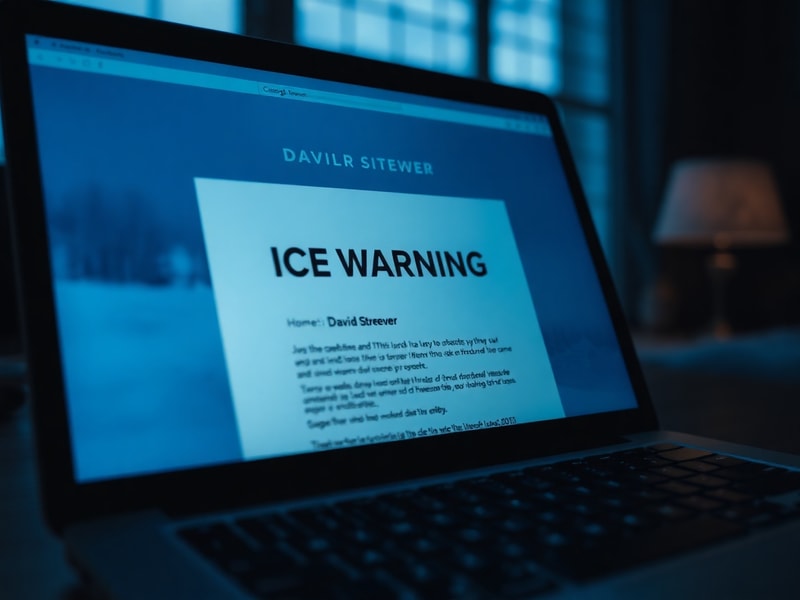
The email, titled “URGENT: Ice Conditions Changing Rapidly,” was sent to a closed group of ice anglers in Minnesota and Wisconsin on May 22. According to screenshots that later circulated on social media, it read:
“Anglers, take note: Reports from Lake of the Woods and Lake Mille Lacs indicate ice breaking up 2-3 weeks earlier than average. Travel at your own risk. Conditions may deteriorate faster than expected due to recent temperature spikes. Stay off the ice.”
Within hours, the message was shared beyond its intended audience. By the next morning, it had appeared on Reddit threads, Twitter/X posts, and even local news segments. The rapid spread was fueled in part by timing—ice anglers were already on edge after an unusually mild winter—and in part by the sender’s name. David Streever, though not a professional meteorologist, is a respected figure in ice fishing circles. His 2019 book Bucks, Boats, and Burgers blends humor with outdoor survival tips, giving his warnings unintended credibility.
Yet the email’s authenticity was immediately questioned. Streever himself denied sending it. “I’ve never issued a group email like that,” he told Outdoor Life. “Someone’s using my name to lend weight to what might be real information—or what might just be a rumor.” The incident highlights a growing challenge in outdoor safety communication: when trusted voices are co-opted, how does the public discern fact from fabrication?
Environmental Context: Is the Ice Really Retreating Early?
To assess the email’s claims, we need to look at broader climate patterns. The winter of 2023–2024 was one of the warmest on record in the Great Lakes region. According to NOAA data, average ice cover on Lake Superior was 45% below the 1981–2010 average. Lakes that historically froze solid by December—like Mille Lacs—remained partially open through January. This isn’t an isolated blip. A 2023 study in Climate Dynamics found that ice duration on North American lakes has declined by an average of 18 days per decade since 1972.
So was Streever’s email based on real data? Possibly. But the lack of official verification turned it into a digital game of telephone. The Minnesota Department of Natural Resources (DNR) later issued a statement confirming “unseasonably early ice breakup” but stressed that conditions vary by lake and by day. Their official safety advice remained unchanged: “Wait for stable ice thickness of at least 4 inches for walking, 8–12 inches for ATVs.”
This discrepancy between public perception and official guidance reveals a troubling gap. Anglers and skiers rely on real-time, peer-to-peer communication when making life-or-death decisions. But when that communication lacks transparency or verification, it can do more harm than good. The Streever email incident underscores the need for better systems—whether through verified safety apps, official DNR hotlines, or even blockchain-based timestamping of critical alerts.
Broader Implications: Trust in Outdoor Safety Communications
The viral ice warning email is more than a fishing story—it’s a case study in how information spreads in niche communities with high stakes. Consider these key points:
- Authority laundering: By attaching a recognizable name to unverified data, the sender exploited the trust built by a legitimate figure. This tactic is increasingly common in misinformation campaigns, from fake celebrity endorsements to doctored quotes from scientists.
- Speed vs. accuracy: In outdoor sports, seconds matter. The pressure to share urgent updates often outweighs the time to verify them. This creates a feedback loop where rumors gain traction before facts can catch up.
- Official silence: When government agencies fail to respond quickly to viral claims, it leaves a vacuum that conspiracy theories or exaggerated warnings fill. The Minnesota DNR’s delayed response likely contributed to the confusion.
- Cultural polarization: In polarized communities—whether ice anglers, climate activists, or survivalists—trust is fragmented. Some recipients of the email dismissed it outright as “another climate scare,” while others treated it as gospel. This binary thinking erodes collective safety.
This episode also intersects with a larger trend: the gamification of outdoor safety. Apps like Fishbrain and iOverlander allow users to share real-time reports on ice thickness, trail conditions, and wildlife sightings. While these platforms democratize information, they also democratize misinformation. A single inaccurate post about thin ice could lead to rescues—or worse. Some outdoor tech companies are now experimenting with verification layers, such as requiring photo evidence tied to GPS coordinates. But adoption remains uneven.
Meanwhile, the fishing industry is taking notice. Major retailers like Bass Pro Shops and Cabela’s have begun featuring climate-resilience content in their blogs and newsletters, blending gear reviews with safety updates. This shift reflects a growing recognition that outdoor recreation is no longer just about skill—it’s about adapting to environmental change. Yet adaptation requires trustworthy data, not viral rumors.
The Way Forward: Can We Fix the System?
Resolving this dilemma won’t be easy, but several strategies show promise. First, outdoor organizations could adopt a “trusted sender” model, similar to how news outlets use verified Twitter accounts or press badges. Anglers, hunters, and hikers could register with state agencies and receive official safety alerts directly—without the noise of social media.
Second, technology platforms need to integrate official data feeds. Imagine if every ice report on Fishbrain automatically cross-referenced NOAA satellite data or DNR ice thickness measurements. Such a system wouldn’t eliminate rumors, but it would give users context to evaluate them.
Third, public education must evolve. Outdoor safety courses—like those offered by the Student Conservation Association or local hiking clubs—should include media literacy modules. Teach anglers not just how to read ice, but how to verify the information they’re reading. This dual focus on technical skill and critical thinking could save lives.
Finally, transparency from authorities is crucial. When a viral claim emerges, agencies must respond quickly—even if only to say, “We’re investigating.” Silence breeds speculation. The Minnesota DNR’s eventual clarification helped, but it came too late to prevent widespread confusion.
As for David Streever, he has largely stayed above the fray. In a recent Instagram post, he shared a photo of himself on a frozen lake with the caption: “Ice is safe today. But always check local reports.” It’s a simple message, but one that cuts to the heart of the issue. In an era where anyone can amplify a warning—or a hoax—personal responsibility and official integrity must go hand in hand.
Until then, the ice will keep melting, the rumors will keep spreading, and outdoor enthusiasts will keep making choices in the dark. The question isn’t just whether the ice is safe. It’s whether we’re ready to build a system where the truth travels as fast as the lies.