The United States and Bosnia have shared a complex relationship spanning decades, marked by geopolitical shifts, cultural exchanges, and sports rivalries. While the two nations differ vastly in size, influence, and historical trajectory, their interactions—whether in diplomacy, migration, or athletics—reveal unexpected connections and tensions. From the waves of Bosnian refugees who sought asylum in the U.S. during the 1990s to the intense showdowns between their national soccer teams, the relationship is layered with both cooperation and competition.
Historical Ties: From Conflict to Cooperation
The foundation of U.S.-Bosnia relations was laid in the crucible of the Bosnian War (1992–1995), a brutal conflict that drew global condemnation for ethnic cleansing and genocide. The U.S. played a pivotal role in brokering the Dayton Peace Accords in 1995, which ended the war but froze Bosnia into a fragile, ethnically divided state. American military and humanitarian aid poured into the region, saving countless lives and shaping Bosnia’s post-war recovery.
For many Bosnians, the U.S. became a symbol of hope and opportunity. Tens of thousands resettled in cities like St. Louis, Chicago, and Detroit, where Bosnian communities flourished. Today, these diaspora populations serve as cultural and economic bridges, contributing to local economies while preserving Bosnian traditions. Organizations like the Bosnian American Genocide Institute in Chicago document this history, ensuring the lessons of the war are not forgotten.
Diplomatic Relations: Strengths and Strains
Bilateral relations remain cordial but are occasionally tested by regional politics. Bosnia’s bid for European Union membership and NATO integration has drawn U.S. support, aligning with America’s strategic interest in stabilizing the Balkans. However, internal divisions within Bosnia—fueled by ethnic nationalism—sometimes frustrate U.S. efforts to promote unity. The 2022 U.S. sanctions against Bosnian Serb leader Milorad Dodik, accused of undermining state institutions, underscored America’s willingness to hold leaders accountable.
Cultural diplomacy also plays a role. The U.S. Embassy in Sarajevo regularly funds exchange programs, English-language initiatives, and STEM scholarships for Bosnian students. These efforts aim to foster long-term ties, though critics argue they do little to address systemic corruption or economic stagnation in Bosnia. Meanwhile, Bosnia’s strategic location—sandwiched between Croatia, Serbia, and Montenegro—keeps it on America’s radar as a key player in Balkan stability.
Sports Rivalries: Soccer and Beyond
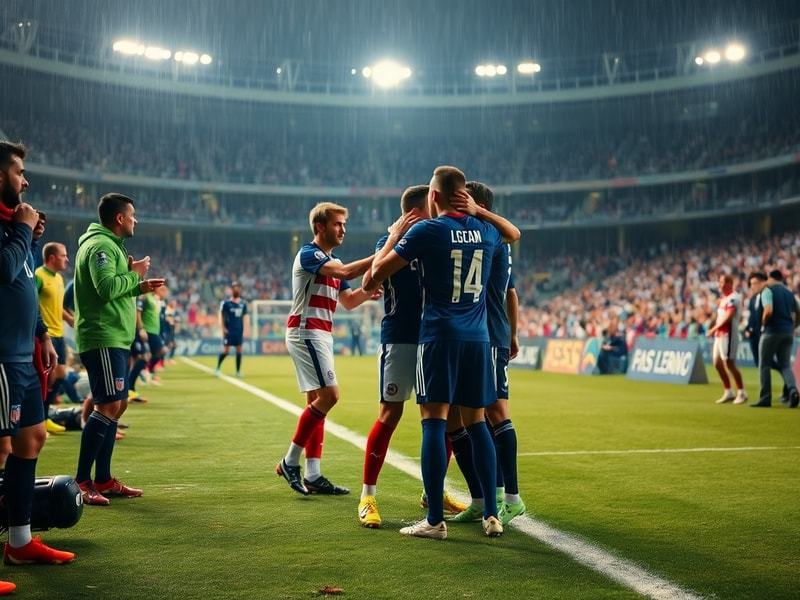
Nowhere are the U.S. and Bosnia’s competitive spirits more evident than on the soccer pitch. Their national teams have faced off five times since 2013, with the U.S. holding a narrow 3-2 edge. These matches are more than just games; they’re cultural events that unite diaspora communities and spark national pride. The most memorable clash came in 2014, when Vedad Ibišević’s 86th-minute winner sealed Bosnia’s historic 2-1 victory over the U.S. in a World Cup qualifier.
The rivalry extends beyond soccer. Bosnian athletes have made their mark in the NBA, with Mirza Teletović and Džanan Musa carving out careers in the U.S. league. Conversely, American players like Tim Duncan and Carmelo Anthony have trained in Bosnia during off-seasons, drawn by the country’s basketball culture. These exchanges highlight how sports can transcend politics, offering a shared language of competition and camaraderie.
The Bosnian Diaspora in America: A Living Bridge
Over 350,000 Bosnian Americans call the U.S. home, making it one of the largest Bosnian diaspora populations outside Europe. Cities like St. Louis and Milwaukee boast vibrant Bosnian enclaves, complete with halal markets, cafes serving ćevapi, and mosques catering to the Muslim-majority community. This diaspora has become a vital economic force, with many Bosnians launching businesses in construction, healthcare, and IT.
Yet integration hasn’t been seamless. Language barriers, trauma from the war, and generational divides have posed challenges. Organizations like the Congress of North American Bosniaks work to address these issues, advocating for better social services and cultural preservation. Meanwhile, the U.S. government has recognized the diaspora’s contributions, with former President Bill Clinton—who played a key role in the Dayton Accords—often praising their resilience.
For Bosnians in America, dual identity is a daily reality. Many navigate two cultures, celebrating Thanksgiving while observing Ramadan. This blend is perhaps best exemplified in cities like Chicago, where Bosnian festivals draw thousands, blending traditional folk music with American pop influences.
The U.S.-Bosnia relationship is a tapestry of history, politics, and human connections. From wartime alliances to diaspora-driven cultural exchanges, it’s a partnership defined by both solidarity and friction. As Bosnia continues its EU and NATO aspirations, and as the Bosnian diaspora grows in influence, the U.S. remains a critical—but not uncritical—partner. Whether on the soccer field or in diplomatic halls, the story of America and Bosnia is one of resilience, rivalry, and an enduring quest for a shared future.