Why Emergency Departments Matter Now More Than Ever
What Happens Inside a Hospital’s Emergency Department
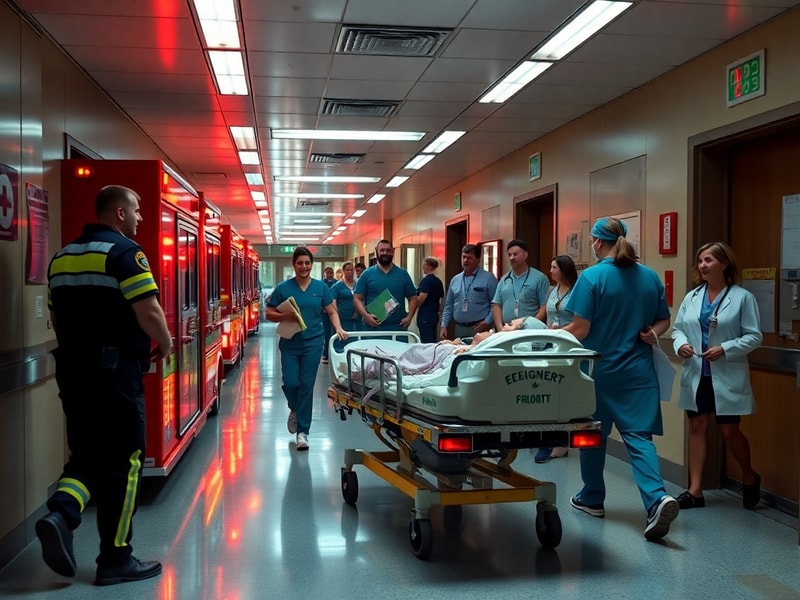
Emergency departments operate as the frontline of modern healthcare, where seconds count and decisions can mean the difference between life and death. These units are designed to handle anything from a sprained ankle to a heart attack, yet their structure, challenges, and cultural significance vary widely around the world. Whether in a bustling urban hospital or a rural clinic, the emergency department is often the only place patients can turn when their health takes an unexpected turn.
Globally, emergency medicine has evolved from a chaotic afterthought to a sophisticated, evidence-based specialty. In many high-income countries, dedicated emergency physicians and nurses work in teams to stabilize patients before transferring them to specialized wards. In lower-resource settings, emergency departments may function more like triage centers, where the most critical cases receive care first while others wait—or are turned away entirely. The differences reveal not just medical disparities, but broader societal values about who deserves urgent attention and how healthcare systems allocate limited resources.
How Emergency Departments Are Structured
Most emergency departments follow a tiered system that begins with triage, where a nurse assesses patients based on the severity of their symptoms. This step is crucial because it determines who gets seen first. In some systems, patients are assigned a color code—red for life-threatening, yellow for urgent but not immediately dangerous, and green for minor issues. Less formal systems rely on nurses’ judgment, which can lead to disparities in care.
Below the triage area, emergency departments are typically divided into zones:
- Resuscitation Room: For patients in cardiac arrest, severe trauma, or other life-threatening conditions. Equipped with advanced monitoring and rapid-response tools.
- Acute Care Bays: For patients requiring immediate but not immediately life-saving care, such as fractures, infections, or chest pain.
- Fast-Track or Minor Injury Area: For non-urgent cases like cuts, sprains, or minor illnesses. Designed to free up space for more critical patients.
- Isolation Rooms: For patients with contagious diseases like COVID-19, tuberculosis, or measles. These rooms have negative air pressure to prevent airborne spread.
Staffing models also differ. In the United States, emergency physicians complete a residency in emergency medicine, while in many European countries, general practitioners or surgeons may rotate through the ED. In parts of Africa and Southeast Asia, emergency care is often delivered by nurses with minimal physician oversight due to a shortage of trained doctors. These structural variations reflect deeper differences in healthcare funding, workforce training, and public health priorities.
The Global Challenge of Overcrowding
Overcrowding is one of the most persistent problems in emergency departments worldwide. In countries like the United States, Canada, and the United Kingdom, long wait times have become a symbol of systemic strain. A 2023 report from the American College of Emergency Physicians found that nearly half of all EDs in the U.S. are operating at or above capacity on a daily basis. This leads to patients waiting hours—or even days—for a bed, a phenomenon known as “boarding.”
In India, public hospital emergency departments often face overcrowding due to a lack of primary care access. Patients with chronic conditions or minor illnesses flood the ED because they have no alternative. Similarly, in South Africa, public sector emergency departments are overwhelmed by trauma cases from violence and road accidents, compounded by staff shortages and resource constraints. These patterns highlight how emergency departments become de facto safety nets for broken healthcare systems.
Solutions are emerging in pockets around the world. In Singapore, the government has invested in community health centers to reduce non-urgent ED visits. In Brazil, some cities have implemented mobile emergency units that respond to calls before patients reach the hospital. Yet, systemic reform remains slow, and the burden often falls on frontline staff who must balance efficiency with compassion in high-pressure environments.
Cultural Perceptions and the Role of the ED
How people view emergency departments is deeply tied to cultural attitudes toward healthcare. In Japan, for example, emergency departments are highly respected, but there is strong social pressure to avoid using them for non-urgent issues. The term “ER tourism” refers to patients who visit the ED for minor complaints, which is frowned upon and can even lead to social stigma. This reflects Japan’s emphasis on personal responsibility in healthcare and the cultural value placed on avoiding unnecessary strain on public resources.
In Mexico, emergency departments are often seen as a last resort, especially in rural areas where traditional healers and home remedies remain common. When patients do arrive, they may present with advanced stages of illness because they delayed seeking care. This cultural preference for alternative medicine can complicate triage and treatment in the ED, requiring staff to be culturally sensitive while ensuring timely intervention.
In Sweden, emergency departments are designed with patient dignity in mind. Privacy curtains, clear communication, and a focus on holistic care are prioritized. This aligns with Sweden’s broader healthcare philosophy, which emphasizes equity and patient-centered care. In contrast, in parts of the Middle East, emergency departments may operate with a more hierarchical structure, where family members play a significant role in decision-making and care coordination.
These cultural lenses shape not only how patients interact with emergency care, but also how healthcare systems are funded and staffed. Understanding these differences is essential for policymakers, clinicians, and patients alike as global health systems continue to evolve.
The Future of Emergency Medicine
The next decade will bring major changes to emergency departments, driven by technology, policy, and shifting demographics. Telemedicine is already being integrated into triage systems, allowing patients to consult with doctors via video before arriving at the ED. Artificial intelligence is being tested to predict patient deterioration and optimize staffing levels. In some hospitals, AI tools can analyze X-rays or ECGs faster than human radiologists, though ethical concerns remain about over-reliance on algorithms.
Another trend is the rise of freestanding emergency centers, which operate outside traditional hospitals and focus on urgent but non-life-threatening care. These centers, popular in the U.S., aim to reduce strain on hospital EDs while offering faster service. However, critics argue they fragment care and may lead to higher costs for patients.
Climate change is also reshaping emergency medicine. As extreme weather events, heatwaves, and infectious disease outbreaks become more frequent, emergency departments are adapting by training staff in disaster response and stocking supplies for mass casualty events. In Australia, for instance, EDs now prepare for bushfire-related respiratory emergencies, while in Europe, heatstroke cases surge during summer heat domes.
Despite these advances, the human element remains irreplaceable. Emergency departments are places of high emotion—fear, relief, grief, and hope often collide in a single shift. The best EDs are not just well-equipped, but also staffed by teams that understand the psychological toll of urgent care. Whether in a state-of-the-art facility in Germany or a rural clinic in Kenya, the core mission remains the same: to save lives, one patient at a time.