The U.S. Department of Education’s latest ruling on Myong Joon student loans has sent ripples through higher education circles, particularly among international students and financial aid administrators. Issued in late March, the decision clarifies long-standing ambiguities around loan forgiveness for borrowers who attended institutions that closed abruptly—like the controversial Myong Joon University in South Korea, which shuttered in 2019 amid allegations of fraud and mismanagement.
This isn’t just a policy tweak. It’s a landmark clarification that affects thousands of students, many of whom were left stranded mid-degree, with loans still due and no degree to show for it. What makes this ruling significant is how it intersects with broader global trends in student mobility, for-profit education regulation, and cross-border debt enforcement. While the U.S. is the first to issue such a directive, the implications may soon resonate in Canada, Australia, and the EU, where similar cases have emerged.
What the Ruling Actually Says
The Department of Education’s decision establishes a clear pathway for borrowers with Myong Joon loans to apply for federal student loan forgiveness under the “closed school discharge” program. This program was created to protect students when their schools close unexpectedly, but until now, its application to foreign institutions—especially those in South Korea—was murky at best.
The new guidance explicitly includes Myong Joon under the discharge criteria, provided the student was enrolled when the school closed or withdrew within 180 days of closure. It also waives the requirement for borrowers to transfer credits to another institution, a hurdle many faced due to language barriers and differing academic systems.
Most importantly, the ruling retroactively applies to loans disbursed between 2015 and 2019, covering the period when Myong Joon was operational and enrolling international students. This could affect over 1,200 borrowers in the U.S. alone, according to estimates from advocacy groups like the Student Borrower Protection Center.
A Global Perspective: When Foreign Schools Fail
Myong Joon is not an isolated case. In 2017, Canada’s TriOS College abruptly closed, leaving 1,500 international students—many from India and Nigeria—with incomplete programs and unpaid tuition. Australia’s Vocation Ltd collapse in 2015 affected 15,000 students across 20 campuses, triggering a parliamentary inquiry into for-profit education oversight.
What ties these cases together is the rapid globalization of higher education and the lack of coordinated international regulation. Unlike domestic schools, foreign institutions often operate under minimal scrutiny when recruiting overseas students. They rely on local agents, aggressive marketing, and promises of work visas—only to vanish when regulatory pressure mounts or funding dries up.
This creates a perfect storm: students take on debt believing a degree will lead to residency or employment, only to find their credits unrecognized and their loans unpayable. The Myong Joon ruling is a rare attempt to address this systemic gap, but it raises critical questions about accountability. Who bears responsibility when a foreign school fails—its home government, the host country, or the accrediting bodies?
The Human Cost: Stories from the Ground
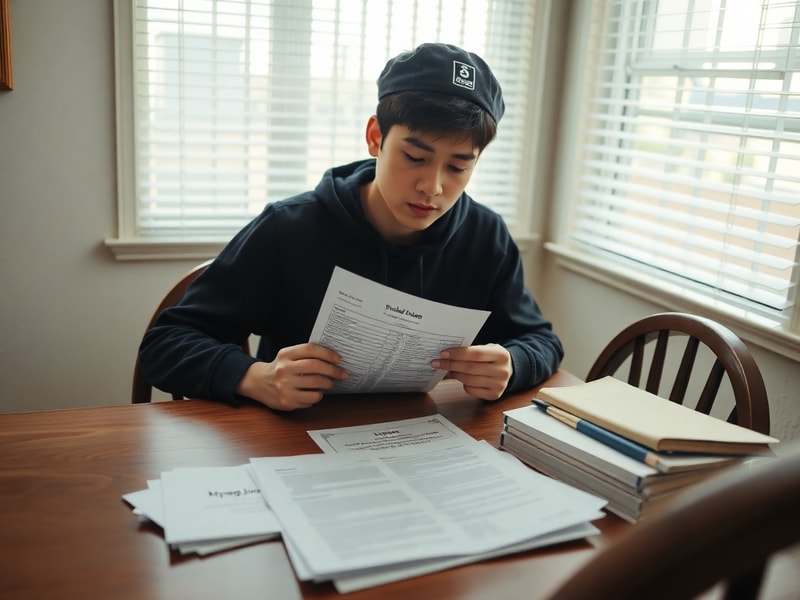
The impact of Myong Joon’s closure extends far beyond policy documents. Take Priya Kapoor, a 23-year-old from New Jersey who enrolled in 2018 after seeing ads promising a “fast-track MBA with U.S. job placement.” When the school closed in October 2019, she had completed only one semester. She still owes $28,000 in federal loans and has been unable to enroll elsewhere due to credit transfer denials.
“They took my money and my time,” Kapoor said in a recent interview. “Now I’m stuck. I can’t get a job with a partial degree, and I can’t afford to start over.” Her case is echoed by dozens of borrowers in online forums, where frustration has turned into organized advocacy. Groups like the Korean Student Alliance have launched petitions demanding broader debt relief and stronger protections for international students.
But not all borrowers are eligible. The ruling excludes students who withdrew before the closure or those who completed their programs. It also doesn’t address private loans, which many international students rely on due to limited federal aid eligibility. This creates a two-tier system: federally backed borrowers get relief; others remain trapped.
Broader Implications for Student Loan Policy
The Myong Joon ruling signals a potential shift in how the U.S. government views international education debt. Historically, federal loan forgiveness has focused on domestic institutions, but as student mobility grows, so does the need for cross-border solutions.
One emerging model is the use of bilateral agreements, like the one between the U.S. and South Korea to recognize certain degrees and credits. However, these are slow to implement and rarely cover for-profit institutions. Another approach is enhanced transparency: requiring foreign schools to register with the Department of Education before enrolling U.S. students, much like domestic colleges must do.
Critics argue that such measures don’t go far enough. “This is a bandage on a gaping wound,” said Dr. Elena Martinez, a higher education policy expert at Columbia University. “We need global standards for international student protections, not just piecemeal rulings after the damage is done.”
Meanwhile, financial aid offices across the country are scrambling to update their guidance. Some have already begun proactively reaching out to affected borrowers, while others wait for clearer instructions from the Department of Education. The process is uneven, and confusion persists—especially around deadlines and documentation requirements.
What Happens Next?
The Department of Education has opened a 60-day comment period for borrowers to submit discharge requests. Advocacy groups are urging students to act quickly, as processing times could stretch into months. The agency has also promised to work with South Korean authorities to recover funds from Myong Joon’s former operators, though legal hurdles remain high due to sovereign immunity and asset dissipation.
For now, the ruling stands as a rare win for international students, but its long-term impact depends on whether it sparks systemic change. Will other countries follow suit? Will the U.S. expand protections to private loan borrowers? These questions remain unanswered—but the conversation has begun.
The Myong Joon case is more than a legal footnote. It’s a mirror held up to the fractured reality of global higher education, where dreams of opportunity are often underwritten by debt and dashed by neglect. This ruling offers a sliver of justice—but the system still has a long way to go.