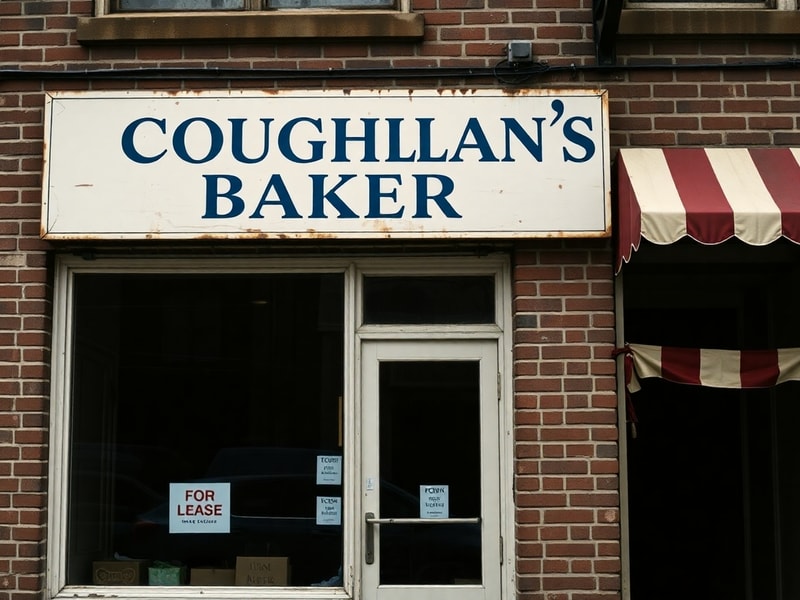
Coughlan’s Bakery Closes After 90 Years: The End of a Bronx Institution
From Family Legacy to Final Sale: The End of an Era at Coughlan’s Bakery
For nearly a century, Coughlan’s Bakery stood as a quiet monument to tradition in a rapidly changing world. The New York institution, known for its Irish soda bread, butter cookies, and unmistakable aroma of baked goods wafting through the Bronx, announced its closure this month after decades of service. The news sent ripples through local communities and beyond, prompting reflection on what it means when a small business built by immigrants becomes a casualty of modern commerce.
The bakery’s final day of operation, June 15, marked the close of a chapter that began in 1930 when Irish immigrant Michael Coughlan opened a modest shop on Fordham Road. Over the years, Coughlan’s evolved from a corner bakery serving working-class families to a regional brand with a cult following. Its products were staples in Irish-American households, especially during holidays like St. Patrick’s Day, when shelves would empty within hours. But like so many family-run businesses, Coughlan’s faced relentless pressure from rising rents, supply chain disruptions, and changing consumer habits.
“It wasn’t just a bakery,” said local historian Maria O’Shea, who grew up down the block. “It was a gathering place. You’d see cops, nurses, construction workers—all kinds of people—lining up before dawn. The smell alone made the neighborhood feel like home.” The bakery’s closure isn’t just about lost jobs or empty shelves; it signals a broader shift in how cities preserve their cultural fabric amid gentrification and corporate dominance.
The Economic Forces Behind the Closure
Coughlan’s story reflects a global trend: the decline of independent bakeries in favor of mass-produced alternatives. A report by the American Bakers Association found that between 2010 and 2023, the number of small commercial bakeries in the U.S. dropped by 18 percent. Rising ingredient costs, labor shortages, and competition from grocery chains offering “artisan-style” bread at lower prices have squeezed margins for traditional bakeries. In New York City, commercial rents in neighborhoods like the Bronx have surged by over 40 percent in the past decade, making it nearly impossible for legacy businesses to survive.
The bakery’s owner, Patrick Coughlan (Michael’s grandson), cited “unforeseen financial challenges” in a statement to the Bronx Times. While he did not elaborate on specifics, industry insiders point to a combination of factors: increased competition from national brands, the cost of maintaining a brick-and-mortar location, and the lingering effects of the pandemic, which disrupted supply chains for flour and dairy. “They were making a quality product,” said food critic Javier Morales. “But quality doesn’t always translate to profitability in today’s market.”
This isn’t an isolated case. Across Europe, small bakeries are disappearing as well. In Ireland, the number of traditional bakeries fell by 22 percent between 2015 and 2022, according to the Central Statistics Office. In France, the heartland of artisanal baking, 12 percent of independent bakeries closed between 2018 and 2023, according to the Confédération Nationale de la Boulangerie-Pâtisserie Française. The reasons are similar: rising energy costs, competition from supermarkets, and a generational shift away from baking as a trade.
The Cultural Significance of a Vanishing Tradition
Coughlan’s wasn’t just a business; it was a cultural touchstone. For generations of Irish immigrants, the bakery represented a taste of home. The soda bread recipe, passed down through the family, used a blend of flour imported from Ireland—a detail that mattered deeply to customers. “When I moved to New York in the 1970s, Coughlan’s was one of the first places I went,” said Dublin-born retiree Liam O’Connor. “It was the closest thing to a piece of Ireland I could find.”
The bakery’s closure also highlights the role of small businesses in preserving immigrant identity. In cities across the U.S. and Europe, family-run bakeries, delis, and butcher shops serve as living archives of cultural heritage. When they close, entire neighborhoods lose a piece of their history. “These places aren’t just about food,” said sociologist Dr. Elena Vasquez. “They’re about memory, ritual, and community. When they disappear, so does a part of the neighborhood’s soul.”
In an era dominated by algorithms and global supply chains, Coughlan’s offered something rare: authenticity. Its shelves held products made in small batches, with ingredients sourced from trusted suppliers. That commitment to craftsmanship is increasingly rare in an age where convenience often trumps quality. As one former customer put it, “You can’t replicate the feeling of walking into a bakery where the owner knows your name and remembers your usual order.”
Could Coughlan’s Have Been Saved?
The question lingers: Was the bakery’s closure inevitable, or could it have been prevented? Some argue that small businesses need more support from local governments. In cities like Paris, bakeries receive subsidies to help offset rising costs, while in New York, programs like the Food Retail Expansion to Support Health (FRESH) initiative provide grants to grocery stores—but not always to independent bakeries. Others suggest that Coughlan’s could have adapted by expanding its online presence or collaborating with local cafes to distribute its products. However, Patrick Coughlan’s decision to close the business outright suggests that the challenges were simply too great to overcome.
There’s also the matter of succession. Like many family businesses, Coughlan’s faced the challenge of passing the torch to the next generation. Patrick’s children, who grew up in the bakery, pursued careers outside the family trade. “They didn’t want this life,” Patrick told the Irish Echo in a rare interview. “And I couldn’t blame them. The hours are long, the pay isn’t great, and the pressure is immense.” This generational divide isn’t unique to Coughlan’s. A 2022 study by the U.S. Census Bureau found that only 30 percent of family businesses successfully transition to the second generation, and just 12 percent make it to the third.
Could crowdfunding or community ownership have saved Coughlan’s? In some cases, yes. The famous San Francisco bakery Tartine Manufactory was saved from closure in 2020 after a successful crowdfunding campaign raised over $1 million. Similarly, the London-based bakery E5 was able to expand its operations after local supporters rallied behind it. But for Coughlan’s, the timing was too tight, and the financial burden too heavy. “By the time we realized how dire the situation was, it was already too late,” Patrick admitted.
What’s Next for the Coughlan’s Legacy?
With the bakery’s doors now closed, the future of its recipes and brand remains uncertain. Patrick Coughlan has not ruled out licensing the name or selling the recipes to another business, though he emphasized that any such deal would need to honor the bakery’s traditions. “This isn’t just about money,” he said. “It’s about respect.”
For now, the community is left to mourn the loss. Social media has become a digital memorial, with customers sharing photos of their favorite treats and stories of their first visits. Local politicians, including Bronx Borough President Vanessa Gibson, have called for a study to explore ways to support legacy businesses in the borough. “We need to do more to protect these institutions,” Gibson said in a statement. “They’re not just businesses; they’re pillars of our community.”
The closure of Coughlan’s also raises broader questions about the future of small businesses in urban centers. As cities become increasingly homogenized—filled with the same chain stores and generic eateries—what happens to the places that give neighborhoods their character? The loss of Coughlan’s is a reminder that cultural preservation isn’t just about historic buildings or museums; it’s about the living, breathing institutions that shape our daily lives.
For those who remember the bakery fondly, the memories will endure. But for the next generation, the scent of Irish soda bread baking in the Bronx will become a thing of the past—a relic of a time when small businesses could thrive in the shadows of skyscrapers and corporate giants. Whether that’s progress or loss depends on who you ask.
One thing is certain: Coughlan’s Bakery will be missed.