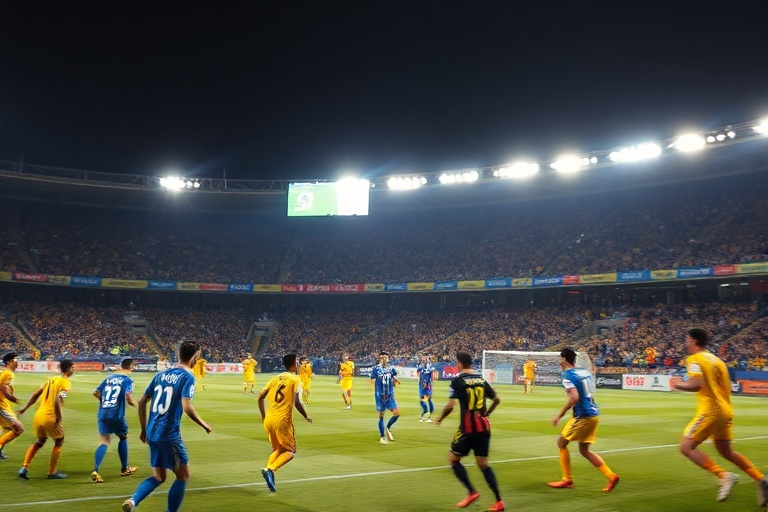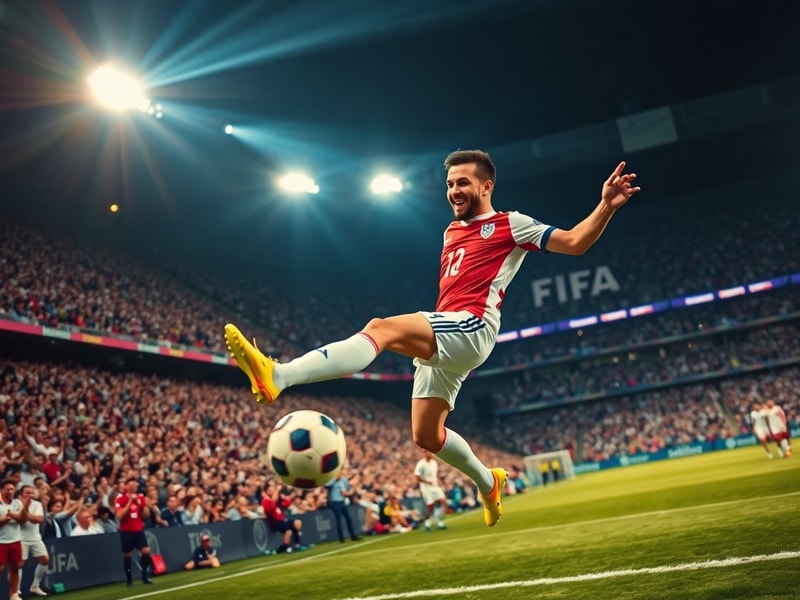
The FIFA World Cup has always been a stage where legends are born, and few roles shine as brightly as that of the top goal scorer. Known in Spanish as goleadores, these players transcend the game. They don’t just score—they define tournaments, etch their names into history, and often carry their nations on their shoulders. The quest for the Golden Boot is more than a competition; it’s a narrative of pressure, precision, and peak performance under the world’s brightest spotlight.
The numbers tell only part of the story. Behind every goal lies countless hours of training, tactical understanding, and mental resilience. Some strikers thrive in the crucible of knockout stages; others rise in group play, turning early matches into personal showcases. What makes a goleador truly special isn’t just their tally—it’s their timing, their influence, and the emotional weight they bring to the pitch.
What Makes a World Cup Top Scorer?
The title of top scorer at a World Cup isn’t awarded by chance. It demands a rare blend of physical ability, technical skill, and psychological fortitude. Unlike club football, where consistency over a season is rewarded, the World Cup favors those who can deliver when it matters most—often in high-pressure moments against elite defenses.
Speed and finishing are obvious prerequisites. But intelligence is equally crucial. A goleador must read the game like a chess player, anticipating passes, exploiting spaces, and timing runs to perfection. Many of the tournament’s most prolific scorers, such as Ronaldo in 2002 or Kylian Mbappé in 2022, combined raw athleticism with an uncanny ability to be in the right place at the right time.
Psychological resilience also plays a defining role. Playing in front of billions, with every touch scrutinized, requires mental strength. Some players crumble under the weight of expectation; others, like Miroslav Klose, who holds the record for most World Cup goals (16 across four tournaments), thrive on it. Consistency across multiple matches—often against increasingly physical and organized opponents—separates the good from the great.
Team dynamics matter too. A goleador is only as effective as the system around them. Whether it’s the supply from midfield maestros like Zidane or Modrić, or the tactical setup from a manager like Joachim Löw or Didier Deschamps, the path to the top of the scoring charts is often a collaborative one.
Historical Legends: The Names Etched in World Cup Lore
The annals of World Cup history are rich with goal-scoring royalty. Their feats define generations and become cultural touchstones in football lore. At the summit stands Miroslav Klose, whose 16 goals across four tournaments (2002–2014) make him the undisputed king of World Cup scoring. His evolution from a young German talent to a seasoned finisher culminated in a World Cup triumph in 2014, cementing his legacy.
Just behind him, Ronaldo—the Brazilian phenomenon known as “O Fenômeno”—holds the record for most goals in a single tournament (8 in 2002), leading his nation to a fifth title. His combination of power, pace, and clinical finishing redefined what it meant to be a World Cup striker. Meanwhile, Miroslav Klose’s fellow German, Thomas Müller, may never be the most technically gifted, but his unorthodox movement and knack for scoring in big games have earned him the nickname “Raumdeuter” (space interpreter).
On the women’s side, Marta Vieira da Silva, simply known as Marta, stands as the all-time leading scorer in Women’s World Cup history with 17 goals across five tournaments. Her dribbling, creativity, and clutch performances have made her a global icon, inspiring generations of female footballers in Brazil and beyond.
The list of legends extends further:
- Pelé (Brazil) – 12 goals in three tournaments (1958–1970), including a brace in the 1958 final at age 17.
- Gary Lineker (England) – Won the Golden Boot in 1986 with six goals, despite England’s early exit.
- Gabriel Batistuta (Argentina) – Scored twice in 1998 and led Argentina’s attack with power and precision.
- Sándor Kocsis (Hungary) – Recorded a hat-trick of hat-tricks in 1954, scoring 11 goals in five games.
These players didn’t just score goals—they became symbols of their eras, their performances transcending sport and entering national consciousness.
Modern Masters: Mbappé, Lewandowski, and the New Breed
The modern era of World Cup strikers blends raw talent with scientific preparation. Kylian Mbappé’s explosive rise culminated in a tournament-best eight goals in 2022, including a brace in the final. His speed, composure, and ability to score in knockout stages reaffirmed his status as one of football’s brightest stars. Mbappé’s goals weren’t just numbers—they were moments that shifted momentum and defined matches.
Poland’s Robert Lewandowski, though yet to lift a World Cup, has been a consistent force. His 2022 campaign saw him score twice, continuing a career defined by consistency, intelligence, and an unshakable mentality. Lewandowski’s ability to adapt—from a poacher in his early years to a complete forward capable of linking play—shows how the modern goleador evolves with the game.
Erling Haaland’s inclusion in Norway’s 2022 squad was closely watched, though injuries limited his impact. His club record speaks for itself, but the World Cup remains the ultimate test. Meanwhile, Harry Kane’s 2018 and 2022 performances for England solidified his reputation as one of the most reliable finishers of his generation, despite the scrutiny of playing in a high-pressure English shirt.
What sets these modern players apart is their preparation. Data analytics, individualized training, and recovery science now play a central role in maximizing performance. Clubs and federations invest heavily in nutrition, sleep tracking, and even virtual reality training to simulate match scenarios. The modern goleador isn’t just born—they’re engineered.
Yet, technology has not erased the human element. The best strikers still rely on instinct, creativity, and an almost sixth sense for the ball. As the game evolves, so too does the profile of the World Cup’s top scorer—more versatile, more prepared, but no less magical.
The Broader Impact: Beyond the Pitch
The influence of a World Cup goleador extends far beyond the tournament itself. A standout performance can launch a player into global superstardom, boosting their market value and commercial appeal. Players like Mbappé and Messi have leveraged their World Cup exploits into lucrative sponsorships and brand partnerships, shaping the economics of modern football.
Nationally, a prolific scorer can reignite hope and pride. When Gabriel Batistuta led Argentina in 1998, he became a symbol of resilience and talent. Similarly, Son Heung-min’s goal for South Korea in 2022 inspired a nation and drew global admiration, showcasing how football unites diverse cultures under a common passion.
Even in defeat, a top scorer’s legacy endures. Gary Lineker’s 1986 performance, despite England’s early exit, cemented his status as a national hero. His sportsmanship and professionalism became a benchmark for future English strikers.
The Golden Boot also influences tactics and team building. Nations now prioritize strikers with World Cup pedigree, knowing their ability to deliver in high-pressure moments can be decisive. This has led to a shift in youth development, with academies emphasizing finishing drills and game intelligence from an early age.
Yet, the pressure on these players is immense. The expectation to replicate or surpass past glories can be paralyzing. Some, like Batistuta, rise to the challenge. Others, like David Villa in 2014, face the harsh reality that even great players can be overshadowed in a single tournament.
Ultimately, the goleador embodies the soul of the World Cup: hope, drama, and the unpredictable beauty of football. Their goals are not just statistics—they are moments that define careers, nations, and generations.
What’s Next: Predicting the Next Golden Boot Winner
With the 2026 World Cup in the United States, Canada, and Mexico on the horizon, speculation about the next goleador is already underway. Eyes are on young talents like England’s Jude Bellingham, who combines midfield vision with late runs into the box, and France’s Warren Zaïre-Emery, whose composure belies his age.
Brazil’s Endrick, still a teenager, has drawn comparisons to Pelé and Ronaldo. His dribbling, flair, and finishing could see him light up the 2026 stage. Meanwhile, Argentina’s Julián Álvarez has already proven his World Cup mettle, scoring in the 2022 final. His ability to play as a false nine could make him a key figure in 2026.
But the World Cup is unpredictable. Injuries, form, and tactical shifts can derail even the most promising careers. The next top scorer may come from an unexpected nation—perhaps Morocco, Senegal, or the USA—where rising football cultures are producing technically gifted forwards.
One thing is certain: when the whistle blows in 2026, the world will be watching for the next chapter in the story of the goleadores. Whoever emerges will not just chase a trophy—they will chase immortality.
Until then, the legends of the past remind us that greatness is not measured in goals alone, but in the moments that make football eternal.