Elliot Anderson’s Move to Manchester City: A Calculated Gamble or a Bridge Too Far?
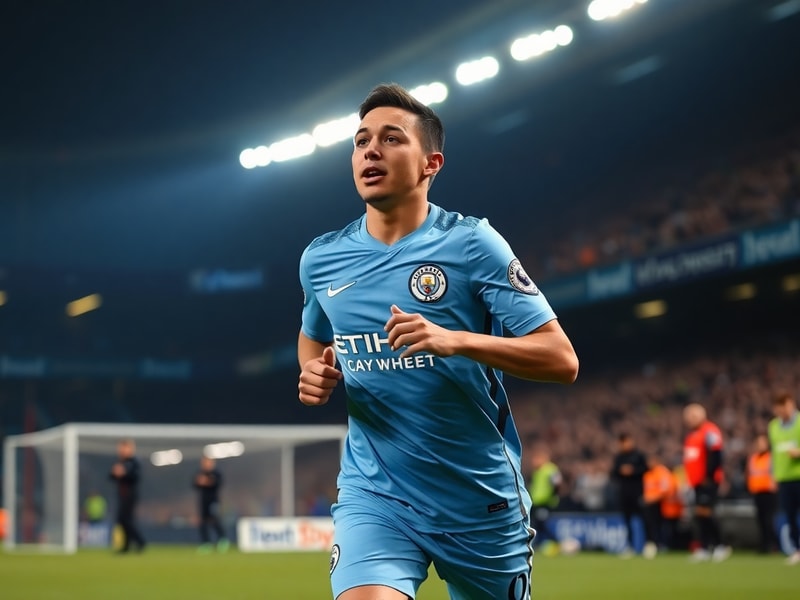
Elliot Anderson’s transfer to Manchester City from Newcastle United has sent ripples through the Premier League, raising questions about Pep Guardiola’s long-term vision and Anderson’s role in a squad already brimming with talent. While the fee—reportedly £45 million—reflects Anderson’s potential, the timing and necessity of the deal remain subjects of debate. At 24, Anderson brings dynamism and versatility, but his integration into a team stacked with world-class midfielders and attackers will demand tactical flexibility.
For Anderson, the move is a chance to prove himself at the highest level, away from the shadows of Newcastle’s recent ups and downs. City, meanwhile, are doubling down on young English talent, a strategy that has paid dividends with players like Phil Foden and Cole Palmer. Yet, with limited minutes likely in a squad prioritizing Champions League and title ambitions, Anderson’s path to regular football isn’t guaranteed.
The transfer also underscores City’s willingness to invest in homegrown players, a nod to their commitment to the Premier League’s homegrown player rule. However, critics argue that the club could have targeted a more experienced option to bolster depth in midfield or defense. Anderson’s arrival suggests Guardiola is looking beyond immediate needs, betting on the player’s growth and adaptability.
Why Manchester City Wanted Elliot Anderson
Pep Guardiola has a history of nurturing young talent, but his recent transfers have skewed toward experienced, high-profile signings like Erling Haaland and Rodri. Anderson’s profile—an energetic, technically gifted midfielder capable of playing in multiple positions—aligns with City’s evolving style. His ability to press high, carry the ball, and contribute defensively makes him a valuable asset in a league where stamina and tactical discipline are paramount.
Anderson’s versatility is a key selling point. He can slot into midfield, play as a false winger, or even feature in deeper roles, providing Guardiola with tactical flexibility. This adaptability is crucial in a season where City are competing on multiple fronts, including the Premier League, FA Cup, and Champions League. The club’s recent struggles in midfield depth, particularly after injuries to Kevin De Bruyne and Rodri, have made Anderson’s arrival timely.
Financially, the deal makes sense for both parties. Newcastle, financially constrained after their takeover, offloaded a high-potential player for a significant fee. City, meanwhile, secured a player who could develop into a long-term asset without immediately disrupting their established hierarchy. The transfer fee, though substantial, is a fraction of what top midfielders like Declan Rice or João Neves command, reflecting Anderson’s status as a project rather than an instant solution.
The Challenges Ahead for Anderson
Despite the hype, Anderson faces an uphill battle to secure regular playing time. Manchester City’s midfield is one of the most stacked in world football, with Rodri, De Bruyne, Bernardo Silva, and now Mateo Kovacic all vying for minutes. Anderson’s best chance may lie in cup competitions or as a tactical tweak in games where City are already dominating.
Competition isn’t the only hurdle. Anderson must adapt to the intensity of City’s training regime and the tactical demands of Guardiola’s system. His development at Newcastle was impressive, but the Premier League’s physicality and tactical nuance require a steep learning curve. Injuries have also been a concern in his career, adding another layer of uncertainty to his City future.
For Anderson, mentorship will be vital. Players like Phil Foden and Cole Palmer have thrived under Guardiola’s guidance, but their journeys began with more immediate opportunities. Anderson’s role may initially resemble that of a squad player, a far cry from the star status he enjoyed at Newcastle. His ability to stay motivated and improve in limited minutes will define his first season at the Etihad.
Newcastle United’s Loss and the Bigger Picture
Elliot Anderson’s departure is a blow for Newcastle, who have seen several key players leave in recent transfer windows. The club’s financial constraints under the Saudi-led ownership have forced them to prioritize profit over retention, a strategy that has drawn criticism from fans. Anderson, a product of Newcastle’s academy, was one of the few homegrown talents who had broken into the first team consistently.
His exit leaves a void in Newcastle’s midfield, where Bruno Guimarães and Joelinton have shouldered much of the creative burden. The club’s ambition to compete in the Champions League next season will now rely heavily on their remaining core, including Alexander Isak and Anthony Gordon. The Anderson transfer is symptomatic of a broader trend: Newcastle are becoming a selling club, trading talent for financial stability rather than building a sustainable squad.
For Newcastle’s fanbase, the move underscores the challenges of balancing ambition with reality. While the £45 million fee is a significant return, it’s a far cry from the sums top clubs demand for established stars. The club’s long-term project remains promising, but the Anderson transfer highlights the risks of overhauling a squad too quickly.
What This Means for the Premier League’s Future
Anderson’s transfer is a microcosm of the Premier League’s evolving dynamics. Clubs are increasingly willing to invest in young English talent, not just as a PR exercise but as a strategic move to meet homegrown player quotas and future-proof their squads. City’s willingness to sign Anderson, despite their financial constraints, signals confidence in his potential to become a key player.
The deal also reflects the league’s shifting power balance. With Chelsea and Manchester United struggling to compete financially, clubs like City and Arsenal are dominating the transfer market, often outbidding rivals for young talent. Newcastle’s sale of Anderson is a reminder that even ambitious clubs can be forced into difficult decisions when finances are tight.
Looking ahead, Anderson’s success at City could encourage more Premier League clubs to prioritize homegrown players. However, the risk remains that these players become mere stepping stones for bigger clubs, leaving their original teams scrambling for replacements. The Premier League’s sustainability depends on finding a balance between developing talent and retaining it—something Newcastle are still learning.
Anderson’s Road to Manchester City: A Timeline
Elliot Anderson’s journey to Manchester City is a testament to his resilience and talent. Here’s a quick look at the key moments in his career:
- 2019: Signed by Newcastle United from Sunderland’s academy, joining a club in transition under Steve Bruce.
- 2021: Made his senior debut for Newcastle, becoming one of the few academy graduates to break into the first team under Bruce.
- 2022-23: Established himself as a regular under Eddie Howe, earning praise for his work rate and versatility.
- 2023-24: Became a key player for Newcastle, contributing goals and assists while catching the eye of top clubs.
- Summer 2024: Completed a £45 million move to Manchester City, reuniting with Pep Guardiola, who coached him at the 2023 European Championships with England.
Anderson’s rise from Sunderland’s academy to the Premier League and now to one of the world’s biggest clubs is a story of perseverance. His ability to adapt to different managers and systems has made him a sought-after talent, and his time at City will be pivotal in determining whether he can fulfill his potential.
Will Anderson Succeed at Manchester City?
The answer to this question depends on how Guardiola intends to use him. If Anderson is deployed in a rotational role, his development may be gradual. However, if he’s given a clear position—such as a box-to-box midfielder or a hybrid winger—he could thrive. His performances in cup competitions and as a late substitute may provide early indications of his impact.
For Anderson, the pressure is on to justify the £45 million fee. He’ll need to prove that he can handle the physical demands of the Premier League and the tactical intricacies of Guardiola’s system. His England call-ups under Gareth Southgate suggest he’s already on the radar, but consistent minutes at City will be the true test.
Ultimately, Anderson’s success at Manchester City could redefine his career. If he delivers, he’ll join the ranks of young English players who have thrived under Guardiola. If not, his move may be remembered as a missed opportunity. For now, the footballing world watches closely.