Princess of Wales Makes Surprise Wimbledon Appearance, Delights Crowds
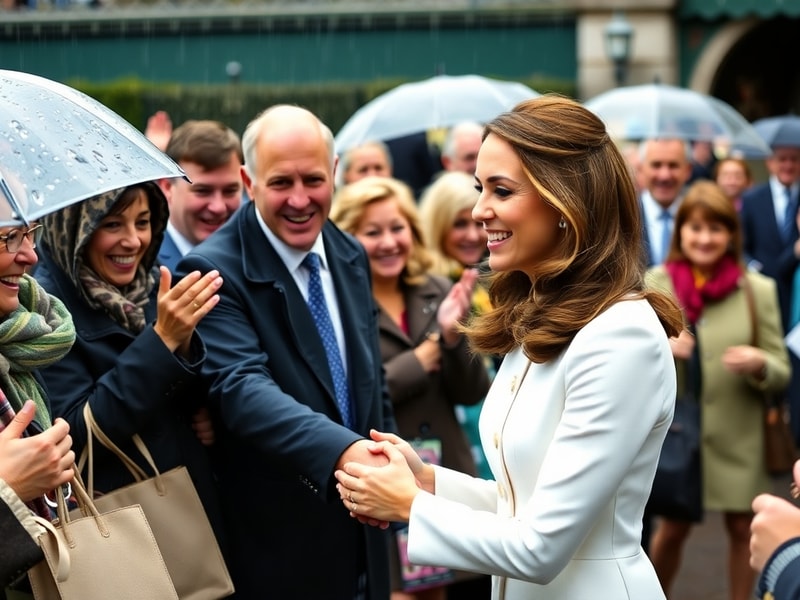
The Wimbledon queue took an unexpected royal turn this week when Catherine, Princess of Wales, made a surprise visit to the iconic tennis tournament. The unexpected appearance sent ripples through the All England Club, where fans had gathered for days under grey British skies to secure coveted Centre Court tickets. Dressed in a lightweight cream blazer and a floral dress, Catherine joined the queue just before noon, blending seamlessly with the sea of spectators waiting patiently for their chance to watch the world’s top players.
Her arrival was met with a mix of hushed excitement and polite applause. One fan, who had been queuing for over 48 hours, later told reporters, “I couldn’t believe it when I saw her. She just walked up, smiled, and said hello to everyone. It was so normal, like she was just another tennis fan.” The Princess spent nearly two hours mingling with the crowd, signing autographs, and posing for photos—an unscripted moment that stood in stark contrast to the rigid protocols often associated with royal engagements.
A Break from Tradition: Royals and Wimbledon’s Evolving Image
Wimbledon has long been synonymous with tradition, from its all-white dress code to its strict no-nonsense queuing system. Yet the Princess of Wales’ surprise visit signals a subtle shift in how royalty engages with public events. Unlike her late mother-in-law, Princess Diana, who famously attended Wimbledon in the 1980s and 90s with a more reserved presence, Catherine seems to embrace a more accessible approach. Her willingness to stand in line with ordinary fans rather than arriving through private entrances reflects a modernizing monarchy keen to connect with younger generations.
This approach aligns with broader trends in royal public relations. The late Queen Elizabeth II, for instance, rarely ventured into unscripted public interactions. In contrast, King Charles III and Queen Camilla have both made efforts to appear more approachable, whether through charity walks or surprise visits to local businesses. Wimbledon, as one of the UK’s most-watched sporting events, offers a prime opportunity for the royal family to humanize their image while participating in a quintessentially British tradition.
Analysts suggest that such appearances are carefully calculated to reinforce the monarchy’s relevance in an era where public trust in institutions is increasingly scrutinized. As historian Dr. Anna Whitelock noted, “The monarchy survives by adapting to the times. By showing up in the Wimbledon queue, Catherine is not just enjoying a tennis match—she’s subtly reminding the public that the royal family is still a part of everyday life.”
Behind the Scenes: How the Surprise Visit Was Pulled Off
While the Princess’ arrival at Wimbledon was a spontaneous-seeming moment, the logistics behind it were anything but. Sources within the All England Club confirmed that security arrangements were finalized within hours of her decision to attend. Unlike scheduled royal engagements, which often involve weeks of planning, this visit required rapid coordination between the Princess’ team, Wimbledon officials, and local police.
The challenge was compounded by the unpredictability of the Wimbledon queue itself. Unlike a fixed venue like a theater or museum, the queue is a fluid, ever-shifting entity. Fans camp for days, and their positions can change based on weather, ticket availability, and even the whims of the person in front. To navigate this, Catherine’s security detail reportedly scouted the queue the evening before her visit, identifying a section where she could blend in without drawing excessive attention.
Her outfit choice also played a strategic role. The cream blazer and floral dress were practical—lightweight enough for a summer day but elegant enough to avoid standing out in a crowd of spectators. A Kensington Palace spokesperson later confirmed that the Princess had chosen the ensemble herself, emphasizing her personal connection to the event.
Interestingly, this wasn’t the first time a royal figure had disrupted the Wimbledon queue. In 2016, Princess Beatrice and Princess Eugenie were spotted in the line, though their visit was somewhat more orchestrated. Catherine’s appearance, however, felt different—less like a PR stunt and more like a genuine moment of connection. As one long-time Wimbledon fan observed, “It’s one thing to see a royal at a VIP box. It’s another to see them standing next to you, waiting for a burger at the food stand.”
Key Takeaways from the Princess’ Wimbledon Surprise
- Public Perception: The visit reinforced the monarchy’s image as approachable and in touch with contemporary British culture.
- Security Challenges: Coordinating a last-minute royal appearance at an event with an unpredictable queue system required rapid, precise planning.
- Cultural Shift: Catherine’s willingness to engage with fans on equal footing marks a departure from the more formal royal engagements of the past.
- Media Impact: The surprise visit generated significant positive coverage, overshadowing more traditional royal stories of the week.
- Fan Experience: For those in the queue, the moment became a highlight of their Wimbledon experience, creating lasting memories.
The Broader Implications: What This Means for Royalty and Public Events
The Princess of Wales’ Wimbledon appearance is more than just a feel-good story—it’s a case study in how modern monarchy intersects with popular culture. Wimbledon, as one of the UK’s most-watched sporting events, attracts a global audience. By inserting herself into the fabric of the tournament, Catherine was able to reach millions who might not typically engage with royal news. This strategy mirrors the approach taken by other European monarchies, such as the Dutch royal family, which frequently participates in public events with minimal fanfare.
Yet the visit also raises questions about the boundaries between public and private life. While Catherine’s engagement was warmly received, not all royal appearances are met with such enthusiasm. The late Princess Margaret, for example, was known for her sharp tongue and occasional brashness in public settings. Today, the monarchy treads a fine line between accessibility and intrusion. Too much informality risks undermining the institution’s mystique; too little risks appearing out of touch.
There’s also the matter of consistency. If the Princess of Wales can spend a morning in the Wimbledon queue, why not attend a local football match or a community festival? The answer likely lies in the careful calculus of risk and reward. Wimbledon, with its global audience and relatively controlled environment, presents a lower-risk opportunity compared to, say, a political rally or a protest march. Yet as the monarchy seeks to remain relevant, such calculated risks may become increasingly necessary.
The broader sports world has taken note. Tennis, in particular, has long struggled with its elitist reputation. While the sport boasts global stars like Serena Williams and Novak Djokovic, its traditions—such as the all-white dress code and the Royal Box at Wimbledon—can feel exclusionary to some. Catherine’s presence in the general queue subtly challenges this perception, reinforcing the idea that tennis, like royalty, is for everyone.
Looking Ahead: Will This Become a Royal Tradition?
With Wimbledon now in the rearview mirror, the question on everyone’s mind is: Will this be a one-off, or the start of a new royal tradition? The Princess of Wales has a history of surprising appearances, from turning up at a London primary school unannounced to joining a community choir rehearsal in Wales. These moments, while small, have contributed to her popularity, particularly among younger demographics.
If Wimbledon does become a recurring stop on the royal calendar, it would likely follow a pattern similar to the Queen’s annual Trooping the Colour appearance—expected but not formally announced. This would allow the Princess to maintain the spontaneity that made this week’s visit so memorable while giving fans something to look forward to each summer.
For now, however, the focus remains on the lasting impact of this single afternoon. In a week where Wimbledon’s on-court drama included a record-breaking 62-match win streak and a surprise upset by a qualifier, it was Catherine’s quiet presence in the queue that captured the public’s imagination. As one fan put it, “It’s not about the tennis today. It’s about the memory of a princess standing next to me, eating a strawberry and cream.”
Whether this moment sparks a broader trend remains to be seen. But one thing is clear: in an era where public figures are often criticized for performative gestures, Catherine’s Wimbledon surprise felt refreshingly authentic. And in the world of royalty, authenticity is rarer—and more valuable—than gold.