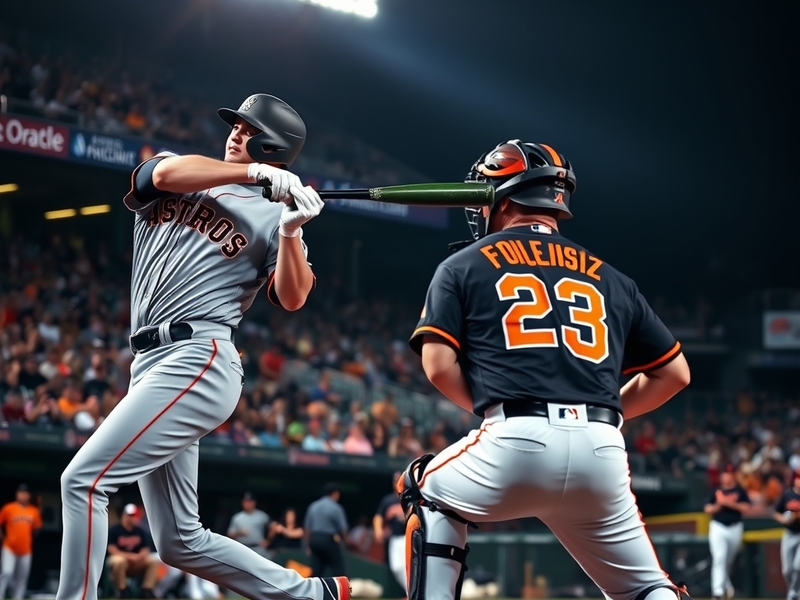
The Houston Astros and the San Francisco Giants share more than just a place in Major League Baseball. Their rivalry, though not as storied as Yankees-Red Sox, carries a unique flavor shaped by geographic contrasts, cultural clashes, and the evolving nature of the sport itself. One team hails from the sprawling energy capital of Texas, where baseball is just one thread in a vast tapestry of cowboy culture and high-stakes commerce. The other emerges from the tech-driven, cosmopolitan heart of California, where innovation and diversity define not just the city but the very rhythm of the game.
This matchup isn’t just about wins and losses. It’s a collision of identities—Texas grit versus Bay Area swagger, old-school baseball values versus analytics-driven modernity. As these two franchises continue to shape the narrative of modern MLB, their encounters offer a window into how baseball is played, perceived, and consumed across different corners of America and, increasingly, the world.
The cultural divide: Texas pride vs. California cool
Houston is a city that wears its identity on its sleeve. The Astros play in a stadium surrounded by oil rigs and sprawling suburbs, where the humidity hangs thick and the accents drawl. Baseball here is part of a larger narrative of resilience—whether it’s rebuilding after Hurricane Harvey or rising from the ashes of the sign-stealing scandal that rocked the franchise in 2019. The Astros represent a brand of baseball that’s unapologetically blue-collar, even as they’ve embraced advanced analytics to stay competitive.
Contrast that with San Francisco, where the Giants play in the shadow of Silicon Valley and the city’s reputation for progressive thinking, diversity, and relentless innovation. Oracle Park isn’t just a ballpark; it’s a cultural hub where the pre-game scene includes food trucks serving fusion cuisine, art installations, and a fanbase that spans from tech millionaires to working-class families. The Giants have long been associated with a more traditional, community-oriented approach to baseball, even as they’ve integrated data and technology into their operations.
This cultural divide extends beyond the field. In Texas, baseball is often seen as a complement to football and rodeo culture, a summer pastime that doesn’t overshadow the state’s obsession with gridiron glory. In California, baseball is a year-round conversation, fueled by the state’s deep connection to the sport’s history—from Willie Mays to Barry Bonds—and its role as a gateway for international talent, particularly from Latin America and Asia.
Baseball’s evolution: analytics vs. tradition
The Astros and Giants embody two distinct philosophies that have reshaped modern baseball. The Astros, under the leadership of general manager Jeff Luhnow in the mid-2010s, became the poster children for the analytics revolution. Their front office prioritized data over gut feeling, leading to unconventional strategies like shifting defenders almost constantly and emphasizing launch angle and exit velocity over traditional batting metrics. This approach paid off with a World Series title in 2017, but it also sparked controversy and accusations of cheating when the team was caught using a camera system to steal signs in 2018.
The Giants, meanwhile, have taken a more measured approach to analytics. While they’ve adopted data-driven decision-making, they’ve done so with an emphasis on blending it with scouting and player development. This philosophy has led to a more balanced roster, one that values versatility and adaptability over raw power or specialized roles. It’s a reflection of the Giants’ organizational culture, which has long emphasized character and leadership as much as talent.
This contrast highlights a broader tension in baseball today. The Astros represent the sport’s future—a high-stakes, data-driven environment where every decision is scrutinized and optimized for maximum efficiency. The Giants, on the other hand, symbolize a more human-centric approach, one that values tradition, storytelling, and the intangible qualities that make baseball more than just a game.
The global lens: baseball’s fading and rising stars
Neither the Astros nor the Giants can ignore baseball’s shifting global landscape. Once a sport dominated by American players, MLB now features talent from every corner of the world, with stars from the Dominican Republic, Venezuela, Japan, South Korea, and beyond. The Astros have been particularly successful in tapping into this international pipeline, with players like José Altuve and Yordan Álvarez becoming household names in baseball circles worldwide. Their success reflects Houston’s role as a hub for Latino communities and its connections to baseball hotbeds in Latin America.
The Giants, too, have benefited from global talent, though their approach has often focused more on homegrown players and players from within the United States. This reflects the broader challenges facing MLB as it seeks to grow its international footprint. While the sport remains wildly popular in parts of Asia and Latin America, its growth in Europe and Africa has been slower, and MLB has struggled to replicate the global appeal of soccer or basketball.
For both teams, the challenge is clear: how do they adapt to a world where baseball’s traditional fanbase is aging and younger audiences are drawn to faster-paced, more interactive sports? The Astros have leaned into their high-energy, analytics-driven brand, while the Giants have focused on creating a family-friendly, community-oriented experience at Oracle Park. Both strategies reflect broader trends in how sports are consumed in the 21st century, where fan engagement is as much about the experience as it is about the game itself.
What’s next for the rivalry?
The Astros and Giants don’t meet as frequently as some of MLB’s classic rivalries, but when they do, the games are often memorable. Whether it’s a high-scoring affair in Houston’s humid summer or a tightly contested pitchers’ duel in San Francisco’s cool evening air, these matchups offer a glimpse into the future of baseball. The Astros are still chasing another championship under manager Dusty Baker, who brings a mix of old-school grit and modern adaptability to the role. The Giants, meanwhile, are in the midst of a rebuild, with a young core of players that promises to bring a new era of competitiveness to the franchise.
As baseball continues to evolve, so too will the Astros-Giants rivalry. It may never reach the level of intensity seen in Yankees-Red Sox or Dodgers-Giants, but it offers something just as valuable: a snapshot of the sport’s diversity, its contradictions, and its endless capacity for reinvention. For fans of sports who appreciate both the art and science of baseball, this rivalry is a reminder that the game is as much about culture as it is about competition.
In an era where sports are increasingly globalized and commercialized, the Astros and Giants represent two sides of the same coin. One team is a product of Texas’ relentless ambition, the other of California’s boundless creativity. Together, they embody the spirit of modern baseball—a sport that is constantly changing, yet forever tied to its roots.