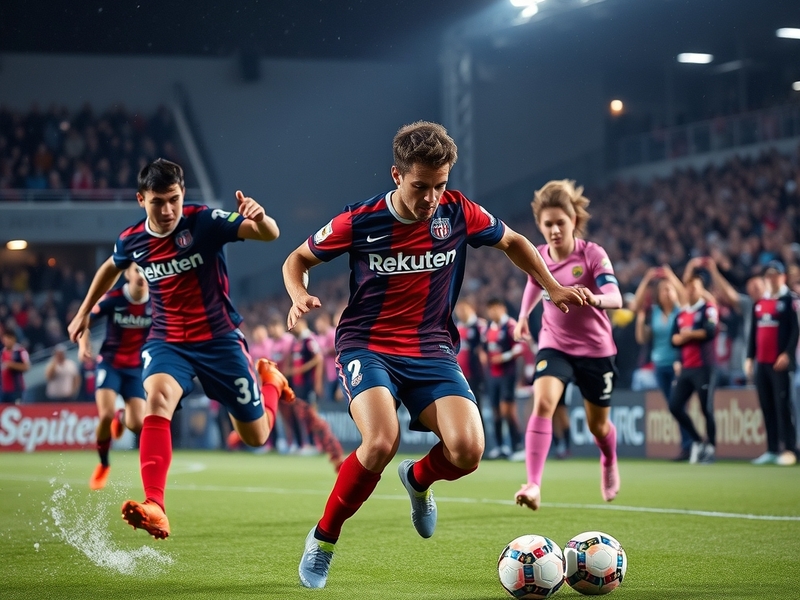
The clash between CF Montréal and Inter Miami CF on Saturday night delivered more than just a hard-fought 2-2 draw at Saputo Stadium. It crystallized the widening gap between MLS’s developmental ethos and European-style ambition, a divide that now shapes the league’s identity and its relationship with global talent. For Montréal, a team built on homegrown players and tactical discipline, the draw felt like a step forward. For Miami, a franchise designed to showcase superstars, the result underscored the gulf between star power and team cohesion under coach Gerardo Martino.
Tactical Contrasts on Full Display
The matchup wasn’t just about two teams—it was a collision of philosophies. CF Montréal, under interim head coach Laurent Cormier, lined up in a compact 4-4-2, prioritizing pressing triggers and quick transitions. The players executed with textbook precision, especially in midfield where Victor Wanyama and Samuel Piette anchored a disciplined block. Miami, despite featuring Lionel Messi, Luis Suárez, and Jordi Alba, struggled to string together possession. Martino’s 4-3-3 often looked disjointed, with Messi drifting into pockets of space but unable to link up effectively with Suárez due to poor timing and communication.
Key moments revealed the tactical divide:
- Montréal’s Pressing Trap: On several occasions, the Impact forced Miami into long balls or turnovers in dangerous areas. The high press led to a first-half goal by Romell Quioto, capitalizing on a misplaced pass by Sergio Busquets.
- Miami’s Star-Laden Inefficiency: Despite controlling 62% of possession, Miami created just three shots on target. Messi completed 94% of his passes, but most were lateral or backward, failing to advance play.
- Set-Piece Vulnerability: Montréal’s only goal came from a corner, while Miami’s equalizer came from a defensive miscue, highlighting how even elite talent can be undone by structural flaws.
Montréal’s Identity Meets Miami’s Ambition
CF Montréal’s performance was a microcosm of its broader strategy: build from within, prioritize structure over star power, and grind out results through collective effort. The club’s academy graduates—Mathieu Choinière and Joel Waterman—played pivotal roles, with Choinière’s work rate and Waterman’s leadership anchoring the backline. The draw extended Montréal’s unbeaten run to six matches, a streak built on resilience rather than glamour.
Inter Miami, meanwhile, remains a work in progress. Messi’s presence draws global attention, but the team’s performance suggests that assembling a squad of individual talents does not automatically translate to cohesion. The lack of a clear identity was evident in transitions between defense and attack, where Miami often looked disjointed. Even with world-class players, the team lacks the midfield steel that defines top European sides—a gap that becomes more glaring with each passing match.
For Montréal, the result was a statement: MLS can still produce competitive, tactically sound teams without relying on marquee signings. For Miami, it was a reminder that even the most talented rosters need more than just star power to succeed. The contrast between the two teams raises a critical question: Is MLS better served by nurturing homegrown talent or by chasing global stardom?
Broader Implications for MLS and the Future of North American Soccer
The Montréal vs. Miami matchup is more than a single game—it’s a snapshot of MLS’s evolving role in global soccer. On one hand, CF Montréal represents the league’s original vision: a team rooted in local development, with a focus on tactical intelligence and work ethic. On the other, Inter Miami embodies the new wave of franchises designed to leverage star power for global marketing and commercial growth.
This divide has broader implications:
- Competitive Balance: While star-driven teams like Miami can dominate headlines, consistent success in MLS often comes from structured, team-oriented play. The league’s Designated Player rule allows for both approaches, but the latter may prove more sustainable in the long run.
- Youth Development vs. Immediate Impact: Montréal’s reliance on academy players highlights the importance of investing in grassroots soccer. Miami’s struggles suggest that importing talent without integrating it properly can backfire.
- The Messi Effect: Messi’s presence has elevated MLS’s profile globally, but his impact on the pitch hasn’t yet translated to consistent team success. This raises questions about whether the league’s investment in superstars is justified by on-field performance.
- Tactical Evolution: As MLS teams face more European and South American opponents in continental competitions, the ability to play structured, possession-based soccer will become increasingly vital. Montréal’s approach may offer a blueprint for other MLS sides looking to compete at a higher level.
The match also underscored the growing importance of set-piece mastery in MLS. With teams like Los Angeles FC and Columbus Crew excelling in dead-ball situations, the ability to score from corners and free kicks is becoming a differentiator. Montréal’s goal from a corner was a reminder that even in an era of Messi and Suárez, fundamentals still matter.
What Comes Next?
For CF Montréal, the challenge is to maintain this level of performance against stronger opposition. The team’s next few matches against playoff-contending sides will test whether their recent form is sustainable or simply a temporary uptick.
For Inter Miami, the road ahead is more complicated. With Messi, Suárez, and Alba aging and the team still searching for defensive stability, Martino faces a delicate balancing act. The club’s ownership has invested heavily in star power, but the on-field results suggest that investment must now be matched by tactical refinement and squad integration.
The broader lesson for MLS is clear: success in the league requires more than just assembling a roster of famous names. Whether through academy development or strategic signings, teams must build identities that go beyond individual brilliance. The Montréal vs. Miami game was a reminder that in soccer, as in life, structure often trumps spectacle.
As the season progresses, watch for how other MLS teams adapt. Will more clubs follow Montréal’s model of development and discipline? Or will the allure of global stardom continue to reshape the league’s competitive landscape? One thing is certain: the answer will define MLS for years to come.