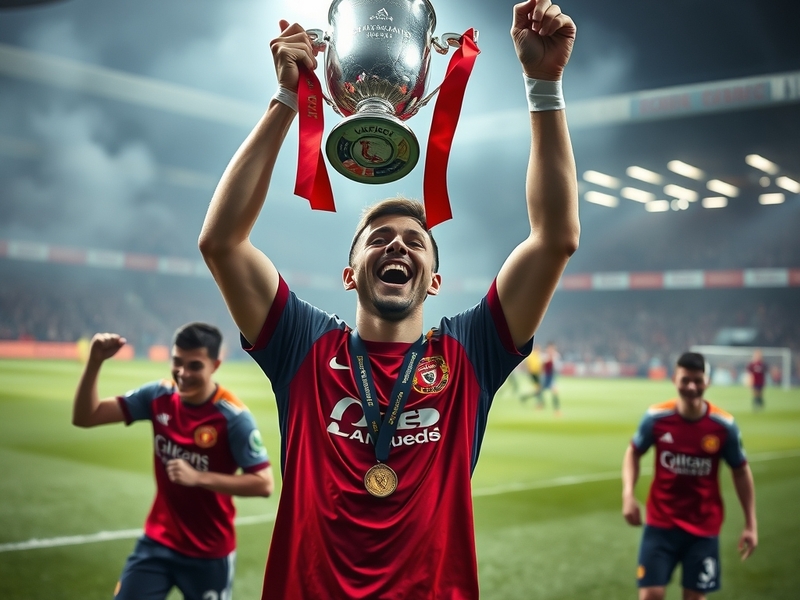
The Carabao Cup, officially known as the EFL Cup due to sponsorship, stands as England’s most prestigious knockout competition outside the FA Cup. Unlike domestic leagues or European tournaments, the Carabao Cup offers clubs a shorter path to silverware, often serving as a proving ground for young talent and tactical experimentation. Its condensed format—just seven rounds from August to February—creates a unique pressure cooker environment where underdogs can topple giants and managers face immediate scrutiny.
This season, the competition has already delivered shocks. Lower-league sides like Port Vale and Sutton United have stunned Championship and Premier League outfits with disciplined displays, proving that form and league position matter less than focus and adaptability. Such upsets highlight the Carabao Cup’s role not just as a financial lifeline for smaller clubs but as a stage where David can genuinely face Goliath. The tournament’s structure, with its single-leg ties and no replays, amplifies the drama, ensuring every match carries consequence.
The competition’s evolution: from League Cup to EFL Cup
The Carabao Cup originated in 1960 as the Football League Cup, conceived as a midweek competition to generate additional revenue for clubs during a financially challenging era. It was initially met with skepticism, viewed by some as an unnecessary fixture, but it quickly established itself as a valuable asset. By the late 1960s and 1970s, the competition had grown in prestige, with iconic finals at Wembley and a growing list of winners that included giants like Liverpool, Manchester United, and Arsenal.
In 2016, the competition was rebranded as the EFL Cup following a sponsorship deal with Capital One. That partnership ended in 2017, and Carabao Energy Drink took over, giving the tournament its current name. Despite the branding changes, the competition’s core identity has remained intact: a platform for domestic dominance, youth development, and strategic innovation. The EFL Cup’s continued relevance is evident in its ability to attract top clubs, who often rotate squads and field experimental lineups, treating it as both a challenge and an opportunity.
The competition’s importance has only grown with the introduction of UEFA’s new financial regulations and the increasing financial disparities between Premier League clubs and those in the Championship or lower leagues. For smaller clubs, a deep run in the Carabao Cup can provide a crucial financial boost. For example, a club like Bolton Wanderers, currently in League One, could earn over £1 million for reaching the quarter-finals—funds that can stabilize a struggling organization or fund infrastructure improvements.
Key rules and format: what sets the Carabao Cup apart
The Carabao Cup operates under a straightforward yet distinctive format designed to create fast-paced, unpredictable football. Here’s how it works:
- Single-leg knockout ties: Unlike the FA Cup, which has replays in the early rounds, the Carabao Cup features single-leg matches from the first round onward. This means every game is a do-or-die affair, increasing the stakes and intensity.
- Seven rounds total: The competition begins in August with the first round, featuring clubs from the Championship, League One, and League Two alongside Premier League teams not involved in European competitions. The final is typically played in late February or early March at Wembley Stadium.
- No extra time or penalties in early rounds: If a match ends in a draw, the tie goes straight to penalties. Extra time is only introduced from the semi-finals onward, adding a layer of tactical complexity to the latter stages.
- Participation rules: Premier League clubs not involved in European competitions enter in the second round, while those competing in the Champions League or Europa League skip the competition entirely until the knockout stages of those tournaments.
- Financial incentives: Prize money is distributed based on how far a club progresses, with the winners earning approximately £100,000 and runners-up receiving around £50,000. Additional funds are allocated for television broadcasts and sponsorship deals.
This format ensures that the Carabao Cup remains a dynamic and unpredictable tournament, where momentum and squad depth often outweigh league position. It also makes the competition a valuable tool for managers to assess squad fitness, test tactical systems, and integrate young players into competitive environments.
Broader implications: why the Carabao Cup matters beyond trophies
The Carabao Cup’s influence extends far beyond the trophy cabinet. For smaller clubs, it serves as a financial lifeline and a platform for visibility. A strong run can boost a club’s reputation, attract sponsorships, and even influence player recruitment. For example, Leyton Orient’s 2023-24 campaign saw them reach the fourth round, earning significant broadcast revenue and heightened interest in their squad.
For Premier League clubs, the competition is increasingly seen as a tool for squad rotation and player development. Managers like Pep Guardiola and Mikel Arteta have used the Carabao Cup to blood youngsters such as Rico Lewis and Fabio Vieira, giving them first-team experience in a competitive setting. This approach not only develops talent but also helps clubs manage the demands of a congested fixture schedule.
The Carabao Cup also plays a role in the broader narrative of English football’s financial inequality. While the Premier League’s financial dominance continues to grow, the Carabao Cup provides a rare opportunity for lower-league clubs to compete on a national stage. This dynamic fosters a sense of community and shared ambition across all tiers of English football, reinforcing the idea that success is not solely reserved for the wealthiest clubs.
Moreover, the competition’s television coverage and sponsorship deals underscore its commercial viability. Broadcasters like Sky Sports and ITV have invested heavily in the Carabao Cup, recognizing its appeal to fans who crave unpredictable, high-stakes football. The tournament’s ability to draw audiences, even during midweek, highlights its enduring relevance in an era dominated by global competitions and streaming platforms.
From a tactical standpoint, the Carabao Cup encourages innovation. Managers are often forced to think outside the box, deploying unconventional formations or experimenting with new signings. This flexibility can pay dividends later in the season, as seen with Manchester City’s 2020-21 triumph, which was built on a squad brimming with young talent and tactical versatility.
The future of the Carabao Cup: challenges and opportunities
The Carabao Cup faces both challenges and opportunities as it looks to maintain its relevance in an increasingly crowded football calendar. One of the biggest challenges is fixture congestion. With the Premier League, FA Cup, and European competitions all vying for attention, clubs often prioritize certain tournaments over others. This has led to debates about the competition’s long-term role in the footballing calendar.
However, the Carabao Cup’s ability to adapt and innovate offers a path forward. Recent discussions about expanding the competition to include more clubs from lower leagues or even international sides could inject fresh energy into the tournament. Additionally, the continued emphasis on youth development and financial incentives ensures that the competition remains attractive to clubs across all tiers of English football.
Another opportunity lies in the growing popularity of women’s football. While the Carabao Cup is currently a men’s competition, there is potential to introduce a parallel women’s tournament. This would not only align with the broader push for gender equality in the sport but also create a new platform for women’s club football to flourish.
Ultimately, the Carabao Cup’s future hinges on its ability to evolve while staying true to its core identity. It must balance its role as a competitive tournament with its function as a developmental platform and financial resource for smaller clubs. If it can achieve this, the Carabao Cup will continue to be a vital part of English football’s fabric for decades to come.