Ohio’s Tornado Warning System: How It Works and Why It Matters
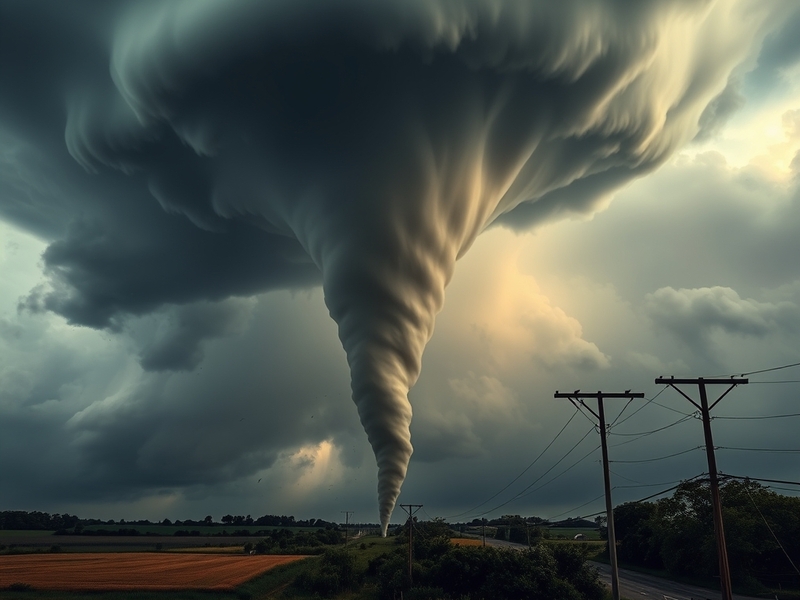
When dark, swirling clouds gather over Ohio’s farmland or dense urban areas, residents know to pay attention. Tornado warnings in the state aren’t just routine alerts—they’re a critical line of defense against sudden, devastating storms. Ohio sits on the western edge of Tornado Alley, a region stretching from Texas to the Dakotas where tornadoes are most frequent. But unlike the flat, open plains of Kansas or Oklahoma, Ohio’s varied terrain—from the Appalachian foothills to the shores of Lake Erie—creates unique challenges for meteorologists and emergency responders.
The state averages about 18 tornadoes per year, according to the National Weather Service (NWS). While that number pales in comparison to the 100+ tornadoes Oklahoma experiences annually, Ohio’s tornadoes can still pack a punch. In 2023 alone, Ohio recorded 22 tornadoes, including an EF-2 that tore through the Cincinnati suburbs, damaging homes and businesses. The unpredictability of these storms, combined with Ohio’s mix of rural and urban populations, makes tornado preparedness a year-round priority.
Unlike hurricanes, which often provide days of warning, tornadoes can form in minutes. This is where Ohio’s advanced warning systems come into play. The state relies on a multi-layered approach, blending cutting-edge technology with community education to minimize harm. But how exactly do these systems work, and what makes Ohio’s response to tornado warnings stand out in the broader context of global storm preparedness?
The Science Behind Ohio’s Tornado Warnings
Ohio’s tornado warning infrastructure is a collaboration between the National Weather Service, local emergency management agencies, and advanced meteorological tools. The process begins with real-time data collection from Doppler radar, weather balloons, and satellite imagery. Meteorologists at the NWS Cleveland and Wilmington offices analyze this data to detect signs of rotation in thunderstorm clouds—a key indicator of potential tornado formation.
Once rotation is identified, the NWS issues a tornado warning for the affected area. These warnings are not issued lightly. They require confirmation of either a visible tornado or strong radar signatures of rotation. The goal is to balance urgency with accuracy, avoiding false alarms that could desensitize the public. In Ohio, the average lead time for tornado warnings is about 13 minutes, though some storms provide more notice. For comparison, the average lead time in the U.S. is around 10 minutes, while countries like Japan and parts of Europe see lead times closer to 5 minutes due to less advanced radar networks.
Ohio’s system also incorporates a network of spotters—trained volunteers who report tornadoes and severe weather in real time. These spotters, often amateur radio operators or emergency responders, provide ground-level confirmation that radar alone cannot detect. Their contributions are especially valuable in rural areas where tornadoes might go unnoticed until they’re upon a community. Internationally, countries like Canada and Australia rely heavily on spotter networks as well, though their reporting structures differ based on population density and terrain.
The state’s warning system is further enhanced by the Ohio Emergency Management Agency (OEMA), which coordinates with local governments to disseminate alerts via sirens, emergency broadcast systems, and smartphone notifications. Ohio’s tornado sirens, a staple in many towns, are tested monthly in non-emergency conditions to ensure functionality. This proactive approach reflects a broader trend in global disaster preparedness, where early warning systems are increasingly integrated with public infrastructure.
Cultural and Historical Context: Tornadoes in Ohio’s Identity
Tornadoes have left an indelible mark on Ohio’s history and culture. One of the deadliest tornadoes in U.S. history struck the state in 1924, when an F4 tornado ripped through Van Wert and Paulding counties, killing 85 people. The disaster reshaped emergency response protocols and spurred the development of early warning systems. Decades later, the 1974 Super Outbreak—a historic tornado event that spawned 148 tornadoes across 13 states—hit Ohio particularly hard, with 23 tornadoes touching down in a single day. The outbreak led to significant improvements in tornado forecasting and public awareness.
Today, tornadoes are woven into Ohio’s collective memory. Communities like Xenia, which was devastated by an F5 tornado in 1974, have rebuilt with resilience in mind. The city’s recovery efforts became a model for disaster recovery, emphasizing both physical reconstruction and emotional healing. Ohio’s tornado lore is also reflected in local media, where storm chasers and meteorologists have become quasi-celebrities. The annual Ohio Severe Weather Awareness Week, held in March, is a testament to the state’s commitment to education. Schools, businesses, and families participate in tornado drills, ensuring that preparedness is second nature.
Globally, tornadoes carry different cultural significances. In Bangladesh, tornadoes are among the deadliest in the world due to high population density and limited warning systems. The 1989 Manikganj tornado, which killed 1,300 people, remains one of the deadliest in history. In contrast, the U.S. and Canada have fostered a culture of storm chasing, where enthusiasts and scientists alike pursue tornadoes for research and documentation. Ohio sits at the intersection of these extremes—a state with advanced warning systems but still vulnerable to nature’s unpredictability.
What to Do When a Tornado Warning Is Issued
Receiving a tornado warning can be terrifying, but knowing how to respond can save lives. Ohio’s emergency management agencies recommend a simple but effective plan: Get In, Get Down, Cover Up. This means seeking shelter indoors, preferably in a basement or an interior room on the lowest floor. If a basement isn’t available, a small, windowless bathroom or closet is the next best option. Covering yourself with a mattress or heavy blankets can protect against flying debris—a leading cause of tornado-related injuries.
For those outdoors or in a vehicle, the advice is clear: do not try to outrun a tornado. Instead, seek sturdy shelter immediately. If no shelter is available, lie flat in a low-lying area and cover your head. Ohio’s tornado warnings often include specific instructions for mobile home residents, who are particularly vulnerable. The state advises that mobile homes are not safe during tornadoes, and residents should evacuate to a designated storm shelter or a nearby sturdy building.
Technology plays a growing role in tornado preparedness. Apps like the Red Cross’s Emergency App provide real-time alerts and safety tips. Ohio’s own ReadyOhio program offers resources for families, businesses, and schools. Internationally, countries like Japan use a combination of sirens, text alerts, and community drills to prepare for disasters. However, the effectiveness of these systems depends on public trust and participation—a challenge even in advanced nations.
Here’s a quick checklist to follow when a tornado warning is issued:
- Move to the lowest floor of a sturdy building.
- Avoid windows and exterior walls.
- Cover your body with a mattress, heavy blankets, or a helmet.
- Listen to a NOAA Weather Radio or local news for updates.
- Wait until the warning is lifted before venturing outside.
Ohio’s tornado warnings are a blend of science, history, and community resilience. While the state’s advanced systems offer a critical advantage, the human element—education, preparedness, and quick action—remains the most important factor in survival. As climate change increases the frequency and intensity of severe weather, Ohio’s approach to tornado warnings could serve as a blueprint for other regions grappling with similar challenges.
The Future of Tornado Warnings in Ohio and Beyond
The future of tornado warnings in Ohio is likely to be shaped by innovation. Meteorologists are increasingly turning to artificial intelligence and machine learning to improve detection and prediction. Projects like the NOAA’s Warn-on-Forecast initiative aim to provide minute-by-minute updates on tornado formation, potentially extending lead times to 30 minutes or more. Ohio’s participation in these efforts could further reduce the risk of tornado-related injuries and fatalities.
Climate change also looms large over the future of tornado warnings. While the overall number of tornadoes in the U.S. hasn’t increased significantly, research suggests that tornadoes are becoming more clustered and intense. Ohio, with its mix of urban and rural landscapes, could see more frequent and unpredictable storms. This reality underscores the need for adaptive strategies, from retrofitting older buildings to improving early warning systems in underserved communities.
Globally, the challenges are even more pronounced. In developing nations, limited resources often mean that tornado warnings are less reliable or nonexistent. Organizations like the International Federation of Red Cross and Red Crescent Societies (IFRC) are working to bridge this gap by providing early warning systems and disaster preparedness training. Ohio’s experience could offer valuable lessons for these efforts, demonstrating how technology and community engagement can work hand in hand.
The evolution of tornado warnings also reflects broader trends in disaster management. The integration of social media, for example, has transformed how warnings are disseminated. In Ohio, platforms like Twitter and Facebook are often used to share real-time updates and photos of storm damage. This crowdsourced information can complement official alerts, though it also risks spreading misinformation. The key will be finding a balance between speed and accuracy—a challenge that will define the next generation of tornado warnings.
As Ohio continues to refine its approach, one thing remains clear: tornadoes are an inescapable part of the state’s identity. From the deadly storms of the past to the advanced systems of today, Ohio’s response to tornado warnings is a testament to human ingenuity and resilience. And as the world faces an uncertain climate future, the lessons learned in Ohio could help save lives far beyond its borders.