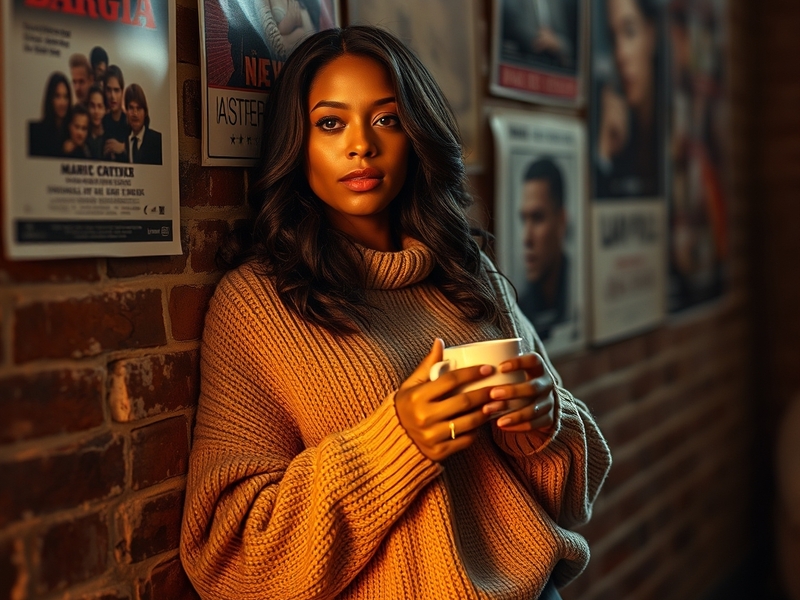
Rosario Dawson isn’t just an actress. She’s a cultural architect whose career has stretched across film, television, music, activism, and even comic books for over three decades. Born in New York City’s Lower East Side in 1979, Dawson grew up in a Puerto Rican and Irish household, a heritage that shaped her artistic sensibilities and social consciousness. From indie darling to Marvel heroine, Dawson’s journey reflects broader shifts in representation, creative collaboration, and the role of artists as public voices.
From the streets to the screen
Dawson’s acting career began in the mid-1990s when she was discovered by photographer Larry Clark while sitting on her front steps. Clark cast her in his controversial 1995 film Kids, a raw portrayal of teenage life in New York City that became a defining work of the era. The film’s unflinching look at youth culture, HIV awareness, and urban decay resonated globally, especially in cities like London, Tokyo, and São Paulo where similar issues fueled underground art movements.
What followed was a deliberate move away from typecasting. Dawson chose roles that challenged expectations—like her breakout turn in Menace II Society (1993), where she played a grounded, morally complex character amid the film’s gritty realism. Her performance wasn’t about glamour; it was about authenticity. That commitment to truth over spectacle became a hallmark of her career, setting a standard for actors of color navigating an industry still grappling with diversity.
Building bridges between genres and communities
Dawson’s filmography reveals a deliberate strategy: to blur lines between genres, cultures, and audiences. In 2005, she starred in Rent, the Jonathan Larson musical adapted for the screen, playing the fierce and tender Mimi. The role connected her to a global fanbase of theater lovers, especially in cities like Buenos Aires and Manila where Rent had cult followings. The film’s themes of queer love, gentrification, and artistic survival struck a chord far beyond New York’s Alphabet City.
Her turn as Claire Temple in the Marvel Netflix series Daredevil and Luke Cage expanded her reach into the superhero genre, a space long dominated by white male leads. Dawson’s portrayal of the compassionate nurse-turned-activist wasn’t just a cameo; it became a bridge between comic book lore and real-world social justice. The character’s Puerto Rican heritage and commitment to community healing resonated deeply in Puerto Rico and among diaspora communities across the U.S., Brazil, and Spain.
Dawson has also used her platform to support entertainment projects that center marginalized voices. In 2021, she co-founded the media company Voto Latino, which mobilizes Latinx voters through digital campaigns. The initiative reflects a growing trend among artists to merge creative work with civic engagement, especially in countries like Mexico and Colombia where youth-led movements are reshaping politics.
A voice for social and environmental justice
Dawson’s activism isn’t limited to voting rights. She has been a vocal advocate for environmental justice, linking climate change to racial and economic inequality. In 2020, she partnered with the NRDC to highlight the disproportionate impact of pollution on communities of color. Her op-eds and public statements often draw parallels between environmental degradation in places like Flint, Michigan, and favelas in Rio de Janeiro—both sites where marginalized populations bear the brunt of systemic neglect.
Her commitment extends to Indigenous rights. Dawson has supported campaigns for land sovereignty in the Amazon and the Standing Rock Sioux Tribe’s opposition to the Dakota Access Pipeline. These causes aren’t isolated; they’re part of a global pattern where Indigenous and Afro-descendant communities face displacement due to resource extraction. Dawson’s involvement adds star power to grassroots struggles, but she’s careful to center local leaders rather than overshadow them.
Below is a snapshot of Dawson’s advocacy work across different regions:
- Latin America: Partnered with local NGOs in Mexico and Colombia to fund arts programs for at-risk youth in cities like Bogotá and Oaxaca.
- United States: Co-founded Studio 6BD, a production company focused on diverse storytelling, with a focus on stories by women and people of color.
- Global South: Supported campaigns for clean water access in sub-Saharan Africa through her work with the Water.org initiative.
Cultural legacy and future horizons
As Dawson approaches her mid-40s, her influence shows no signs of waning. She continues to take on roles that defy ageist stereotypes, like her portrayal of a 60-something woman in the 2023 film Top Gun: Maverick—a rare moment of visibility for older women in action cinema. Her presence in such films signals a shift in Hollywood’s willingness to cast actresses of color in roles beyond youthful archetypes.
Dawson’s work in animation and gaming further expands her cultural footprint. She voiced characters in Axcellent Adventure and Justice League: War, bringing her voice to global audiences in Japan, France, and India where animation enjoys massive popularity. These roles help normalize her presence in spaces that have historically excluded women of color.
Looking ahead, Dawson’s focus on media ownership could redefine how stories are told. She has spoken openly about the need for creators of color to control their narratives, not just appear in them. This mirrors a growing movement among artists globally, from Nigerian filmmakers producing Nollywood content to Korean creators dominating the K-drama wave. Dawson’s role as a producer and investor could help democratize access to funding and distribution for underrepresented voices.
Her influence also extends to fashion. Dawson has walked runways for brands like Pyer Moss and Telfar, two labels that blend streetwear with political messaging. Her red carpet choices often highlight designers of color, reinforcing the idea that style can be both aesthetically bold and socially conscious. In cities like Lagos and Dakar, where African fashion is reshaping global trends, Dawson’s advocacy resonates with designers and fans alike.
A blueprint for the next generation
What makes Rosario Dawson’s career truly noteworthy isn’t just her talent or her activism—it’s her ability to weave them together into a cohesive vision. She doesn’t separate art from politics or entertainment from education. That integration is increasingly vital in a world where audiences demand authenticity and accountability from public figures.
Dawson’s journey also reflects the power of cultural hybridity. Born to a Puerto Rican mother and an Irish-American father, raised in a multicultural neighborhood, and now navigating global platforms, she embodies the future of identity in the 21st century. Her success isn’t just personal; it’s collective. It belongs to the communities she represents, the artists she uplifts, and the audiences who see themselves in her work.
As the entertainment industry continues to evolve, Dawson’s legacy offers a roadmap: one where artists don’t just reflect the world but help transform it. Whether through film, activism, or entrepreneurship, she reminds us that culture isn’t just what we consume—it’s what we build together.