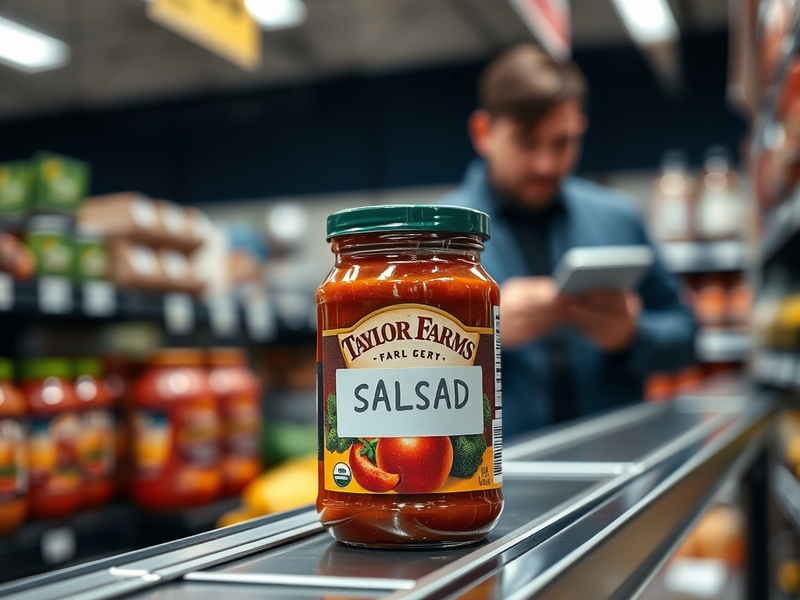
Taylor Farms, one of the largest fresh food producers in the United States, has initiated a voluntary recall of several salsa products after routine quality testing detected potential contamination risks. The move reflects broader trends in food safety enforcement, where even minor deviations can trigger large-scale recalls affecting global supply chains. While the company has not yet confirmed the specific contamination source, the recall spans multiple states and includes products distributed under various brand labels.
The affected salsa varieties include red, green, and mild pico de gallo styles, all packaged in 16-ounce containers. Taylor Farms has suspended production at its facility in Salinas, California, pending further regulatory review. Consumers who purchased these products between June 1 and July 15, 2024, have been urged to check their kitchens and discard or return any items with the lot codes listed on the company’s recall notice.
Global Supply Chains and Food Safety Oversight
This recall underscores the fragility of modern food distribution networks, which rely on rapid transportation and just-in-time inventory systems. Even in a country with stringent food safety laws, recalls can ripple across borders when products are exported or when ingredients are sourced internationally. Taylor Farms, with operations spanning North and South America, exports fresh produce and packaged goods to over 50 countries, making this recall a matter of international concern.
Regulatory agencies such as the U.S. Food and Drug Administration (FDA) and the U.S. Department of Agriculture (USDA) enforce strict guidelines on microbial contamination, chemical residues, and labeling accuracy. When violations occur, recalls are not just a corporate response but a legal obligation. The Taylor Farms incident follows a pattern seen in other high-profile recalls, such as the 2022 Salmonella outbreak linked to packaged salads that sickened over 100 people across 21 states.
Consumer Trust and Brand Reputation in the Digital Age
In an era where social media amplifies both product praise and criticism, brand reputation is more fragile than ever. A recall can erode consumer confidence within hours, especially when misinformation spreads online. Taylor Farms has responded with transparency, posting detailed recall notices on its website and social media channels. The company has also set up a dedicated hotline for concerned customers, a strategy increasingly adopted by food producers facing similar crises.
Yet, the challenge extends beyond immediate damage control. In Latin American and Hispanic communities, where salsa is a staple condiment, the recall carries cultural weight. Many households use store-bought salsa daily, and concerns about safety can lead to shifts in purchasing habits. Some consumers may return to homemade versions, reviving traditions of small-batch preparation passed down through generations.
The incident also highlights the role of influencers and food critics in shaping public perception. A viral tweet or TikTok video about the recall could amplify its impact far beyond the original distribution area. Conversely, a well-crafted apology campaign or educational video might help restore trust. This dynamic places additional pressure on companies to manage not just the recall itself, but the narrative surrounding it.
Lessons for the Food Industry and Regulatory Future
Food safety experts argue that recalls like this one reveal systemic gaps in traceability and transparency. While Taylor Farms has pledged to enhance its testing protocols, the recall raises questions about whether current regulations are sufficient in an era of globalized food production. The European Union, for instance, employs a more centralized rapid alert system (RASFF) that allows for faster cross-border communication during contamination events.
Looking ahead, several trends may reshape how recalls are handled:
- Blockchain for Traceability: Some companies are piloting blockchain technology to track produce from farm to shelf, enabling precise identification of contamination sources within hours rather than days.
- AI-Powered Monitoring: Machine learning algorithms are being tested to predict contamination risks by analyzing weather patterns, supplier data, and historical recall trends.
- Consumer-Facing Apps: New platforms are emerging that allow shoppers to scan barcodes and receive instant alerts about recalled products, reducing reliance on manual checks.
For now, Taylor Farms’ recall serves as a case study in crisis management, food safety, and the evolving expectations of consumers worldwide. How the company navigates this challenge could set a precedent for how future recalls are handled across the industry.
The broader lesson is clear: in a global food system, safety is not just a local issue but a shared responsibility. Whether through stricter regulations, technological innovation, or cultural shifts in consumption, the goal remains the same—ensuring that every jar of salsa on the shelf is as safe as it is flavorful.
For those interested in learning more about food safety standards in the U.S., the FDA’s Health section provides updated guidelines on handling and storing perishable foods. Meanwhile, the Culture section explores how culinary traditions adapt in response to modern challenges.