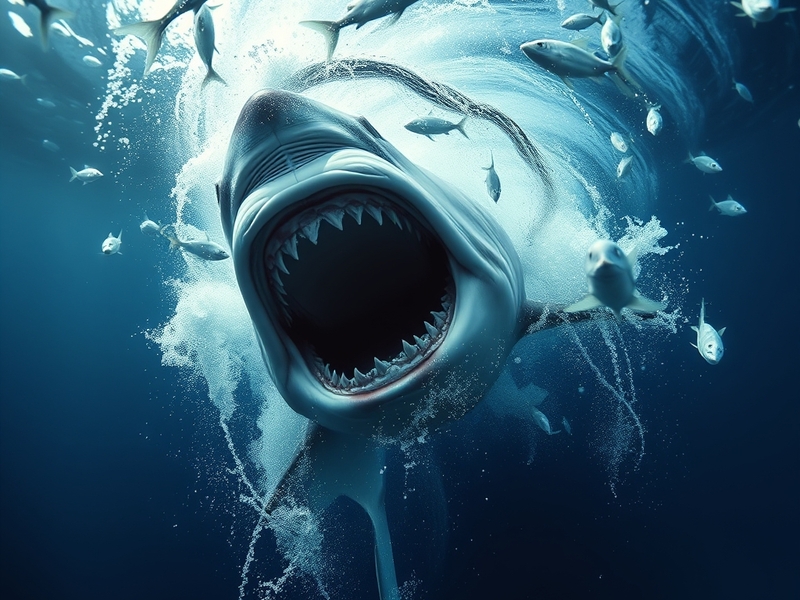
The great white shark remains one of the ocean’s most misunderstood apex predators. For decades, its reputation has been shaped by sensationalized media and Hollywood tropes rather than scientific reality. Found in coastal and offshore waters across the globe, this species plays a critical role in marine ecosystems. Yet public perception often overlooks its ecological significance in favor of fear-driven narratives. From the reefs of Australia to the kelp forests of South Africa, the great white’s presence is both a barometer of ocean health and a symbol of humanity’s complex relationship with the natural world.
The global distribution and habitats of the great white
Great white sharks, scientifically known as Carcharodon carcharias, inhabit temperate and subtropical waters on every continent except Antarctica. Their range extends from the northern Pacific—off the coasts of California and Mexico—to the southern Atlantic near Argentina and South Africa. In the Indian Ocean, they are frequently spotted around the Seychelles and Mauritius, while in the Mediterranean, sightings are rare but documented near the Strait of Gibraltar and the Adriatic Sea.
These sharks display remarkable adaptability, thriving in both shallow coastal waters and deep pelagic zones up to 1,280 meters (4,200 feet) below the surface. Juveniles often prefer nursery grounds in warmer, shallow bays such as those in Southern California or the waters around Guadalupe Island, where they can avoid larger predators. Adults, however, are more nomadic, traveling vast distances in search of prey like seals, sea lions, and other marine mammals. Satellite tagging studies have revealed transoceanic migrations, with one individual recorded traveling from South Africa to Australia and back—a journey of over 20,000 kilometers.
Climate change and shifting ocean temperatures are beginning to alter these patterns. Warmer waters are pushing some populations northward, bringing them closer to human populations and increasing the likelihood of human-shark interactions. In New Zealand, for example, sightings have become more frequent in recent years, prompting both concern and curiosity among local communities.
Cultural symbolism: from reverence to fear
The great white shark’s cultural footprint stretches far beyond marine biology. Indigenous communities across the Pacific and Indian Oceans have long held nuanced views of the species. In some Polynesian traditions, the shark is seen as a guardian spirit, or aumakua, in Hawaiian culture, revered as protectors and ancestors. Similarly, the Māori of New Zealand associate sharks with strength and leadership, often incorporating their imagery into carvings and tattoos.
Contrast this with the Western perspective, where the great white has been demonized since Peter Benchley’s 1974 novel Jaws and its 1975 film adaptation. The image of a toothy, relentless killer lurking beneath the waves has become ingrained in popular culture, perpetuating an irrational fear. While shark attacks are statistically rare—there were only 69 confirmed unprovoked shark bites worldwide in 2023, according to the International Shark Attack File—the narrative persists. This fear is not just a relic of cinema; it influences policies such as shark culling in countries like Australia, where drum lines and nets are deployed despite evidence that they harm ecosystems more than they protect swimmers.
In contrast, parts of South Africa have embraced ecotourism centered around great white sharks. Places like Gansbaai and False Bay have become global hotspots for cage diving, where operators argue that responsible tourism can foster conservation by shifting public perception. Yet even this industry is not without controversy, as critics point to the potential for habituating sharks to human presence or disrupting natural feeding behaviors.
Ecological importance and conservation challenges
The great white shark is a keystone species, meaning its presence regulates the populations of prey species and maintains the balance of marine ecosystems. By preying on sick or weak individuals, they help prevent the spread of disease and support genetic health in seal and sea lion populations. Their movements also influence nutrient cycling, as they transport organic matter across vast oceanic distances through their migrations.
Despite their ecological importance, great white sharks face severe conservation challenges. They are listed as vulnerable on the IUCN Red List, with some regional populations—such as those in the Mediterranean—critically endangered. The primary threats include:
- Bycatch in commercial fishing operations, particularly in gillnet and longline fisheries targeting tuna and swordfish.
- Illegal, unreported, and unregulated (IUU) fishing, driven by demand for shark fins and jaws in the black market.
- Habitat degradation from coastal development, pollution, and noise pollution, which disrupts their sensory capabilities.
- Climate change, which alters prey availability and forces behavioral adaptations that may not be sustainable.
Conservation efforts vary widely by region. In the United States, the National Marine Fisheries Service has implemented protections under the Endangered Species Act and Marine Mammal Protection Act, limiting fisheries interactions. Australia has taken a more contentious approach, combining shark spotting drones and SMART drum lines with controversial lethal measures. Meanwhile, South Africa has established several marine protected areas (MPAs), such as the Gansbaai MPA, to safeguard critical habitats.
International cooperation is essential but inconsistent. The Convention on International Trade in Endangered Species (CITES) lists the great white shark under Appendix II, regulating its trade. However, enforcement remains weak in many countries, and illegal fishing continues to thrive in unregulated waters. NGOs like Ocearch and the Shark Trust are working to bridge gaps by tagging sharks and raising public awareness, but the road to recovery is long and fraught with obstacles.
The future of coexistence
As human populations expand and ocean temperatures rise, the great white shark’s future hangs in a delicate balance. The choices we make today—whether in policy, tourism, or public education—will determine whether this apex predator survives beyond the 21st century. One promising trend is the growing movement toward shark conservation education. Initiatives like shark awareness weeks, school programs, and interactive exhibits at aquariums are slowly reshaping public perception. For instance, the Monterey Bay Aquarium’s “Sharks: Fear and Fascination” exhibit has been credited with reducing negative attitudes among visitors by emphasizing the shark’s ecological role.
Technology is also playing a pivotal role. Advances in satellite tagging, underwater drones, and AI-powered tracking systems are providing scientists with unprecedented insights into shark behavior. Projects like Global Shark Tracker allow the public to follow tagged sharks in real time, fostering a sense of connection and stewardship. These tools are not just for researchers; they offer a way to demystify sharks and replace fear with fascination.
Yet, technology alone cannot solve the problem. Local communities must be engaged in conservation efforts, particularly in regions where livelihoods depend on fishing. Sustainable alternatives, such as shark dive tourism and eco-certified fisheries, can provide economic incentives to protect rather than exploit these animals. In places like Beqa Lagoon in Fiji, community-led shark conservation programs have demonstrated that protecting sharks can be more profitable than hunting them.
The great white shark is not merely a predator or a symbol of danger—it is a vital thread in the tapestry of ocean life. Its survival hinges on our willingness to confront our fears, challenge outdated narratives, and embrace a future where humans and sharks coexist. That future is not guaranteed, but with concerted effort, it remains within reach.