USS Abraham Lincoln: A Floating City of Power and Prestige
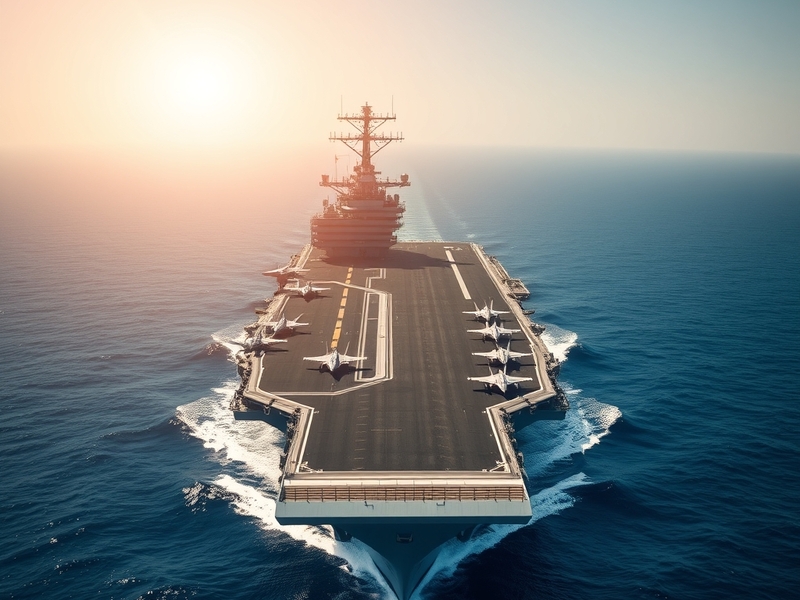
The USS Abraham Lincoln (CVN-72) is more than just a warship—it’s a symbol of American naval dominance and technological prowess. Commissioned in 1989, this Nimitz-class aircraft carrier has become a cornerstone of the U.S. Navy’s global presence, projecting power across oceans while serving as a mobile command center for joint military operations.
Named after the 16th U.S. President, the Abraham Lincoln was built to replace the aging USS Kitty Hawk. Constructed at Newport News Shipbuilding in Virginia, the carrier was designed with cutting-edge technology for its time, including advanced radar systems, nuclear propulsion, and a flight deck capable of launching and recovering a wide range of aircraft. Its keel was laid in 1984, and it entered service five years later, marking the beginning of a legacy that continues to evolve.
The carrier’s nuclear reactors allow it to operate for over 20 years without refueling, giving the Abraham Lincoln unmatched endurance. This capability enables it to remain on station for extended periods, supporting humanitarian missions, combat operations, and diplomatic engagements. Its sheer size—measuring 1,092 feet in length and displacing over 100,000 tons—makes it one of the largest warships ever built, a floating city that carries nearly 6,000 personnel.
A Global Presence: Deployments and Strategic Role
The Abraham Lincoln’s operational history reflects its critical role in U.S. foreign policy. One of its most notable deployments occurred in 2003, when it spearheaded Operation Iraqi Freedom. The carrier’s air wing launched thousands of sorties, providing close air support and striking key targets in Iraq. This mission underscored the carrier’s ability to project force rapidly and decisively, a capability that remains central to its strategic value.
Beyond combat operations, the Abraham Lincoln has participated in numerous humanitarian missions. In 2011, it was among the first ships to respond to the earthquake and tsunami in Japan, delivering aid and medical supplies to affected regions. Such deployments highlight the carrier’s versatility, proving it can be a platform for both hard and soft power.
The carrier’s global reach extends to the Middle East, Asia, and Europe, often serving as a deterrent against regional aggression. Its presence in the Strait of Hormuz, for example, reinforces U.S. commitments to free navigation and regional stability. These deployments are not just military exercises; they are geopolitical statements, reinforcing alliances and projecting American influence.
Cutting-Edge Technology and Innovation
The Abraham Lincoln is a marvel of modern engineering, equipped with systems that push the boundaries of naval technology. Its nuclear propulsion plant, developed by Bechtel and General Electric, provides a virtually unlimited range, allowing the carrier to operate independently for decades. This autonomy is a game-changer in naval strategy, eliminating the need for vulnerable supply lines.
The carrier’s flight deck is a marvel of efficiency, featuring four steam catapults that launch aircraft at high speeds. Its arresting gear systems ensure safe landings for jets like the F/A-18 Super Hornet and E-2D Hawkeye. The ship’s advanced radar and communication systems, including the AN/SPY-1D radar and the Cooperative Engagement Capability (CEC), enable real-time data sharing with allied forces, enhancing situational awareness.
In 2017, the Abraham Lincoln underwent a mid-life refueling and complex overhaul (RCOH) at Newport News Shipbuilding. This $2.8 billion upgrade extended its service life by 25 years and integrated new technologies, such as the F-35C Lightning II, the Navy’s next-generation stealth fighter. The refit also included upgrades to the ship’s electrical systems, weapons systems, and crew living quarters, ensuring it remains at the forefront of naval innovation.
Here’s a breakdown of the carrier’s key technological features:
- Nuclear Propulsion: Two Bechtel A1B reactors provide 30+ years of endurance without refueling.
- Advanced Radar: AN/SPY-1D(V) radar offers 360-degree coverage and multi-target tracking.
- Electromagnetic Aircraft Launch System (EMALS): A next-gen catapult system for launching heavier aircraft.
- Cooling Systems: Advanced chilled water plants manage heat generated by the reactor and electronics.
- Self-Defense Arsenal: Phalanx CIWS, Rolling Airframe Missiles (RAM), and Evolved Sea Sparrow Missiles (ESSM) provide layered protection.
Crew Life: The Human Element of a Floating City
Life aboard the USS Abraham Lincoln is a study in discipline, teamwork, and resilience. The carrier’s crew of nearly 6,000 includes sailors, pilots, engineers, and support personnel, each playing a critical role in the ship’s operations. For many, serving on the Abraham Lincoln is a career-defining experience, offering unparalleled training and camaraderie.
The carrier operates on a 24/7 schedule, with flight operations, maintenance, and watch rotations running around the clock. Crew members work in shifts, ensuring the ship remains combat-ready at all times. Living conditions are tight—sailors sleep in shared berthing areas, eat in mess decks, and rely on the ship’s massive desalination plants for fresh water. Despite the challenges, the sense of purpose is palpable. Many veterans of the Abraham Lincoln describe their time aboard as transformative, fostering skills that translate into civilian careers.
Morale is a priority, and the ship’s leadership invests in morale-boosting activities, from sports tournaments to movie nights in the hangar bay. The Abraham Lincoln also hosts religious services, counseling services, and community events, ensuring the crew’s well-being remains a top priority. For those who serve, the carrier is more than a ship—it’s a second home, a place where lifelong bonds are forged.
The Future of the Abraham Lincoln and Carrier Warfare
The USS Abraham Lincoln’s service life is expected to extend well into the 21st century, thanks to ongoing upgrades and refits. The U.S. Navy’s plan to field the next-generation Gerald R. Ford-class carriers will eventually replace the Nimitz-class, but the Abraham Lincoln is slated to remain operational until at least 2042. Its continued relevance will depend on adapting to emerging threats, including hypersonic missiles, cyber warfare, and unmanned aerial systems.
The Navy is exploring ways to integrate artificial intelligence and automation into carrier operations, potentially reducing the crew size while increasing efficiency. The Abraham Lincoln’s upcoming deployments will likely test these innovations, ensuring it remains a cornerstone of naval power for decades to come. Its legacy will also influence the design of future carriers, setting a standard for power projection and technological advancement.
The carrier’s role in global affairs will continue to evolve as well. With tensions rising in the South China Sea and the Middle East, the Abraham Lincoln’s presence serves as a stabilizing force. It also plays a key role in joint exercises with allies, such as Japan’s Maritime Self-Defense Force and the Royal Navy, reinforcing international partnerships.
As the world’s geopolitical landscape shifts, the USS Abraham Lincoln remains a symbol of American resolve. Whether responding to crises, deterring aggression, or supporting allies, the carrier’s mission is clear: to ensure freedom of the seas and protect U.S. interests worldwide.
The Abraham Lincoln’s story is far from over. As long as there are oceans to patrol and skies to defend, this floating city of power will continue to write its legacy, one deployment at a time.