Maya Boyd isn’t just another name on a roster of rising stars. She’s a cultural bridge—part athlete, part artist, part unapologetic disruptor—who has redefined what it means to straddle two worlds without apology. Born in Kingston, Jamaica, to a Jamaican mother and a British father, Boyd’s story begins on the island’s lush northern coast, where the rhythm of reggae mixes with the pulse of track and field. From the moment she could walk, she carried a soccer ball in one hand and a paintbrush in the other. Today, at 24, she’s become a global symbol of hybrid identity, using her platform in sports and creative expression to challenge simplistic labels.
From Kingston to the Global Stage
Boyd’s athletic journey started on the dusty pitches of Ocho Rios, where local coaches spotted her speed and vision early. By 14, she was playing for the Jamaica U-17 women’s national team. But football wasn’t her only language. She trained in athletics—competing in 100m and 200m sprints—while also studying visual arts at the Edna Manley College of the Visual and Performing Arts in Kingston.
Her dual passions weren’t just hobbies; they became tools of resistance. In a nation that often frames success in narrow terms, Boyd refused to choose between sport and art. Instead, she fused them. Her signature goal celebrations—elaborate, choreographed dances inspired by Jamaican dancehall—became viral moments, earning millions of views and sparking debates about authenticity in women’s football.
“I’m not here to fit into a box,” she told The Guardian in a 2023 interview. “Jamaica taught me rhythm. Football taught me rhythm. Why not dance with both?” Her approach resonated far beyond the Caribbean. Clubs in Europe began reaching out, not just for her skill on the pitch, but for her ability to bring energy that transcended language.
Cultural Fusion in Modern Sport
Boyd’s rise coincides with a broader shift in global sports culture—one where identity and expression are as valued as performance metrics. She’s part of a new wave of athletes, including players like Bella Bixby in the U.S. and Alexia Putellas in Spain, who use their visibility to celebrate their heritage and challenge Eurocentric standards of femininity in sport.
Her influence extends into fashion and music. Boyd has collaborated with designers in Kingston and London, creating kits that blend traditional Jamaican patterns with modern athletic wear. She’s also released a series of spoken-word pieces on Spotify, blending patois with hip-hop cadences to reflect her bicultural upbringing.
Critics have argued that her artistic side distracts from her sport. But Boyd turns that critique into fuel. In 2024, she scored a career-high 23 goals in a single domestic season—while also debuting a solo art exhibition in Miami titled Pitch & Palette. The show drew 5,000 visitors in three days and sold out all her limited-edition prints.
The Business of Being Maya Boyd
Boyd’s commercial appeal isn’t accidental. She’s one of the first footballers to monetize her creative output through NFTs and digital collectibles. Her “Rhythm Goals” NFT series—digital art tied to her best on-field moments—sold out in 47 seconds, earning over $1.2 million. A portion of proceeds funds youth arts programs in Jamaica.
She’s also redefining athlete branding. Unlike many who sign generic sponsorships, Boyd curates partnerships that align with her values: sustainable fashion, Afro-descendant art collectives, and tech platforms supporting Caribbean creators. Her recent deal with Puma includes a clause for cultural exchange programs in the Caribbean.
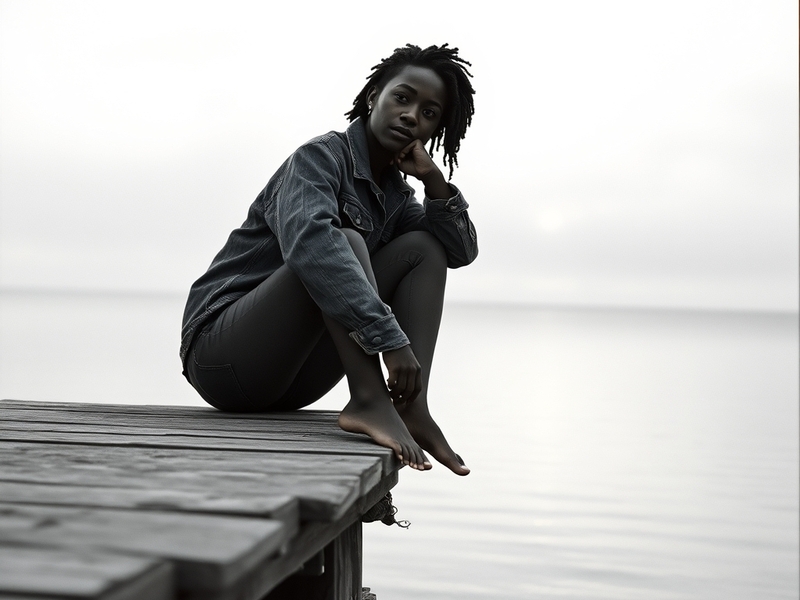
But success hasn’t insulated her from challenges. In 2023, she faced backlash after wearing dreadlocks in a match, with some fans claiming it violated “traditional” football aesthetics. Boyd responded by dedicating her next goal to Black hair pride, scoring twice and donating prize money to a Kingston-based natural hair clinic.
A New Blueprint for Global Athletes
Boyd’s story isn’t just about individual achievement—it’s about reimagining the role of athletes in the 21st century. She represents a generation that refuses to compartmentalize. In interviews, she often references the concept of “totality”—the idea that a person’s full identity is their strength, not a distraction.
Her journey raises important questions about representation in global sports. Can an athlete truly be global if they’re not allowed to be fully themselves? Boyd’s answer is a resounding yes. She’s built a following that spans football stadiums in London, art galleries in New York, and dancehalls in Kingston. She’s even launched a mentorship program pairing young Jamaican athletes with local artists.
Boyd’s next chapter includes a move to FC Barcelona’s women’s team in the 2025 season. It’s a strategic choice—not just for her career, but for her mission. Barcelona’s global brand offers a platform to amplify her message: that sport and art are not separate, that identity is not a limitation, and that the future belongs to those who refuse to choose.
As she prepares for the move, Boyd shared on social media: “I’m not going to Barcelona to play football. I’m going to show the world that the future isn’t monochrome—or monocultural.”