The Department of Justice’s plans to construct a new ballroom at the White House have reignited discussions about federal spending, historic preservation, and the evolving role of the nation’s most iconic residence. While the Biden administration has framed the project as necessary for hosting larger diplomatic events, critics argue the $30 million allocation could be better directed toward pressing domestic needs. The controversy reflects broader tensions over how federal funds are prioritized in an era of fiscal constraint and polarized politics.
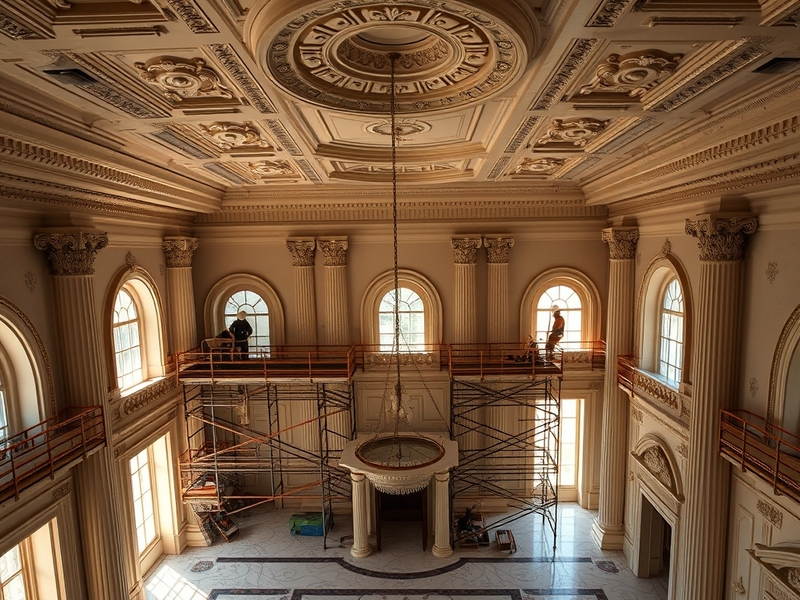
The ballroom in question, located within the Eisenhower Executive Office Building, has not undergone significant renovations since the 1970s. Officials cite outdated infrastructure, including inadequate HVAC systems, electrical limitations, and accessibility issues, as justification for the upgrade. The proposed design includes modernizing the space to accommodate press briefings, state dinners, and other high-profile gatherings—events that have grown in scale and frequency in recent years. Supporters of the project point to the White House’s role as a global symbol of American diplomacy, arguing that its facilities must keep pace with contemporary demands.
Historical Context and Architectural Significance
The Eisenhower Executive Office Building, originally constructed in the 1870s as the State, War, and Navy Building, has been a fixture of White House operations for over a century. Its ballroom has hosted historic moments, from diplomatic receptions during the Cold War to post-election gatherings in modern times. Preservationists warn that any major renovation risks altering the building’s original character, particularly its intricate plasterwork, grand staircases, and period-specific detailing. The Advisory Council on Historic Preservation has emphasized the need for careful oversight to ensure the project adheres to preservation standards set by the National Historic Preservation Act.
The debate over the ballroom’s renovation also intersects with broader questions about the White House’s evolving function. In the 21st century, the residence is no longer just a private home for the president but a 24/7 operational hub for the executive branch. State dinners, which once accommodated a few dozen guests, now regularly include hundreds of attendees, including foreign dignitaries, members of Congress, and high-profile celebrities. The ballroom’s current capacity—roughly 200 people—has become a bottleneck for events that require more space, such as joint press conferences or large-scale diplomatic summits.
Funding and Political Controversy
The $30 million price tag for the ballroom renovation has drawn sharp criticism from congressional Republicans, who have questioned the administration’s spending priorities. In a recent budget hearing, Representative Tom McClintock of California argued that the project was “a luxury we cannot afford” amid rising inflation and concerns about the national debt. Democrats, however, have countered that the investment is justified, pointing to the ballroom’s role in facilitating international relations. A senior White House official stated that the funds would come from existing DOJ appropriations rather than new allocations, but the optics of such a project remain politically fraught.
The funding mechanism has also sparked confusion. While the DOJ is overseeing the project, the ballroom is technically part of the White House complex, raising questions about interagency coordination. A breakdown of costs includes:
- $12 million for structural upgrades, including seismic retrofitting and electrical system overhauls
- $8 million for interior design, including restoration of historic elements and installation of modern amenities
- $5 million for accessibility improvements, such as elevators and ramps
- $4 million for contingency and project management fees
- $1 million for environmental and historical compliance reviews
Critics have seized on the lack of transparency surrounding the bidding process, with some alleging that contracts may favor politically connected firms. A Freedom of Information Act request filed by a watchdog group revealed that the primary contractor, a Virginia-based firm specializing in historic renovations, has donated to both major political parties in recent years. The DOJ has denied any impropriety, stating that all contracts were awarded through a competitive and merit-based process.
Public Opinion and the Role of Symbolism
Public reaction to the ballroom project has been mixed, with polls showing a near-even split between supporters and detractors. Advocates for the renovation argue that the White House must project strength and capability, especially as global power dynamics shift. They point to recent incidents where logistical limitations have forced last-minute adjustments, such as relocating events due to inadequate climate control or cramped conditions. “The White House is the face of America to the world,” said a former chief usher of the White House. “If we can’t host dignitaries with dignity, we send the wrong message.”
Opponents, however, see the project as emblematic of a larger pattern of government excess. Social media has amplified calls to redirect the funds toward social programs, veterans’ services, or infrastructure repairs. One viral tweet argued, “The White House has 132 rooms. Maybe one of them could be repurposed as a ballroom instead of building a new one.” The administration has dismissed such criticism as reductive, emphasizing that the ballroom serves a functional purpose beyond mere symbolism.
The debate also touches on the emotional resonance of the White House. For many Americans, the residence represents stability, tradition, and continuity—values that feel increasingly fragile in a divided political climate. The ballroom, in particular, has been the backdrop for some of the most iconic images of American leadership, from John F. Kennedy’s televised addresses to Michelle Obama’s advocacy for military families. Any changes to the space, no matter how necessary, risk altering a piece of national identity.
Looking Ahead: What’s Next for the Project?
The ballroom renovation is expected to break ground in early 2025, with completion slated for 2027. The timeline accounts for the complexities of historic preservation, including the need to relocate occupants of the Eisenhower Executive Office Building during construction. The General Services Administration has assured the public that the project will not disrupt day-to-day White House operations, though some events may be temporarily relocated to nearby venues like the State Department’s Diplomatic Reception Rooms.
Long-term, the project could set a precedent for future upgrades to the White House complex. Other areas in need of attention include the residence’s aging elevators, the press briefing room’s inadequate soundproofing, and the lack of a dedicated medical suite for the first family. The administration has hinted at a broader infrastructure plan for the White House, though no details have been released. For now, the ballroom remains at the center of a debate that transcends dollars and cents—one that asks us to consider what we value as a nation.
As the project moves forward, the White House will need to strike a delicate balance between modernization and reverence for history. The ballroom’s renovation may be a small part of that equation, but its symbolism looms large. Whether it becomes a model for responsible stewardship or a cautionary tale about priorities will depend on how the story unfolds in the years to come.