The global beauty industry is facing a seismic shift as governments and health organizations escalate warnings against gel nail polish. Once celebrated for its chip-resistant shine and long-lasting wear, gel nails are now under scrutiny for their chemical composition and potential health risks. The movement to restrict or ban these products has gained momentum, with countries from Europe to Asia implementing stricter regulations. What began as a niche trend has evolved into a contentious debate over consumer safety, corporate responsibility, and the future of cosmetic innovation.
Why are gel nails facing bans?
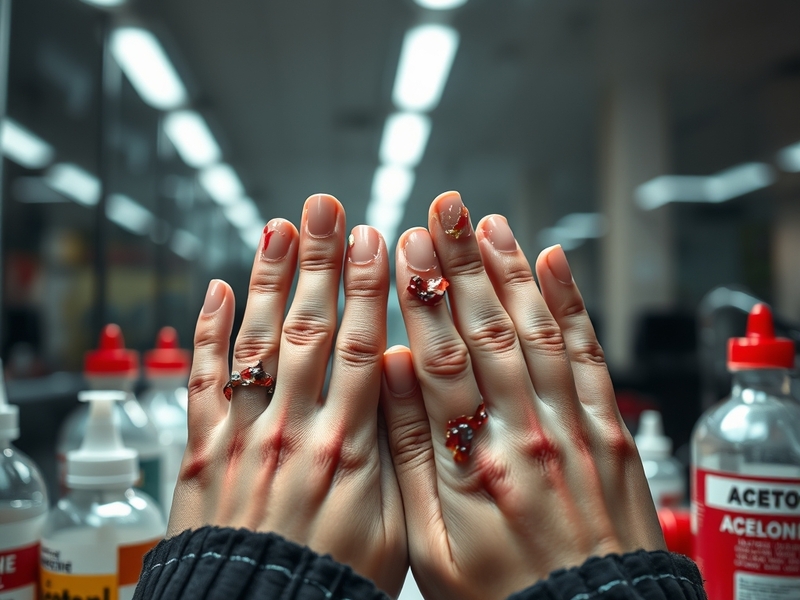
The primary concern stems from the composition of gel polish, which relies on a cocktail of synthetic chemicals to achieve its durability. Key ingredients such as methacrylates, formaldehyde, and toluene have been flagged by health authorities for their potential to cause allergic reactions, respiratory issues, and even long-term reproductive harm. The European Union has taken the most aggressive stance, classifying several methacrylate compounds as skin sensitizers that must be restricted in consumer products. Meanwhile, the U.S. Food and Drug Administration (FDA) has issued repeated warnings about improper ventilation in salons, which can expose both technicians and clients to harmful fumes.
Beyond individual health risks, environmental advocates argue that gel nails contribute to pollution through discarded UV lamps, plastic waste from packaging, and chemical runoff. The European Chemicals Agency (ECHA) has proposed a blanket ban on liquid monomers used in DIY gel kits, citing their role in occupational hazards for nail technicians. These regulatory actions reflect a broader shift toward prioritizing public health over cosmetic convenience—a trend that shows no signs of slowing.
The global regulatory landscape
Countries are adopting strikingly different approaches to the gel nail dilemma, creating a patchwork of regulations that leave consumers and businesses scrambling to adapt. Below is a breakdown of the most significant policy shifts worldwide:
- European Union: The EU’s REACH regulations have already restricted 34 methacrylate substances commonly found in gel polish. France has gone further by banning all monomer liquids in professional and at-home kits as of 2024. Salons now face fines up to €750 for violations, forcing many to switch to alternative products or close down.
- United Kingdom: Post-Brexit, the UK has aligned with the EU’s stance but with a delayed implementation timeline. Health officials are pushing for mandatory ventilation systems in salons by 2025, though enforcement remains inconsistent across regions.
- United States: The FDA has stopped short of a full ban but has strengthened warning labels on gel products. Some states, like California, have introduced bills to classify gel polish as a hazardous material, requiring special disposal protocols. The lack of federal uniformity leaves consumers in a regulatory gray area.
- Canada: Health Canada has issued advisories against DIY gel kits but has not yet moved to ban professional-grade products. However, the agency is funding research into safer alternatives, signaling a potential future crackdown.
- Australia: The Therapeutic Goods Administration (TGA) has banned high-risk gel formulations containing HEMA (2-hydroxyethyl methacrylate), a common allergen. Australian salons must now use “HEMA-free” products, though compliance is uneven.
- China: As the world’s largest manufacturer of gel polish, China has resisted outright bans but has tightened export controls on high-methacrylate formulations. The government is also investing in “green chemistry” alternatives to maintain its dominance in the global market.
The disparity in regulations has created a complex market where some products are legal in one country but banned in another. Brands like OPI and CND have responded by reformulating their lines to exclude restricted chemicals, while smaller manufacturers struggle to keep up with evolving standards. The result is a beauty industry in flux, where innovation is often stifled by bureaucratic red tape.
Cultural and economic ripple effects
The decline of gel nails is more than a health issue—it’s a cultural reckoning. For over a decade, gel manicures symbolized self-care, professionalism, and even economic empowerment for nail technicians, many of whom are women of color. Salons in urban centers like New York, London, and Tokyo built empires on the promise of flawless, week-long wear. Now, these businesses face existential threats as clients grow wary of the risks and regulators tighten restrictions.
In cities like Miami and Dubai, where gel nails were a status symbol among influencers and working professionals, sales have plummeted by 40% in the past year. Nail artists who once charged premium prices for intricate designs are pivoting to traditional polish or press-on nails, which lack the same durability but offer a loophole around bans. The economic fallout is particularly severe for independent salons, which operate on razor-thin margins and lack the resources to reformulate their offerings.
Yet not everyone sees the crackdown as a crisis. Advocacy groups like the Campaign for Safe Cosmetics argue that the gel nail industry has long prioritized profit over safety. They point to studies linking methacrylate exposure to asthma and contact dermatitis, conditions that disproportionately affect salon workers. For these groups, the bans represent a long-overdue correction to an unregulated market. Meanwhile, some consumers are embracing the change, trading gel nails for biodegradable polishes or even embracing bare nails as a statement of natural beauty.
What’s next for the nail industry?
The future of gel nails hinges on innovation—or the lack thereof. Industry insiders are divided on whether a “safe” gel polish can ever exist. Some companies are experimenting with UV-free curing systems, while others are turning to plant-based formulas. However, these alternatives often sacrifice longevity and shine, which are the core selling points of traditional gel.
The most promising developments are coming from biotech startups, which are developing algae-based polymers and enzyme-activated lacquers that harden without UV light. If successful, these products could revolutionize the industry by eliminating the need for harmful chemicals altogether. However, commercial viability remains a hurdle—early prototypes are expensive and lack the glossy finish consumers expect.
For now, the nail industry is in a transitional phase. Regulators are tightening the screws, consumers are growing skeptical, and businesses are scrambling for alternatives. The question isn’t whether gel nails will disappear—it’s how quickly the industry can adapt before the bans become irreversible. One thing is clear: the era of unchecked cosmetic experimentation is over. The beauty industry must evolve or risk becoming a relic of a less health-conscious past.