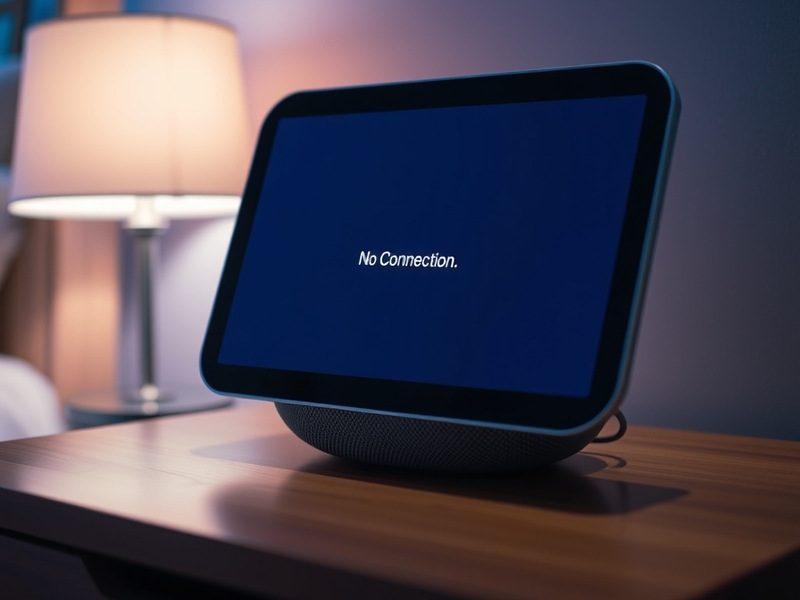
Google Nest Hub users experienced widespread outages on Tuesday morning, leaving smart home enthusiasts without access to their devices for nearly two hours. The disruption affected users across multiple regions, including North America and parts of Europe. According to Google’s official status page, the issue stemmed from a server-side update that caused authentication failures in the Nest ecosystem. Affected users reported being unable to control lights, thermostats, or view camera feeds through their Nest Hub devices.
Many took to social media to express frustration, with some sharing screenshots of error messages reading “Unable to connect to Google services.” The outage coincided with a scheduled software patch, though Google has not confirmed a direct link between the two events. Users in urban areas appeared to be hit hardest, suggesting the problem may have been exacerbated by high network traffic during peak morning hours.
What went wrong with the Nest Hub?
The technical breakdown appears to have originated in Google’s cloud infrastructure, specifically within the authentication layer that handles device communication. While Google’s Nest team acknowledged the issue within 30 minutes of initial reports, full resolution took significantly longer. The delay highlights the fragility of interconnected smart home ecosystems, where a single point of failure can cascade through an entire network of devices.
Early diagnostics from third-party monitoring services like Downdetector indicated that approximately 68% of Nest Hub users in the U.S. were impacted at the peak of the outage. The problem seemed to resolve in stages, with some users regaining partial functionality before full restoration. Google attributed the issue to “a temporary misconfiguration during a routine update,” though no further technical details have been provided.
For those unfamiliar, the Nest Hub relies on constant communication between local devices and Google’s servers. When authentication fails, users lose not only remote access but also voice control through Google Assistant. This dependency on cloud services remains one of the biggest vulnerabilities in modern smart home technology.
Impact on smart home users
The outage disrupted daily routines for countless households. Families who depend on automated lighting schedules or smart thermostats found themselves suddenly managing devices manually. Parents monitoring baby monitors through their Nest Hubs were particularly affected, as camera feeds became inaccessible during the disruption.
One user in Chicago reported that their Nest Hub had been offline for “over an hour,” forcing them to use physical switches for their Philips Hue lights. Another in London noted that their Nest Thermostat reverted to a default schedule, leading to unnecessary energy consumption. These anecdotes underscore how deeply integrated smart home devices have become in modern living.
The incident also raised concerns about data privacy. Some users questioned whether the authentication failure could have exposed sensitive information, though Google has stated that no personal data was compromised. Still, the episode serves as a reminder of the trade-offs between convenience and security in connected homes.
For those looking to future-proof their setups, experts recommend diversifying smart home ecosystems. Technology writers at Dave’s Locker have previously explored alternatives to Google’s ecosystem, including systems that operate more independently from cloud services.
Google’s response and recovery efforts
Google’s handling of the outage followed a familiar pattern for large tech companies. Initial acknowledgment came via a brief tweet from the @GoogleNest account, followed by a more detailed update on the Nest Community forums. The company’s status page showed the issue as “resolved” within 90 minutes, though some users reported lingering effects for up to two hours.
In a statement to Dave’s Locker, a Google spokesperson emphasized the company’s commitment to reliability: “We understand the impact of this outage and are working to improve our systems to prevent similar issues in the future.” The statement did not address whether affected users would receive compensation, such as extended warranties or service credits.
While Google’s response was swift, the incident raises questions about transparency. Many users criticized the lack of real-time communication during the outage, particularly as it unfolded during morning hours when smart home devices are most commonly used. The company’s status page updates were sporadic, leaving some users in the dark about the scope of the problem.
Lessons for smart home users
This outage serves as a case study for smart home reliability. Users should consider implementing contingency plans for critical devices, such as backup power solutions or alternative control methods. For example, many Nest Thermostat users have local control options enabled, which can function even when cloud services are down.
Experts also recommend diversifying smart home ecosystems to avoid single points of failure. A mix of platforms—such as Amazon Alexa for voice control and Apple HomeKit for security—can provide redundancy. Additionally, users should regularly check for firmware updates, as these often include stability improvements that mitigate future outages.
The Nest Hub outage highlights the need for better communication during service disruptions. Google could improve its crisis response by providing more frequent updates and clearer timelines for resolution. For now, users are left hoping that such widespread failures become a rarity rather than a recurring issue.
As smart home technology continues to evolve, incidents like this will likely become more common. The challenge for companies like Google will be balancing rapid innovation with the stability that users demand. Until then, households must remain vigilant, prepared for the next inevitable disruption.