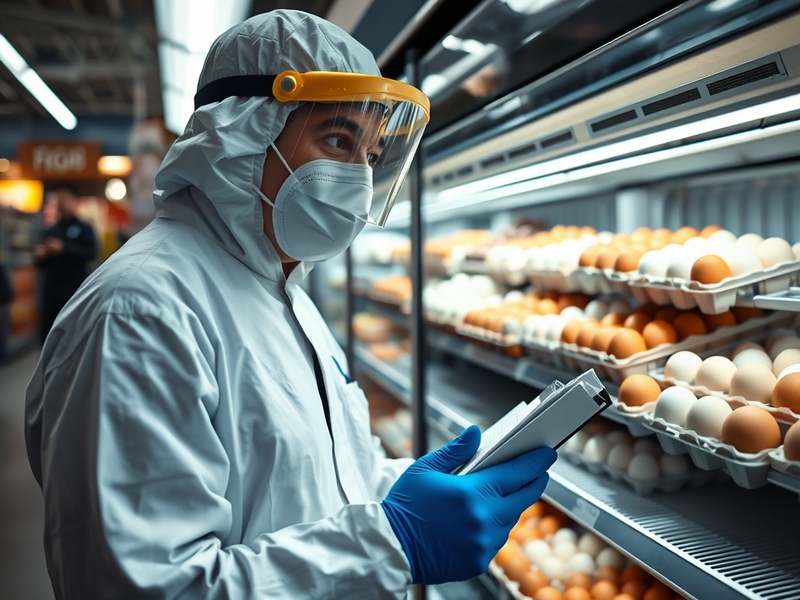
The UK Health Security Agency (UKHSA) has issued urgent guidance following a significant salmonella outbreak linked to contaminated eggs. As of late June 2024, health officials have reported over 200 confirmed cases across England and Wales, with public health teams tracing the source to a specific batch of imported eggs distributed to restaurants and catering suppliers. While no fatalities have been reported, the incident has raised concerns over food safety standards and the reliability of supply chains in an increasingly globalized food industry.
Salmonella infections typically cause symptoms such as diarrhea, fever, and abdominal cramps, which can last up to a week. Vulnerable groups—including young children, the elderly, and individuals with weakened immune systems—are at higher risk of severe outcomes. Public health authorities are urging anyone who suspects they may have consumed contaminated eggs to seek medical attention if symptoms develop. The UKHSA has also emphasized the importance of proper food handling and cooking practices to prevent further spread.
How the outbreak unfolded and what we know so far
The first cases were detected in early May 2024, with a noticeable spike in salmonella reports by mid-June. Genetic sequencing by the UKHSA confirmed that the bacteria matched a strain commonly associated with poultry farms in Spain, one of the UK’s largest suppliers of imported eggs. Investigators traced the contaminated batches to a single processing facility, where lapses in hygiene or contamination during transport may have occurred.
Local authorities and food safety agencies have since launched coordinated efforts to identify and remove affected products from circulation. Restaurants and food service providers have been advised to check their suppliers and dispose of any potentially contaminated eggs. While the UKHSA has not issued a full product recall, it continues to work closely with the Food Standards Agency (FSA) and European counterparts to track the supply chain.
This incident is not isolated. Similar outbreaks have occurred in recent years, often linked to imported produce. In 2022, a salmonella outbreak in France was traced to contaminated eggs used in school canteens, affecting over 200 children. These recurring events highlight a persistent challenge: ensuring food safety across international supply networks where regulations, inspection standards, and enforcement vary widely.
The global context: Why egg-related salmonella outbreaks keep happening
Eggs are a staple in diets worldwide, valued for their nutritional density and versatility. Yet they are also a frequent vector for salmonella due to the bacteria’s ability to contaminate the shell or the yolk during formation. The risk is amplified in large-scale farming operations where thousands of hens are housed in close quarters, creating ideal conditions for bacterial spread.
In the European Union, strict regulations require egg producers to vaccinate hens against salmonella—a measure credited with reducing human cases by nearly 50% since 2008. However, not all countries enforce such rules. Some of the UK’s egg imports originate from regions where vaccination is not mandatory, making it difficult to guarantee safety at the source. This discrepancy has fueled debates about harmonizing international food safety standards.
Consumer trust is another casualty of these outbreaks. When a familiar product like eggs becomes associated with illness, shoppers may hesitate to purchase from certain brands or regions. In the UK, sales of British-produced eggs surged in the weeks following the announcement, as consumers sought perceived safer alternatives. This shift, while understandable, places additional pressure on domestic farmers to meet demand without compromising quality.
Technology offers some solutions. Blockchain-based traceability systems, now being piloted in several countries, allow retailers and regulators to track eggs from farm to shelf in real time. Such innovations could reduce response times during future outbreaks and restore confidence in global supply chains.
What this means for consumers, businesses, and regulators
For consumers, vigilance is key. The UKHSA recommends thoroughly cooking eggs until both the white and yolk are firm, avoiding raw or lightly cooked dishes like homemade mayonnaise or tiramisu if using potentially contaminated eggs. Those in high-risk groups should consider purchasing eggs with the British Lion mark, a certification indicating vaccination and rigorous safety checks.
Businesses face immediate financial and reputational risks. Restaurants implicated in outbreaks often experience sharp declines in customer traffic, even after the source is identified. In 2018, a salmonella outbreak linked to eggs in a major UK fast-food chain cost the company an estimated £2 million in lost revenue and legal settlements. To mitigate such losses, many establishments are now adopting stricter supplier vetting processes and investing in staff training on food hygiene.
Regulators, meanwhile, are under pressure to strengthen oversight without stifling trade. The UK’s departure from the European Union has added complexity, as the country now negotiates independent food safety agreements with third countries. Some policymakers argue for stricter import controls, while industry groups warn that excessive regulations could drive up costs and limit choice.
The outbreak also raises broader questions about food sovereignty and local resilience. Could the UK reduce its dependence on imported eggs by boosting domestic production? While domestic egg output has increased in recent years, meeting demand without imports would require significant investment in infrastructure and labor—an unlikely scenario in the near term.
Lessons learned and the road ahead
Public health experts agree that this outbreak, while serious, presents an opportunity to improve food safety systems. Enhanced collaboration between governments, producers, and technology providers could create a more transparent and responsive supply chain. For instance, real-time monitoring systems could detect contamination earlier, while public alerts could be issued faster to prevent further illnesses.
At the consumer level, awareness campaigns must go beyond warnings about cooking practices. Educating the public on how to identify safe egg sources—such as checking for certification marks or purchasing from reputable suppliers—can empower individuals to make safer choices.
The UKHSA’s response has been swift, but the incident underscores a fundamental truth about modern food systems: safety is only as strong as the weakest link in the chain. Whether that link is a farm in Spain, a processing plant in the UK, or a restaurant kitchen, every stage must adhere to the highest standards. Failure at any point can have widespread consequences.
As global trade continues to expand, so too will the challenges of ensuring food safety. This outbreak is a reminder that vigilance, innovation, and cooperation are not optional—they are essential. For now, the focus remains on containing the current situation, but the lessons learned here will shape food safety policies for years to come.