GCSE Exams Cancelled: A Global Shift in Educational Norms
The cancellation of GCSE exams in 2020 marked a turning point not just for the United Kingdom but for educational systems worldwide. As COVID-19 disrupted traditional learning, governments and educational bodies were forced to rethink how students would be assessed. The move away from standardized exams opened debates about the future of education, fairness, and the adaptability of institutions in times of crisis.
The Immediate Impact on Students and Schools
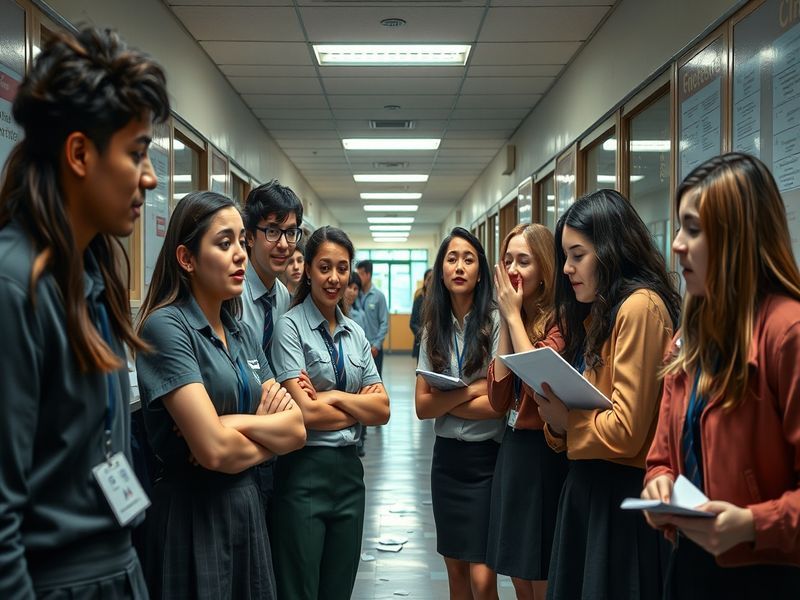
For millions of students, the cancellation of GCSE exams meant an abrupt shift to alternative assessment methods. Teachers were tasked with predicting grades based on coursework, mock exams, and classroom performance. This transition was not without challenges. Some students felt their efforts were undervalued, while others feared inconsistencies in grading across different schools. The lack of a single, unified exam also raised concerns about fairness, particularly for students from disadvantaged backgrounds who might not have had equal access to resources during lockdowns.
The disruption extended beyond the classroom. Schools had to rapidly adapt their operations, balancing remote learning with the emotional well-being of students. Many educators reported increased workloads as they navigated new assessment criteria and supported students through unprecedented uncertainty. The cancellation also delayed key transitions, such as moving from secondary education to college or apprenticeships, creating logistical hurdles for families and institutions alike.
A Global Perspective: How Other Countries Adapted
The cancellation of GCSE exams was not an isolated incident. Countries around the world faced similar dilemmas as the pandemic forced educators to rethink traditional assessment models. In the United States, Advanced Placement (AP) exams were shortened and moved online, while in France, the baccalaureate exams were replaced with continuous assessment and oral evaluations. Australia and Canada also adopted a mix of teacher-assessed grades and modified exams to ensure students could progress without the usual high-stakes testing.
This global shift highlighted the fragility of standardized testing as the sole measure of academic achievement. Many countries are now exploring long-term changes to their education systems. For example, Finland, known for its progressive education policies, has long emphasized project-based learning and continuous assessment over high-stakes exams. The pandemic accelerated these conversations, pushing policymakers to consider whether traditional testing models are still viable in an increasingly digital and unpredictable world.
- United Kingdom: Teacher-assessed grades with moderation to ensure fairness.
- United States: Online AP exams with shortened formats and open-book sections.
- France: Continuous assessment and oral exams replacing the traditional baccalaureate.
- Australia: School-based assessments combined with modified final exams.
- Canada: Provinces adopted varied approaches, from teacher predictions to project-based evaluations.
The Long-Term Effects on Education and Policy
The cancellation of GCSE exams has left a lasting impact on educational policy and practice. One of the most significant outcomes has been the increased recognition of teacher-assessed grades as a viable alternative to traditional exams. While this approach is not without its critics—who argue it may lack objectivity—it has forced a reevaluation of what constitutes fair and effective assessment. Some argue that this shift could lead to a more holistic approach to education, one that values continuous learning over a single high-stakes test.
Another consequence has been the acceleration of digital learning tools. Schools and exam boards had to quickly adopt online platforms for assessments, marking, and student support. This digital transformation has the potential to democratize education, making resources more accessible to students regardless of their location or socioeconomic background. However, it also exposed the digital divide, with many students lacking reliable internet access or devices to participate fully in remote learning.
The pandemic has also reignited debates about the purpose of education. If exams are not the only measure of success, what should replace them? Some educators advocate for a greater emphasis on vocational training, creative subjects, and life skills. Others argue for a return to traditional exams once the pandemic subsides, citing concerns about grade inflation and the need for standardized benchmarks. The conversation is far from settled, but the cancellation of GCSE exams has undeniably pushed it to the forefront of educational discourse.
Looking Ahead: The Future of GCSE Exams
As the world gradually returns to normalcy, the question remains: Will GCSE exams ever go back to the way they were? The UK government has since reinstated exams, but with additional safety measures and contingency plans for future disruptions. However, the experience of the pandemic has left a permanent mark on how exams are perceived. There is growing support for a hybrid model that combines traditional exams with continuous assessment, giving students multiple opportunities to demonstrate their abilities.
For students and parents, the cancellation of GCSE exams was a wake-up call about the unpredictability of the education system. It highlighted the need for resilience and adaptability, traits that will be increasingly important in an uncertain world. Meanwhile, educators and policymakers are left grappling with the question of how to build a more flexible and equitable system—one that can withstand future crises without sacrificing the integrity of education.
As we move forward, the lessons learned from the cancellation of GCSE exams will continue to shape the future of education. Whether through digital innovation, policy reform, or a rethinking of assessment methods, one thing is clear: the traditional exam model is no longer the only path to academic success. The challenge now is to create a system that is both fair and forward-thinking, capable of meeting the needs of students in the 21st century.
For more insights into how educational policies are evolving globally, explore our Education section, where we analyze trends and innovations shaping the future of learning.