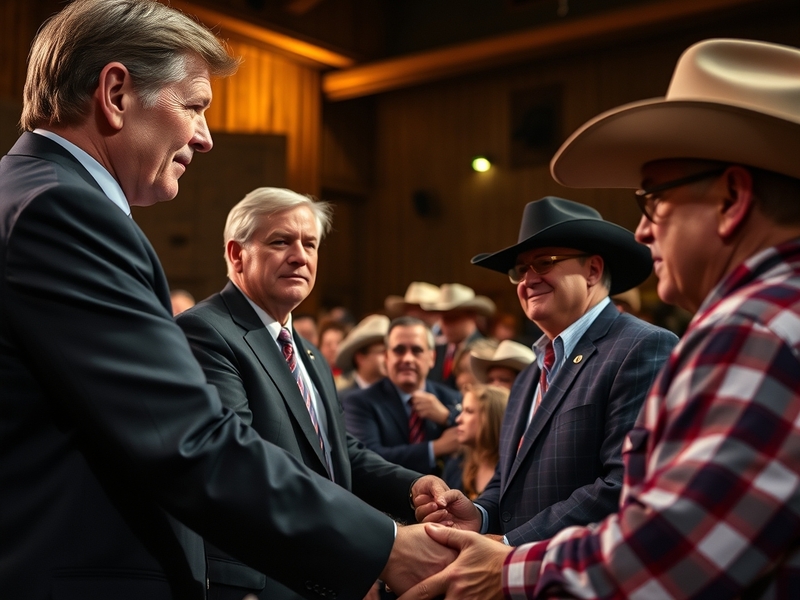
The Wyoming Republican Gubernatorial Primary: A Quiet Battle with National Implications
The Wyoming Republican gubernatorial primary may lack the media glare of races in larger states, but it carries weight far beyond the Cowboy State’s sparse population. With less than 600,000 residents, Wyoming’s political dynamics often reflect broader trends in conservative America—fiscal restraint, energy dominance, and cultural identity. The race to succeed Governor Mark Gordon, who is term-limited, has drawn a field of candidates whose visions for the state’s future could signal shifts in Republican priorities nationwide. From hardline fiscal conservatives to pragmatic business leaders, the primary offers a microcosm of the GOP’s evolving identity.
This contest matters because Wyoming’s policies on energy, education, and land use often precede similar debates in other Western states. The outcome could influence how Republicans balance tradition with modernization, especially as younger conservatives push for change while older voters defend entrenched values. The primary’s timing—just months ahead of the 2024 general election—also gives it outsized significance, as Republicans nationwide look for signals about the party’s direction.
The Candidates and Their Competing Visions
The Republican primary features a slate of candidates whose backgrounds and policy proposals highlight the party’s internal divisions. At the forefront is Secretary of State Chuck Gray, a Trump-endorsed firebrand who has positioned himself as the ideological heir to the former president’s movement. Gray’s platform emphasizes election integrity, opposition to federal overreach, and a hardline stance on abortion—a trio of issues that resonates deeply with Wyoming’s conservative base. His campaign has framed him as the only true conservative in the race, appealing to voters who see the GOP as a movement rather than a political party.
Opposing Gray is Brent Bien, a former state representative and small-business owner whose campaign leans into pragmatic conservatism. Bien’s pitch centers on economic diversification, workforce development, and limited government interference in local affairs. His supporters argue that Wyoming’s future depends on breaking from the culture wars that dominate national headlines and instead focusing on issues like infrastructure and education reform. Bien’s approach reflects a growing faction within the GOP that seeks to soften the party’s image without abandoning its core principles.
A third notable contender is Rex Rammell, a perennial candidate with a libertarian streak. Rammell’s platform includes radical proposals like ending the state income tax and drastically reducing government spending. While his chances of winning are slim, his presence underscores the primary’s ideological breadth. Voters must decide whether to embrace Gray’s unapologetic conservatism or explore alternatives that prioritize stability and growth.
Other candidates in the race include Harriet Hageman, a lawyer and former gubernatorial candidate who has criticized Gray’s tactics, and James Scott Quick, a retired military officer running on a law-and-order platform. The diversity of the field ensures that debates will touch on everything from property rights to the role of government in a state where public lands dominate the economy.
Why Wyoming’s Primary Resonates Beyond Its Borders
Wyoming’s political landscape may be unique, but its primary offers lessons for Republicans across the country. The state’s reliance on energy—particularly coal, oil, and natural gas—makes it a bellwether for debates over climate policy and economic transition. Candidates’ stances on these issues could foreshadow how the GOP navigates the tension between fossil fuel dependence and environmental concerns, especially as renewable energy gains traction.
Culturally, Wyoming’s primary reflects a broader struggle within the GOP to reconcile tradition with modernity. The state’s aging population and rural character make it a stronghold for traditional values, but younger voters and newcomers are pushing for change. This dynamic mirrors conflicts in other conservative strongholds, from Texas to Idaho, where debates over education, healthcare, and social issues are reshaping local politics.
Internationally, Wyoming’s primary is watched closely by observers tracking America’s political evolution. The state’s embrace of Trump-aligned candidates like Gray signals the former president’s enduring influence, even in places far removed from the national spotlight. Meanwhile, the rise of pragmatic conservatives like Bien suggests that the GOP’s future may not be monolithic. As Republicans elsewhere grapple with similar divides, Wyoming’s primary could serve as a case study in how the party adapts—or fractures—in the years ahead.
For those interested in the intersection of politics and culture, Wyoming’s race offers a compelling narrative. The state’s history as a bastion of Western individualism clashes with the modern GOP’s national ambitions, creating a fascinating backdrop for this election. Whether the outcome leans toward firebrand conservatism or pragmatic reform, the primary’s ripple effects will be felt far beyond the Rocky Mountains.
Key Issues That Could Decide the Race
The candidates’ positions on several critical issues are likely to sway voters in the final stretch. Energy policy tops the list, as Wyoming’s economy hinges on its ability to balance fossil fuel extraction with environmental concerns. Gray has vowed to double down on coal and oil, framing energy dominance as a matter of state sovereignty. Bien, by contrast, advocates for a diversified economy that includes renewable energy and technology. Rammell, ever the outlier, calls for the outright elimination of state income taxes—a move that would require drastic cuts to government services.
Abortion is another divisive topic, particularly in a state with deep ties to the anti-abortion movement. Gray has positioned himself as the most uncompromising candidate on the issue, while Bien and others have adopted a more nuanced approach. The primary’s outcome could influence how Republicans in other states navigate the abortion debate ahead of the 2024 election.
Education and land use also feature prominently in the race. Wyoming’s public schools face funding challenges, and candidates have proposed differing solutions—from increased state investment to greater local control. Meanwhile, disputes over federal land management continue to simmer, with candidates split between those who want to assert state authority and those who favor collaboration with Washington.
For voters, the choice comes down to whether they prioritize ideological purity or practical governance. The primary’s outcome will reveal which vision holds sway in a state that has long been a Republican stronghold but is now facing the pressures of demographic and economic change.
As the campaign enters its final weeks, the stakes are clear: Wyoming’s next governor will shape the state’s future in ways that resonate far beyond its borders. For Republicans nationwide, the primary is more than a local election—it’s a referendum on the party’s direction in an era of uncertainty.
What’s Next for Wyoming and the GOP
The primary’s outcome will set the stage for the general election, where the Republican nominee will face a Democratic challenger in a state that hasn’t elected a Democrat to statewide office since 1974. The GOP’s dominance in Wyoming makes the primary the real contest, but the national implications are undeniable. A victory for Gray would embolden Trump-aligned candidates across the country, while a win for Bien or another pragmatist could signal a shift within the party toward more moderate conservatism.
Regardless of the outcome, Wyoming’s next governor will inherit a state grappling with economic diversification, climate change, and a changing electorate. The decisions made in Cheyenne will echo in statehouses and capitals nationwide, as Republicans look for models to emulate—or avoid.
For observers of American politics, the Wyoming Republican gubernatorial primary is more than a footnote—it’s a glimpse into the future of the GOP. Whether the party leans further right or seeks a middle path, the lessons learned in this race will shape its trajectory for years to come.
As voters cast their ballots, they’re not just choosing a governor. They’re deciding which version of conservatism will define Wyoming—and, by extension, the Republican Party—in the years ahead.