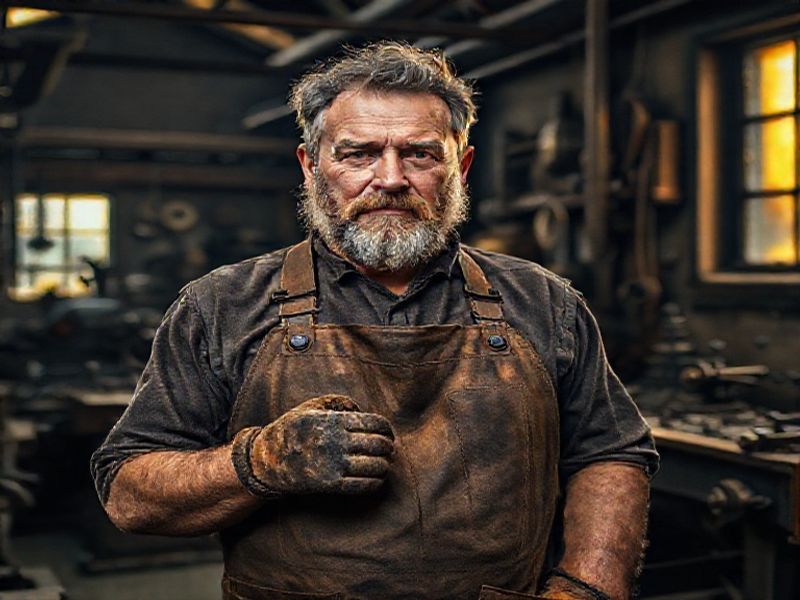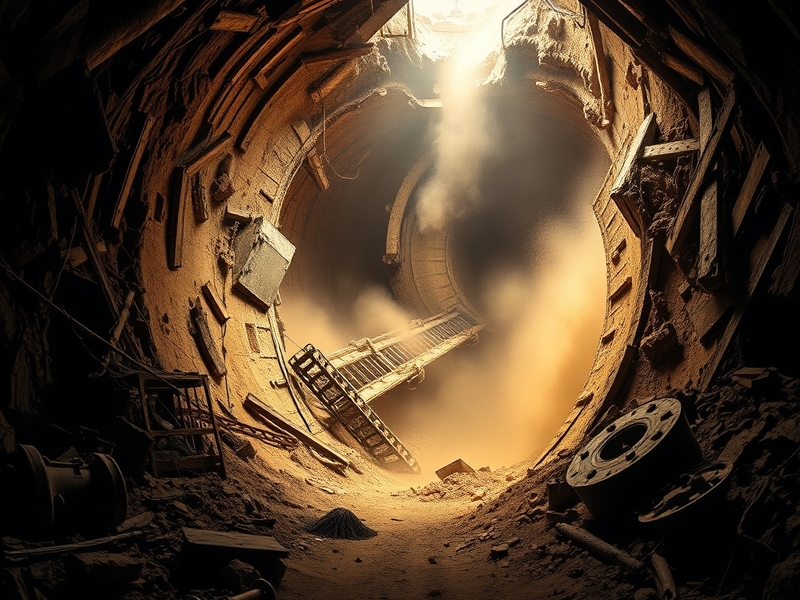
The collapse of a gold mine in Nevada last month sent shockwaves through local communities and international mining circles. On July 12, at approximately 3:47 a.m., seismic sensors registered a magnitude 2.8 tremor near the Eureka Mine, just outside Carlin, Nevada. Within minutes, emergency services received calls reporting a partial tunnel collapse. Rescue operations swung into action as families gathered outside the fenced perimeter, their faces illuminated by the flashing red and blue lights of emergency vehicles.
By dawn, officials confirmed that 12 miners were trapped underground. The depth of the collapse—reported at 1,200 feet—posed immediate challenges for rescue teams. Heavy machinery, including drilling rigs and support beams, was airlifted to the site. In a statement released later that day, Nevada Governor Joe Lombardo emphasized the state’s commitment to bringing everyone home safely. “This is not just a rescue operation,” he said. “It is a test of our resolve, our technology, and our humanity.”
Global echoes of a local tragedy
Mining disasters are not confined by borders. Similar incidents have unfolded across continents, each carrying its own cultural and economic weight. In South Africa, gold mining has deep historical roots, dating back to the late 19th century when thousands migrated in search of fortune. Today, the country’s mining sector remains one of the largest employers, yet it also bears the scars of frequent accidents. In 2022, a collapse at a Witwatersrand mine killed 10 workers and injured dozens more. The tragedy led to nationwide protests demanding stricter safety regulations and better working conditions.
In Peru, artisanal and small-scale mining supports over 200,000 families. Yet, weak enforcement of safety standards has resulted in repeated fatalities. According to Peru’s Ministry of Energy and Mines, at least 34 miners died in accidents during the first half of 2024 alone. Many of these operations are informal, operating outside regulated frameworks. Local NGOs have long called for government intervention, but progress has been slow. “The problem is systemic,” said Rosa Mendoza, a labor rights advocate in Lima. “When communities depend on mining for survival, safety often becomes secondary.”
Meanwhile, in China, where gold mining has expanded rapidly in recent years, officials have touted technological advancements as a solution. Automated drilling and remote monitoring systems are being deployed in newer operations. Yet, even with these tools, accidents continue to occur. In 2023, a collapse in Inner Mongolia trapped 14 miners for nearly 72 hours. After their rescue, state media highlighted the role of drones and AI in locating survivors. While technology offers hope, it also underscores the ongoing risks inherent in deep-level mining.
The human cost behind the headlines
The numbers tell only part of the story. Behind each statistic are families facing uncertainty, financial strain, and emotional trauma. At a makeshift shelter near the Nevada mine, Maria Rodriguez paced back and forth, clutching a framed photo of her husband, Carlos, who had been working the night shift. “He’s been down there for two shifts in a row,” she said. “I keep thinking about the last time I saw him—his smile, the way he kissed the kids before leaving.”
In many mining communities, the industry is more than just employment—it is a way of life passed down through generations. In Ghana, where gold mining contributes nearly 50% of the country’s export earnings, entire villages revolve around nearby pits. Yet, the promise of wealth is often overshadowed by danger. In 2021, the collapse of the Akyem mine killed five workers and displaced hundreds of residents. Families who lost their homes were relocated, but compensation disputes dragged on for years.
Cultural rituals also play a role in how communities process these tragedies. In Colombia, mining towns like Segovia hold annual vigils for miners killed in accidents. These events blend grief with resilience, featuring prayers, music, and storytelling. “We honor those we’ve lost, but we also remind ourselves why we keep going,” said Father Miguel Alvarez, a local priest. “The earth gives, but it also takes. We must respect it.”
Regulation, innovation, and the road ahead
The path to preventing future collapses is complex. It requires a balance between economic demands and worker safety, tradition and innovation. Regulatory bodies like the U.S. Mine Safety and Health Administration (MSHA) have strengthened inspection protocols in recent years. Since 2020, the agency has imposed nearly $20 million in penalties for violations related to structural integrity and emergency preparedness. Yet, critics argue that enforcement remains inconsistent, particularly in smaller operations.
Technology offers a glimmer of hope. Companies such as SensTech Solutions have developed real-time monitoring systems that detect ground movement before collapses occur. Their sensors, installed in mines across Australia and Canada, have already prevented several incidents. “We’re not just reacting to disasters,” said Dr. Elena Vasquez, the company’s lead engineer. “We’re predicting them.”
Still, adoption is slow in regions where resources are scarce. In Zimbabwe, for example, most mines operate with outdated equipment. The government has pledged to modernize the sector, but funding remains a hurdle. Meanwhile, in the Democratic Republic of Congo, where cobalt and gold mining are intertwined, multinational corporations face scrutiny over labor practices. Ethical sourcing has become a growing concern, with consumers increasingly demanding transparency.
Education also plays a critical role. Programs like the International Council on Mining and Metals (ICMM) initiative aim to train workers in hazard recognition and emergency response. In Mongolia, where mining accounts for nearly a quarter of GDP, such training has reduced fatalities by 15% over the past decade. Yet, in remote areas, access to these programs is limited. “Knowledge is power,” said Tserenbat Galsan, a Mongolian miner turned safety instructor. “But power means nothing if you can’t reach the people who need it most.”
A call for collective responsibility
The collapse in Nevada is a reminder that mining is not just an industry—it is a global ecosystem with far-reaching consequences. Governments must prioritize safety over profit margins. Companies should invest in technology and training, not just extraction. And communities must be given a voice in decisions that affect their lives and livelihoods.
As rescue efforts in Nevada continue, the world watches. The outcome will shape policies, influence investments, and perhaps even redefine our relationship with the earth. One thing is clear: no gold is worth a human life. The real treasure lies in ensuring that every miner returns home safely to their family.
For those interested in the intersection of technology and worker safety, explore our Technology section for deeper analysis. To understand the cultural impact of mining communities worldwide, visit our Culture category, where stories of resilience and tradition come to life.