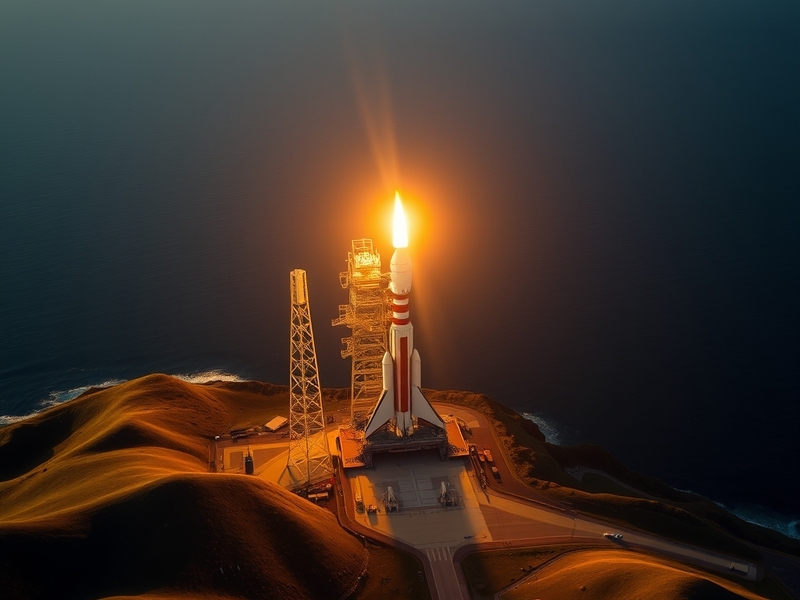
Vandenberg Space Force Base, located on California’s central coast, serves as the U.S. military’s primary West Coast launch site for national security and scientific missions. Established in 1941 as Camp Cooke, the base transitioned through Army, Air Force, and now Space Force oversight, evolving into a critical node for space operations. Its position near Lompoc provides unobstructed polar and high-inclination orbit access, making it indispensable for satellite deployments and missile testing.
From Army Camp to Space Operations Hub
The base’s origins trace back to World War II, when the U.S. Army established Camp Cooke to train infantry and armored units. After the war, the site briefly served as a prisoner-of-war camp before being transferred to the Air Force in 1957. The Cold War era transformed Vandenberg into a key launch site for intercontinental ballistic missiles (ICBMs), including the Thor and Atlas rockets. By the 1960s, it became the primary testing ground for the Air Force’s space programs, launching satellites for reconnaissance and early warning systems.
In 2020, the base transitioned to U.S. Space Force control, reflecting its growing role in national security space missions. Today, Vandenberg hosts the Space Launch Delta 30, overseeing launches for the National Reconnaissance Office, NASA, and commercial partners like SpaceX. The shift underscores the base’s strategic importance in an era where space dominance is increasingly vital to U.S. defense and technological leadership.
Launching the Future: Missions and Milestones
Vandenberg has been the site of numerous historic launches, including the first polar orbit satellite deployment by the U.S. in 1960. The base has supported missions for NASA, such as the launch of the Orbiting Geophysical Observatory and the Infrared Astronomical Satellite. More recently, SpaceX’s Falcon 9 rockets have taken flight from Vandenberg, carrying payloads for Starlink, commercial customers, and NASA’s Earth-observing satellites.
The base’s launch manifest includes a mix of national security and scientific missions. For example, the Atlas V rocket has launched the Joint Polar Satellite System (JPSS), which provides critical weather and climate data. Meanwhile, the Space Force’s SpaceX Sentinel-6 mission, a collaboration with NASA and international partners, monitors global sea levels. These launches highlight Vandenberg’s dual role in both defense and scientific exploration.
Vandenberg is also a hub for missile testing, including the Minuteman III ICBM program. The base’s vast, sparsely populated surroundings allow for safe testing of long-range missiles, ensuring the U.S. maintains a credible nuclear deterrent. The integration of these testing programs with space launches underscores Vandenberg’s unique position as a multi-domain operations center.
Infrastructure and Innovation at Vandenberg
The base spans over 99,000 acres, with launch pads, processing facilities, and tracking stations spread across its rugged terrain. Space Launch Complex-4 (SLC-4) is divided into East and West pads, hosting SpaceX’s Falcon 9 and United Launch Alliance’s Atlas V rockets. The base also includes Space Launch Complex-6 (SLC-6), which was originally built for the Space Shuttle program and now supports Delta IV and Vulcan Centaur launches.
Vandenberg’s infrastructure supports a range of operations, from payload processing to launch execution. The Space Force’s Launch and Range Systems Directorate manages the base’s advanced tracking and telemetry systems, ensuring real-time monitoring of launches. Additionally, the base collaborates with nearby universities and research institutions, fostering innovation in aerospace technology.
One of Vandenberg’s most notable facilities is the Western Range, which provides tracking, telemetry, and command capabilities for launches. The range’s extensive network of ground stations and radars ensures precise trajectory monitoring, even for missions targeting polar orbits. This infrastructure is critical for both military and civilian space operations, making Vandenberg a cornerstone of U.S. space capabilities.
The Base’s Role in National Security and Global Stability
Vandenberg’s strategic location allows the U.S. to launch satellites into polar orbits, which are essential for surveillance, weather monitoring, and communications. These orbits pass over the Earth’s poles, providing global coverage that equatorial orbits cannot. This capability is particularly valuable for national security missions, including missile warning and reconnaissance satellites.
The base’s role in missile testing further enhances U.S. national security. Vandenberg is home to the 30th Space Wing, which conducts ICBM test launches to validate the readiness of the U.S. nuclear arsenal. These tests are crucial for maintaining the reliability of the Minuteman III and future Ground Based Strategic Deterrent systems. The base’s proximity to the Pacific Ocean also allows for safe splashdowns of missile reentry vehicles, ensuring compliance with arms control agreements.
Vandenberg’s operations extend beyond U.S. borders, contributing to international stability. The base has supported launches for allied nations, including Canada and Germany, fostering collaboration in space exploration. Additionally, Vandenberg’s role in tracking and monitoring foreign satellite launches enhances transparency and reduces the risk of miscalculation in global space activities.
In an era of increasing competition in space, Vandenberg’s capabilities are more important than ever. The base’s ability to rapidly deploy satellites and test advanced technologies ensures the U.S. remains at the forefront of space innovation. Whether supporting military missions or scientific exploration, Vandenberg Space Force Base remains a linchpin of American space power.
Key Takeaways
- Vandenberg Space Force Base is the U.S. military’s primary West Coast launch site, with roots dating back to World War II.
- The base supports a mix of national security, scientific, and commercial launches, including SpaceX and NASA missions.
- Its infrastructure includes advanced launch pads, tracking systems, and missile testing facilities.
- Vandenberg plays a critical role in polar orbit satellite deployments, enhancing U.S. surveillance and communications capabilities.
Vandenberg’s legacy is one of adaptability and innovation, evolving from a military training ground to a cornerstone of U.S. space operations. As the Space Force continues to expand its capabilities, the base will remain a vital asset in ensuring American leadership in space. For those interested in the broader context of military space operations, our Technology section offers deeper insights into the technologies shaping this domain.